How Much Does It Cost to Start a Junk Removal Business?
A junk removal startup costs under $1,000 with a truck you already use, or $15,000 to $55,000 if you must buy the truck. Itemized gear, insurance, dump fees, and lead costs.
Starting a junk removal business costs under $1,000 if you already have daily access to a truck or SUV, per the itemized budget in the junk removal course. If you have to buy the truck, the number jumps to $15,000 to $55,000 for a used box truck in the current market. The line between those two outcomes is the single biggest cost decision in the trade, so here is every line, both ways.
The under-$1,000 stack, itemized
This is the stack the course's capital band rests on, with the vehicle assumed:
| Item | Cost | Notes | |---|---|---| | Sole proprietor registration or LLC | $0 to $500 | state dependent | | City or county business license | $50 to $100 | range varies widely by locality | | General liability insurance | $37 to $55 per month | carrier's own data; 49 percent of debris-removal customers pay in this band | | Appliance dolly, straps, blankets, gloves, tarps | $200 to $300 used | the entire working tool kit | | Truck door magnets or decals | $50 to $150 | the truck is an ad |
That lands most single-operator starts under a thousand dollars. One insurance line surprises people: if the truck is business-owned, commercial auto is core coverage, not an add-on, and junk-removal policies run $30 to $322 a month depending on coverage type, averaging about $150 combined.
The buy-the-truck fork
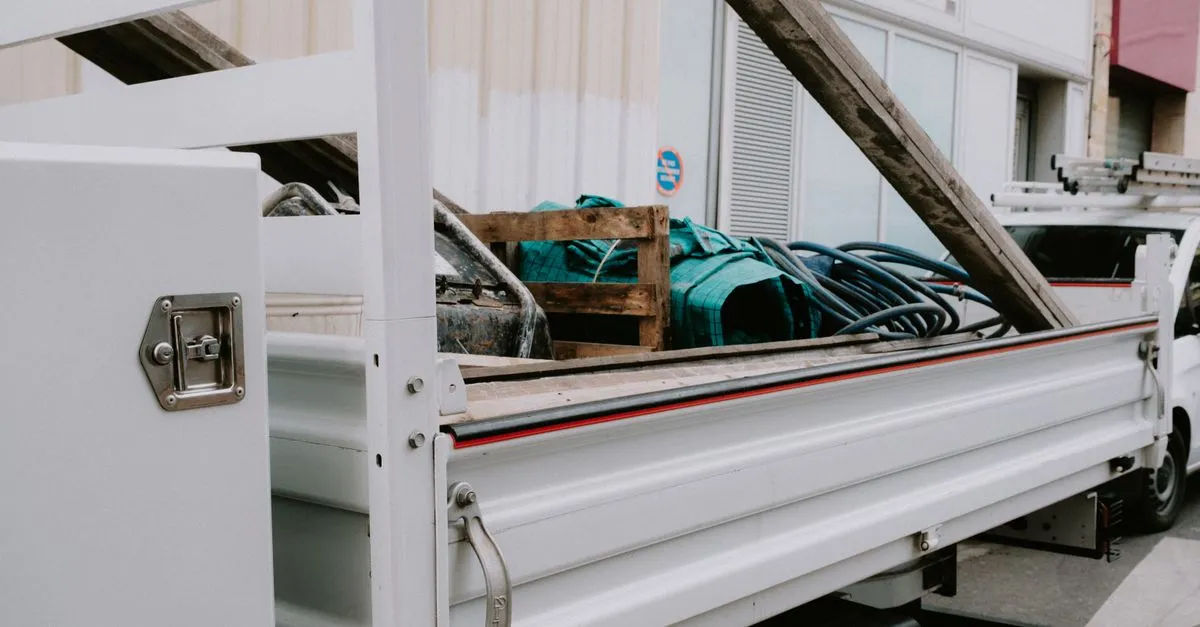
If no suitable vehicle sits in the driveway, the capital conversation changes completely. Current used box trucks run $15,000 to $55,000 across four 2026 market carriers. A new single-axle utility trailer at the big-box end runs roughly $800 to $1,500, though that figure is flagged in the course as locally variable, so verify before budgeting. The common dump-trailer pairing operators converge on is a three-quarter-ton pickup with a 7 by 12 or 7 by 14 dump trailer, which puts the whole rig comfortably into five figures.
The course's honest advice: do not buy the truck for a business that does not exist yet. Start with the vehicle you can reach, prove the route, and let revenue buy the upgrade.
The ongoing costs, per load and per month
Disposal is the cost that defines the trade. The national average landfill tipping fee hit $62.28 per ton in 2024, up ten percent in a single year. Regional spread is wide: Los Angeles County charges $85.91 per ton for municipal waste and $100.91 for bulky items, while parts of the Southeast run in the forties. On top of per-ton fees, gate minimums run roughly $12 to $35 per load, and surcharges stack per item: mattresses commonly $10 to $35 each, tires a few dollars to $20, refrigerant appliances extra.
The worked example from the course: a $700 full trailer load, a ton and a half at the scale, one mattress, two tires. Disposal roughly $138, fuel $20, insurance day-slice $2.50, one paid lead $48. About $490 survives direct costs, and after a 15 percent truck repair reserve the job pays around $390 before self-employment tax. Plan on the same 15-to-30 percent tax set-aside every solo operator needs.
Leads, when you pay for them: Google Local Services Ads run $30 to $65 per lead in this trade, about a $48 average. Thumbtack charges $18 to $55 per lead but sells each lead to several competitors, so the effective cost per actually-booked job runs $150 to $380. The free machine, a complete Google Business Profile, Nextdoor, and the branded truck itself, carries month one at zero spend.
Time to first revenue
Weeks. One reason this trade is attractive: the phone can ring in the first week if the profile is live and the neighborhood groups know you exist. Meaningful income takes longer, since route-style repeat work from realtors and property managers compounds over a season. The operators posting real numbers describe first months that run from a few weekend jobs to $5,000-plus once marketing settles in, and one crossed a first $10,000 month after a slower build.
What not to buy
Skip the franchise fee, the branded box truck, and the second dolly. A franchise entry runs far above the independent stack and buys training and territory you can assemble yourself with a week of practice and the junk removal course, which includes the price ladder, the quoting script, and the disposal pass-through method. The catalog's pricing module covers the disposal-times-two-or-three rule every hauler quotes by.
Not sure whether your truck situation supports this trade or another? The quiz matches your equipment, budget, and schedule against every business in the catalog.
Requirements vary by state and change; verify with your state's regulator and a qualified professional.