How to Start a Junk Removal Business
Start a junk removal business with a truck you can already reach, under $1,000 in gear, and volume pricing that passes dump fees through. Real load math and first customers.
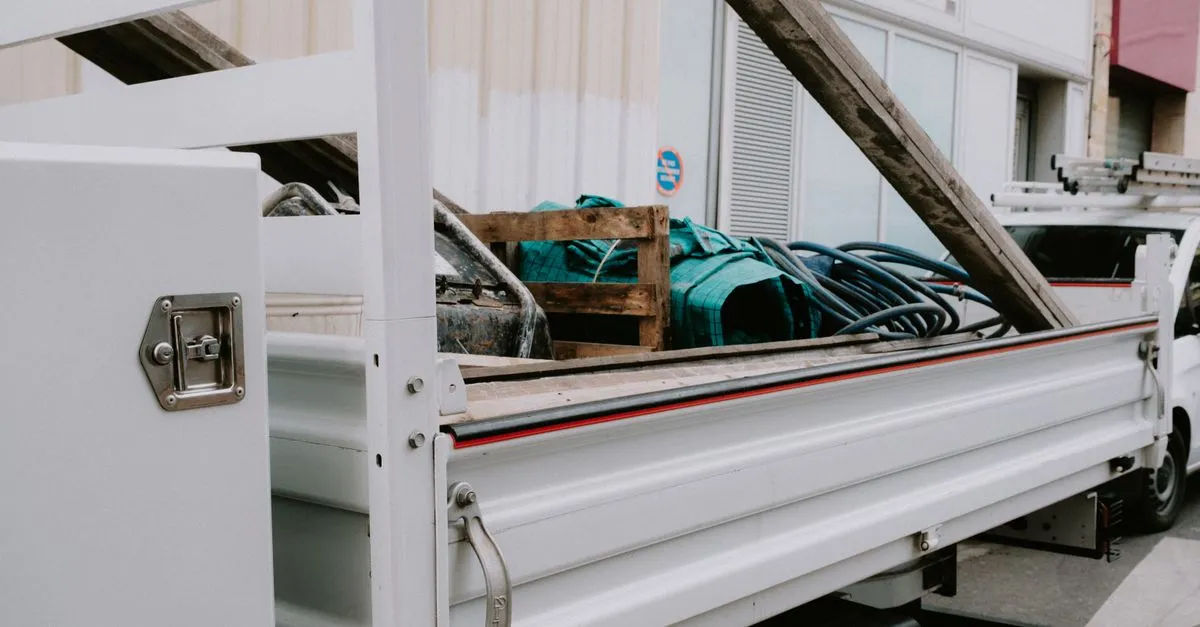
Junk removal is the business of getting paid twice for the same pile of stuff: once by the customer who wants it gone from the garage today, and quietly again when part of the pile turns out to be salable, donatable, or scrap metal. The front of the business is labor. The back of the business is arithmetic. You charge by volume, the landfill charges you by weight, and the gap between those two numbers is your margin. Startup runs under $1,000 if you already have daily access to a truck or SUV, most homeowners spend $150 to $350 per job, and the first jobs can land within weeks. Here is the whole road.
What the work actually is
Somebody's garage must be empty by Saturday. They search once, in a mild panic, and hire whoever is findable and fast. That is the entire demand pattern. You are not building a brand people are loyal to. You are being the answer at the moment of the search, and the work is carrying furniture, bagging debris, sorting the load into its four destinations (landfill, donation, resale, scrap), and sweeping the garage before you leave.
Know the lines. This is not a moving company and not dumpster rental, where the box sits on the driveway for a week. Hoarding situations, biohazard, asbestos, and regulated hazardous waste belong to licensed specialists, and declining that work gracefully is a skill the course teaches on purpose.
What it costs to start
The under-$1,000 band assumes a truck or SUV you can already use daily and a strong back. With the vehicle in the driveway, the stack is short: business registration at $0 to $500 depending on structure and state, a city or county business license at $50 to $100, general liability insurance at $37 to $55 a month for nearly half of debris-removal customers per one carrier's own data, a used tool kit (appliance dolly, straps, blankets, gloves, tarps) at $200 to $300, and door magnets at $50 to $150. That lands most single-operator starts under a thousand dollars.
If you have to buy the truck, this is a different capital conversation. Used box trucks currently run $15,000 to $55,000, and a new single-axle utility trailer runs roughly $800 to $1,500 at the big-box end, though that figure deserves a local check before you plan around it.
One line surprises people: commercial auto coverage. If the truck itself is business-owned, you need it, and junk-removal policies run $30 to $322 per month depending on coverage type, averaging about $150 combined.
The honest money
The market has settled on volume pricing with a minimum charge. Typical minimums run about $100 at the low end, single bulky items run $60 to $150, and most homeowners spend $150 to $350 per job, which works out to roughly $1.50 per cubic foot. The franchise ladder runs small loads $107 to $396, half loads $396 to $600, and full loads $600 to $1,099. Independent operators consistently recommend a minimum of your own around $200, with $250 to $400 per load reasonable in an average-income area, and a completely full 7 by 14 by 4 foot trailer billing near $800.
Now the other side, because this trade's money stories die on it. The national average landfill tipping fee hit $62.28 per ton in 2024, a record jump of ten percent in one year. Los Angeles County charges $85.91 per ton for municipal waste and $100.91 for bulky items, while parts of the Southeast run in the forties. Gate minimums add roughly $12 to $35 per load, and surcharge items stack on top: mattresses commonly add $10 to $35 each, tires a few dollars to $20.
Run one full trailer load, charged at $700 in a mid-market town. The load weighs a ton and a half at the scale, about $93 at the national average rate, plus a $30 mattress surcharge and two tires. Disposal total, roughly $138. Fuel for forty loaded miles runs about $20. A day-slice of insurance is $2.50. One paid lead at the junk-removal average of about $48 brought the job in. After direct costs you keep roughly $490, about 70 percent of revenue. Skim 15 percent into a truck repair reserve, because the transmission does not care that it is a good month, and the job pays you around $390 before self-employment tax. The complete junk removal course walks this cascade with a worksheet, and the trade-wide rule it teaches is simple: take your disposal cost per load, multiply it by two or three, then add your labor. That covers the weight you underestimated and the second dump run you did not plan.
What operators actually make, from the ones posting real numbers: one crossed a first $10,000 month after months of slower building, with a prior month around $5,500. Another new operator's first two jobs, estate-scale work, grossed about $5,300 and netted roughly $1,700 after dump fees, fuel, equipment, and startup costs. Gross numbers that look like corporate money, net numbers that look like tradesman money. The ramp is where your quoting gets sharp, and the pricing method is the catalog module that firms it up.
First steps, in order
One: register the business and buy the liability policy. Haulers also need to check one local question, because some jurisdictions require a waste-hauler license specifically; Denver and New York City are examples, and your city's solid waste page settles it in minutes.
Two: collect your local fee schedule. Drive to your transfer station, ask for the price per ton, the gate minimum, and the surcharge list. Every quote you ever give hangs off those numbers, and the course's honest instruction is to collect them in your first week.
Three: build the price ladder. Minimum near $200, small load, half load, full load, with disposal passed through at cost. The four-destination sort (landfill, donation, resale, scrap) is where the quiet second payday lives; steel scrap runs roughly $120 to $230 a ton by grade, and a 200-pound washer is about $12 to $18 of light iron.
Four: get findable. That is the whole marketing problem, and it is next.
Where the first customers come from
Junk removal customers search once and book fast, so the machine is about being findable and answering the phone. The free version, in order of importance: a complete Google Business Profile fed weekly with before-and-after photos; Nextdoor and neighborhood Facebook groups, where "anyone know a guy who hauls?" gets asked weekly; Facebook Marketplace and Craigslist service posts; and the truck itself, marketed by door magnets and a clean rig parked in driveways.
The repeat engine is realtors, property managers, and landlords. One active realtor can mean five to ten jobs a season, a heuristic estimate but a durable one, because they need haulers who show up on time far more than they need the cheapest. Send ten short, specific messages a week; two reply, one books, and in a season that agent feeds you steady work at zero cost.
Speed decides the rest. Reply inside fifteen minutes during work hours and you will book a share of jobs that shocks slower competitors. Miss the evening window and the customer books whoever answered.
Paid leads work and are priced: Google Local Services Ads run $30 to $65 per lead in this trade, about a $48 average, which is excellent arithmetic at a 50 percent close rate and a slow leak at 20 percent. Thumbtack charges less per lead, $18 to $55, but sells the same lead to several competitors, so the effective cost per booked job runs $150 to $380. Track your close rate weekly and pause any channel that cannot show booked jobs against spend. The full acquisition sequence, including the phone script, is in the junk removal course and in the catalog's first-ten-customers module.
The hardest parts, named
Confusing gross with net is the failure behind most of this trade's money stories. A thousand-dollar job with two tons of mixed debris, a paid lead, and a helper can leave less than $300. Log every job's disposal receipt next to its invoice from day one, or you are running the business on vibes.
The truck is the second. Trucks break, and the operators who die are the ones with no repair reserve. Hence the 15 percent skim on every job.
The season is the third. Demand peaks spring through early fall and thins in winter, and the course's answer is the money system: the disposal receipt log, the repair reserve, and a plan for the slow months built before they arrive. The body is the quiet fourth; typical repetitive carries run 40 to 80 pounds, all day, and backs are the trade's real warranty claim.
Where to go deeper
The course covers the truck question honestly, the quoting walk-through in the driveway, the four destinations in detail, and a first-thirty-days plan. Every number above is sourced in its public claims ledger, and the ones nobody could verify are flagged as such.
Not sure hauling is the right trade for your back, your truck situation, or your market? The quiz matches your situation against every business in the catalog.
Requirements vary by state and change; verify with your state's regulator and a qualified professional.