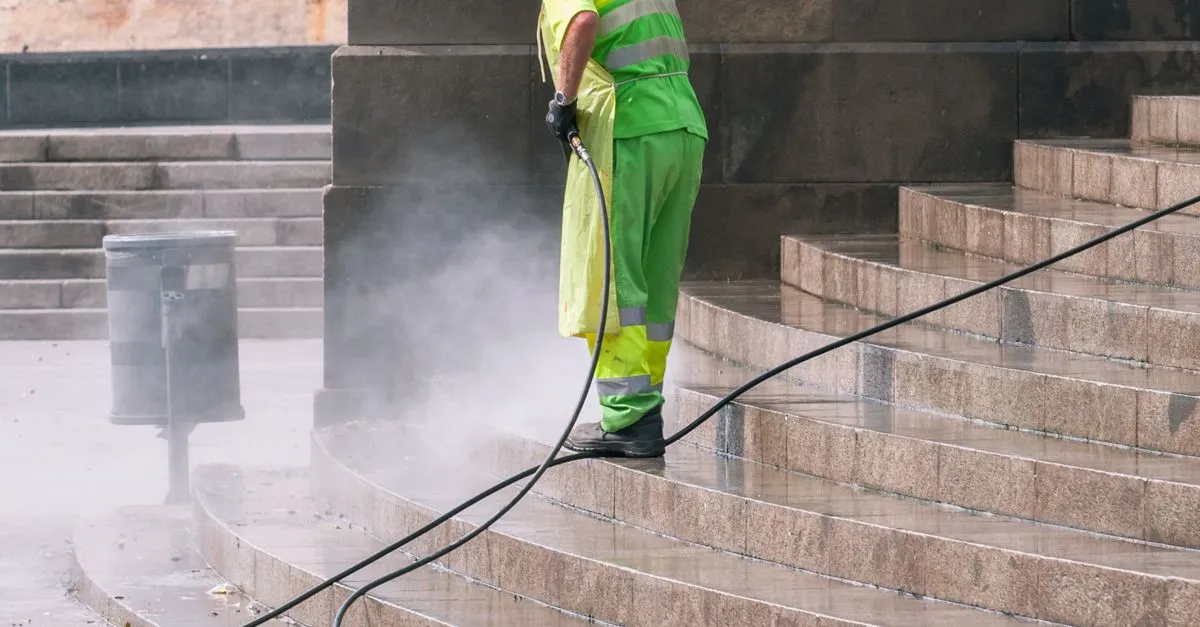
Pressure Washing Business Plan
A one-page pressure washing business plan built on real bands: a used rig near $980, a $250 blended ticket, first-season math to $50,000 gross, and break-even at nine jobs.
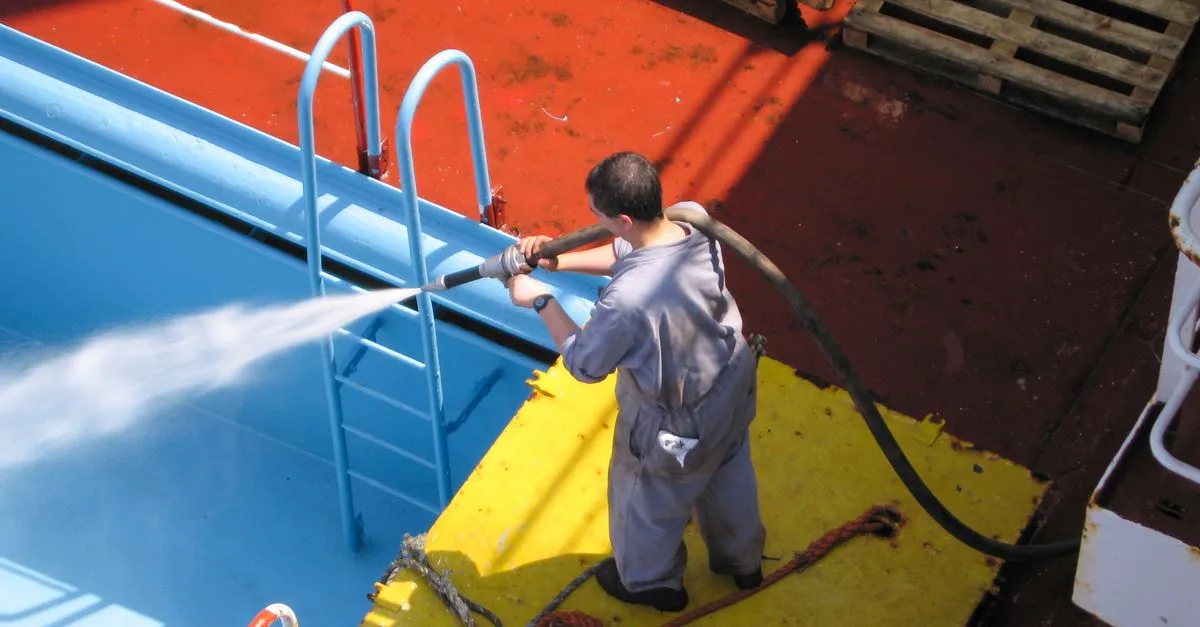
A fifty-page business plan template is a costume for a business that does not exist yet. It wants a five-year projection off zero data and a competitor analysis of companies you have never called. A pressure washing business needs one page with real numbers on it: what you sell, what it costs to start, what a conservative season pays, where the break-even sits, and what kills operators in this trade.
That page has three audiences, and only one is you. You need it because writing the numbers down forces the decisions, the minimum charge, the season dates, the winter reserve. The bank needs it later, if a line of credit or an equipment loan enters the picture; a lender can read one honest page with sourced bands and cannot read a fantasy. And your household needs it, because a seasonal business with a dead January is a family decision before it is a business decision, and that conversation goes better with arithmetic than enthusiasm.
Every number below comes from the pressure washing course and its public claims ledger. Here is the whole plan, worked.
The offer: jobs, not hours
You are not selling time. You are selling the disappearance of green siding, gray concrete, and a slippery walk, priced by the job. The menu, in the order the course teaches it: house washes (chemical at garden-hose pressure, applied from the ground), driveways and flatwork (surface cleaner, not a wand), decks and fences, and roofs and gutters, which carry danger pay and their own rules. Commercial storefronts and property-manager accounts come later, on schedules instead of seasons.
Write the offer as a menu with prices, because "we wash anything" prices your expertise as a commodity. A customer who knows you do a $250 house wash calls you for a house wash. A customer who knows you "do pressure washing" calls you to argue about $99 driveways, and that conversation is how operators fail.
The pricing model
The national calibration, from HomeGuide's survey data: the average job runs $173 to $311, average $211, house washes at $170 to $360, flat-rate jobs clustering at $200 to $600. Per square foot, houses run $0.15 to $0.50, driveways $0.10 to $0.40, roofs $0.40 to $1.00.
The course's method is a skeleton price with condition adjustments: start near $0.10 per square foot for a house wash (deliberately below the survey band while your reviews build), adjust plus or minus one to three cents per square foot for dirt, complexity, and access, and set a minimum job charge before your first quote. Solo minimums run $150 to $219; one nine-truck operator publishes $219 on the logic that a truck roll costs the same for a patio as for a mansion.
Your floor, as arithmetic instead of instinct, is the catalog's cost floor calculator: the take-home you need per hour, divided by your billable share of hours, plus overhead per billable hour, then grossed up for tax. The worked example in the pricing method floors at about $107 an hour for a $40 take-home at a 60 percent share. Job-priced washing translates that into the two ratios the course actually polices: chemicals held between 10 and 20 percent of the ticket, net margin held at 20 to 30 percent per job.
Startup capital
The used lane, itemized from the course's rig lesson:
| Line | Target price | Notes | |---|---|---| | Used 4 GPM gas machine | $400 to $600 | pressure-test before buying; the pump is the risk | | Garden hose, 100 ft | $40 to $60 | buy new; used hoses kink and choke flow | | Pressure hose and gun | $60 to $100 | match fittings to the machine | | Surface cleaner, 15 to 16 inch | $100 to $300 | the biggest flatwork speed upgrade there is | | Downstream injector kit | $15 to $30 | your soft-wash entry | | Starter chemicals | $100 to $150 | SH, surfactant, neutralizer |
At the midpoints that gear sums to about $980, inside the course's under-$1,000 target for the used start. The same kit new runs $500 to $2,500. Add general liability at $75 to $103 a month and the LLC at $50 to $500 by state, and the whole launch sits near $1,100 to $1,600 with the first insurance month paid. The $20,000-to-$50,000 commercial trailer build is a year-two rig funded by revenue, never by savings; one founder who later ran nine trucks started with a $300 converted boat trailer behind the family minivan.
First-year revenue, worked as arithmetic
No income promises, so here is the course's conservative model, shown as multiplication. The national average job is $211; call your blended ticket $250 once driveway add-ons mix in. Two houses a day, four days a week, through a 26-week season:
$250 x 2 houses x 4 days = $2,000 a week. $2,000 x 26 weeks = $52,000, near enough the course's $50,000 gross on roughly 200 jobs.
Subtract insurance, fuel, chemicals, and gear replacement at the course's ratios and $29,000 to $33,000 survives as owner income before income tax. Work the same season at one job a day while you learn and you land near half that. That is the honest planning range for year one, and if a quitting date is attached to this plan, run the runway math first, in months, not in optimism.
Fixed and variable costs
| Cost | Amount | Type | |---|---|---| | General liability | $75 to $103 a month | fixed | | Phone, software, website | $30 to $80 a month | fixed | | Fuel and chemicals | 10 to 20 percent of job revenue | variable | | Gear repair and replacement | inside the margin ratios above | variable | | Paid search, when you start | $600 to $1,200 a month | optional, later |
The fixed column is nearly empty, which is why this trade starts on savings instead of debt. Marketing is deliberately not a month-one line: your first ten customers come from the warm circle, door knocks, and the truck being visible. When you do start buying leads, local services ads currently run $18 to $35 a lead against that verified paid-search band.
Break-even
Take the midpoints and run it. Fixed costs are about $144 a month (insurance $89, phone and software $55), so a 26-week season carries roughly $865 of fixed costs. Variable cost at the midpoint of the 10-to-20 percent band is about $37.50 on a $250 job, so each job contributes about $212.50.
Against the season's fixed costs: $865 / $212.50 is barely five jobs. Against fixed costs plus the $980 rig: about $1,845 / $212.50 is nine jobs, a week and a day of two-a-day work. That is the entire break-even story of this trade, and it is why the failure modes below are never "could not earn the money back."
The real break-even is seasonal, not capital: freeze-market operators report revenue swinging 50 to 60 percent between peak and trough months, so the course sets a winter reserve target of three months of fixed costs, roughly $430 at these numbers, banked by October.
The risk section
Name these in the plan itself, because a plan that cannot say what kills the business is a brochure.
The damage claim. The trade's defining risk: water behind vinyl siding surfacing as interior damage weeks later, etched concrete, chlorine-burned landscaping. The defense is procedural (start weak, test a corner, follow the surface rules on every job including the fiftieth), the insurance is active before the first paid job, and when damage happens you tell the customer same day, photograph, and call the carrier, because an admission plus a cash payment can void the coverage.
The price war you started. The $99 driveway special pays less than a warehouse shift after costs and breeds customers who leave for the next $89 outfit. The minimum charge and skeleton prices are the plan's answer.
The paperwork and the winter. Running chemical water into a storm drain can end the business in one citation in an enforcing city; know where wash water goes before week one. And a beautiful August with no reserve becomes a February with no money: choose the off-season fork (winterize, pivot to holiday lighting and gutters, or build commercial accounts) before October, not during it.
Ladders and burnout. Falls are the catastrophic risk, which is why the course teaches ground-based soft washing. Burnout is the slow one, and rest is part of the model, not a weakness.
The 30/60/90
The course ends with a thirty-day launch plan; here is that plan with its own logic run two more months.
Days 1 to 30: register the entity and buy the policy before the machine, build the used rig, learn it on your own house, set up the Google profile, print door hangers, rehearse the price card, and book the first ten jobs from the warm circle and the streets you washed. The day-30 targets are pipeline numbers: ten completed jobs, five to eight reviews, a quote log with fifteen entries, one week booked ahead.
Days 31 to 60: calibrate. Closing 40 to 50 percent of quotes is normal and healthy; below that, fix prices or sales process; consistently above 50 to 60 percent, you are underpricing. Adjust the skeleton once, not every quote. Add the X-Jet (about $100 in the operator courses, current kits under $200) the week you quote your first two-story house.
Days 61 to 90: answer the season question in writing (freeze, shoulder, or year-round market), set the marketing ramp two to three weeks before your peak, start the commercial conversations in September because commercial budgets are set before the year turns, and confirm the winter reserve is accruing toward its October target.
FAQ
Does a pressure washing business need a formal business plan?
It needs the one page: offer, prices, startup table, season math, break-even, risks, and the 30-day sequence. That page carries the bank conversation and the household conversation. Anything longer is homework you are doing to avoid knocking on doors.
How much money do I need to start?
About $980 for the used rig at the midpoints, under $1,000 by the course's target, plus insurance and filing, roughly $1,100 to $1,600 all-in with the first month's policy paid. The same kit new runs $500 to $2,500. Trailer builds at $20,000 to $50,000 are graduation rigs bought from revenue.
What does a realistic first season pay?
The conservative course model, $250 a ticket at two jobs a day for 26 weeks, produces about $50,000 gross and $29,000 to $33,000 surviving as owner income before tax. At one job a day while learning, about half. No version of this is a promise; every input is a band you re-check against your own quote log.
When does the business break even?
Nine jobs covers the rig plus a season of fixed costs at the midpoints, about a week and a day of full-speed work. The break-even that actually matters is the winter one, three months of fixed costs banked by October in a freeze market.
LLC or sole proprietorship, and do I need insurance?
An LLC runs $50 to $500 in most states and separates business liabilities from your house. The liability policy, $75 to $103 a month, is not optional in a trade whose defining risk is the damage claim; the classic ending is the letter that arrives six weeks after a job you barely remember.
Where to go deeper
This plan compresses the complete pressure washing course, free, with every figure sourced in its public claims ledger. The full walk-through is how to start a pressure washing business, every cost line is itemized in what it costs to start, and pressure washing vs lawn care compares the two outdoor trades on the numbers.
Not sure exterior cleaning is the right trade for your market or your tolerance for ladders? The quiz matches your situation against every business in the catalog.
Requirements vary by state and change; verify with your state's regulator and a qualified professional.