The fee model and the math on one placement
Lesson video in production
The full lesson text below is complete — the video version lands with launch.
The formula
One placement equals one fee. For direct-hire work, that fee is a percentage of the placed candidate's first-year base salary, with 15 to 30 percent as the standard band and 20 percent the most commonly cited rate (Pin.com, Spectraforce). Run the arithmetic at a few salary levels:
| First-year salary | Fee at 15% | Fee at 20% | Fee at 25% | |---|---|---|---| | $50,000 | $7,500 | $10,000 | $12,500 | | $90,000 | $13,500 | $18,000 | $22,500 | | $140,000 | $21,000 | $28,000 | $35,000 |
Three consequences fall out of this table, and they shape every later decision in the course.
First, your niche chooses your income ceiling. The same effort that produces a $7,500 fee on a junior accounting role produces a $21,000 fee on a senior engineering role. The niche tradeoffs get a full lesson later in this course, but know now that experienced operators tell new agency owners to ask what the average salary in their niche is before committing.
Second, one placement a month is a business. Two placements a month is a strong one. Asked directly, working agency recruiters on r/recruiting put a competent full-cycle recruiter at one to two placements a month, a touch lower on six-figure-candidate desks, and call three above average (r/recruiting thread). That throughput number is operator consensus, not a promise, and it belongs in your planning with that label attached.
Third, the percentage is negotiable and clients know it. Which is why the contract around the fee matters as much as the fee itself. More on that later in the course.
Automation already sits inside that pipeline, which is why this course carries a six out of ten on AI exposure, per how this catalog rates AI exposure: machines draft the outreach and sort the resumes, while placements still close on judgment about people and a client's willingness to trust you with a hire.
Contingency, retained, and the flat-fee trap
Contingency means the client pays nothing unless your candidate is hired. You carry all the risk, the client can work five agencies on the same role, and your placement can be undercut by a competitor's candidate at the last moment. It is also how nearly every new agency starts, because no client grants a retained search to an unproven shop.
Retained search inverts it. The client pays in stages, usually across the search, at roughly 25 to 35 percent of total compensation (Frontline Source Group). Retained work is calmer, exclusive, and close to unreachable in your first year, because it is sold on track record. Expect to graduate into it, not start in it.
The trap in the middle is the flat fee. A big brand offers a fixed fee per placement instead of a percentage, and the logo feels worth it. One agency owner tells the story of taking a flat five thousand dollars per engineer from a well-known tech company, placing three strong engineers, and collecting fifteen thousand dollars total, less than a single placement would have earned at her standard percentage. The client, she says, treated her like a vendor ever after, because she priced herself like one. Treat that as an operator anecdote with a clear lesson attached, not a statistic. The lesson stands: a flat fee caps you and anchors the relationship at the wrong number. If a client insists on flat, do the division, and if it comes out under your percentage, decline with a number in your hand.
What the fee contractually buys
The fee percentage is only one clause. Two others decide whether you keep the money.
The guarantee window: if your placement quits or gets fired inside a defined period, the client wants remedy. Industry survey data puts the 30-, 60-, and 90-day windows together over most of the market, with 90 days the most common single choice (TopEchelon). The remedy is usually either a free replacement search or a prorated refund, refunding a slice of the fee for each completed month of work (NPAworldwide). Free replacement is the better structure for you: it costs you time instead of cash, and it keeps the client relationship alive.
Payment timing: the operator default is net-10, the fee due within ten days of the candidate's start date, and that default appears in member firms' own policy language: an NPAworldwide roundup of guarantee policies quotes "net 10 days," invoices submitted on the new employee's first day of employment (NPAworldwide). Clients who push stretch payment to thirty, which is practice rather than policy, so treat the whole band as your default posture going into a negotiation, not a fact about the universe.
A longer guarantee is a concession you trade for something, never a gift. A 90-day guarantee with prorated refund on a $22,500 fee means you can watch a third of it evaporate if the hire leaves in month two. The full negotiation gets its own treatment later in this course.
The cycle your money runs through
This is the machine, from first contact to fee you can spend:
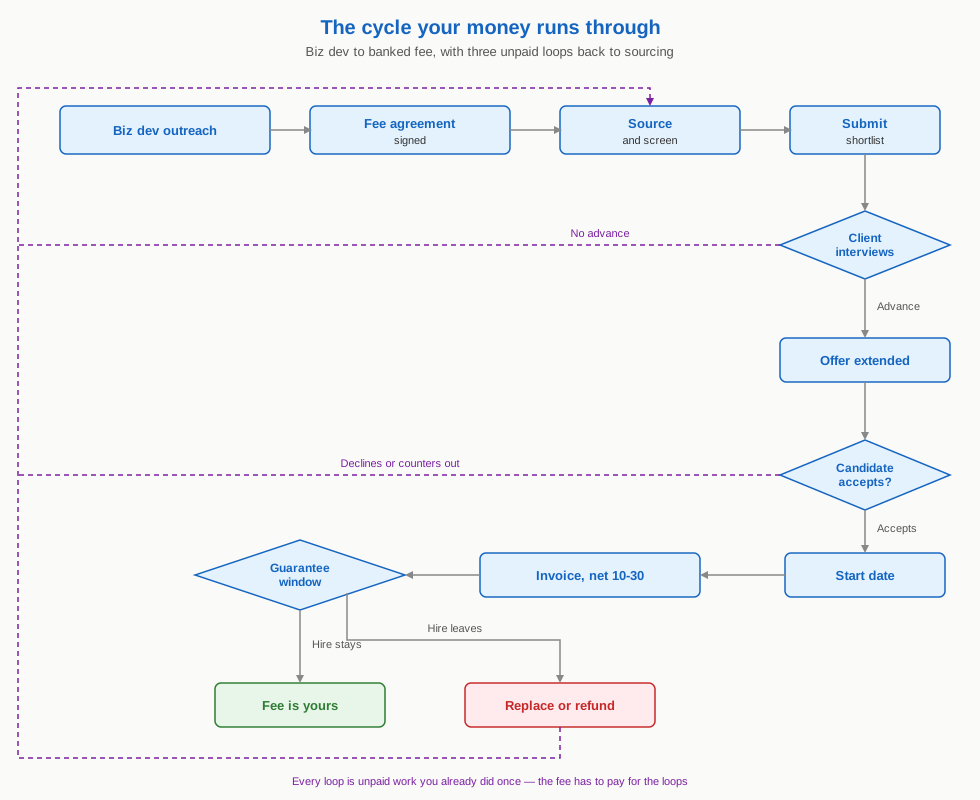
Count the loops back to sourcing. Every one of them is unpaid work you already did once. The fee has to pay for the loops.
Downloads for this lesson
Keep going — you're working through Start a Recruitment Agency.
All courses are free ↗