Quality Control From Your Kitchen Table
Lesson video in production
The full lesson text below is complete — the video version lands with launch.
Somebody you have never met is about to clean somebody else's home under your company's name. The customer will judge you for it. The only things standing between you and a one-star review are systems, and the good news is that systems work better than proximity: the on-site owner eyeballs jobs in person, while the remote operator inspects every job, every time, with a camera.
The loop
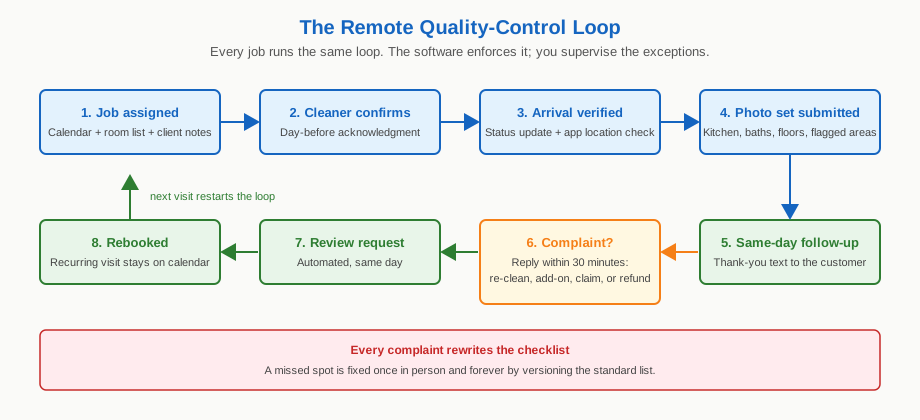
Every job runs the same loop, and the software enforces most of it. The job goes on the cleaner's calendar with the room list and client notes. The cleaner acknowledges it the day before. Arrival triggers a status update; most field-service apps verify location. Completion requires the photo set: kitchen, every bathroom, floors, and any area the client flagged, taken after finishing. The customer gets the same-day thank-you text with the review link. Complaints route to you for triage. That loop, run without exception, is how sixty jobs a week stay good without you touching a mop.
The checklist itself is the curriculum. Write it once, revise it after every complaint, and version it. When a customer says the fridge top was dirty, the fix is never "tell the cleaner to try harder"; the fix is fridge-top on the standard list, which changes every future job for every cleaner. Corpus operators run exactly this discipline, mandatory checklists with mandatory photos, and the photos serve a second purpose: when a guest or client claims a room was never cleaned, you have timestamped proof it was.
Complaint triage: the thirty-minute rule
A complaint is a clock. Respond inside thirty minutes, always with the same first line: "Thank you for telling me, I'm on it." Then decide with a simple rule. Product failure, a room not done, a streaky floor: offer the re-clean today or tomorrow; the guarantee you sold requires it. Expectation gap, the customer wanted something outside the standard scope: show the checklist kindly, offer the add-on at its price. Damaged item: insurance claim, apology, no arguing fault on the phone. Accusation of theft: stop. No accusations against your cleaner, no payment of hush money, no defensiveness. Ask the customer to check thoroughly, tell them you are pulling the job record, then actually pull the photos and timestamps, and loop in your insurer if it stands. The bond exists for exactly this conversation.
One corpus story is worth internalizing: an operator refunded a cleaning over a skipped bathroom, at a cost of maybe a hundred dollars, and that customer stayed roughly a decade, worth around twenty thousand dollars of bookings. The specific figures are course-lore, flagged as unverified in our claims log, but the economics are not exotic: a refund is the cheapest retention tool you own, and generosity on a small failure is a marketing expense with a suspiciously good return.
Entry, keys, and the trust perimeter
Decide your entry policy before your first job, write it on your website, and never freelance it. The clean options: smart lock or garage codes unique per client where possible, lockboxes, or the customer being home. If you ever hold physical keys, they get coded, stored locked, logged, and returned within two days of cancellation, and your policy should say the client shares responsibility for anything left under a mat. Never let a cleaner keep a client's key between jobs "for convenience." That convenience is how a break-in two streets over becomes your company's name in a police report.
Quality holds now. The last question of the remote model is you: how much of this machine can leave your hands without it slowing down?
Downloads for this lesson
Keep going — you're working through Run a Home-Service Business Remotely.
All courses are free ↗