How to Start a Car Restoration Business
Start restoring cars for money from a home garage: real shop rates, tool costs, licensing limits, milestone billing, and a ninety-day launch plan.
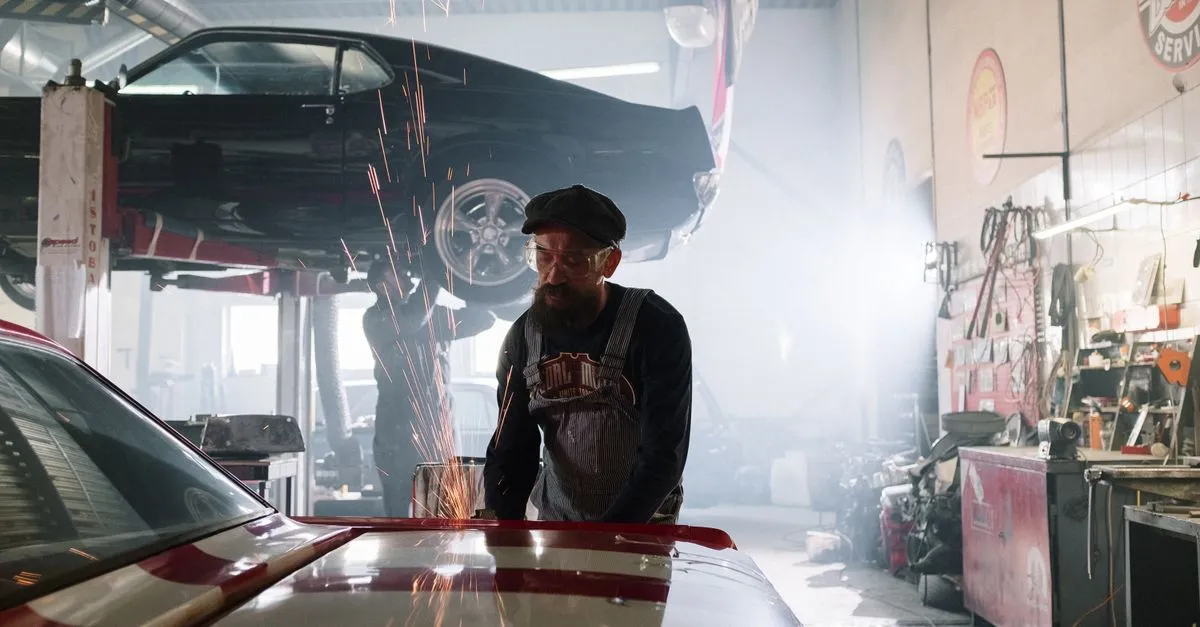
You start a car restoration business in your own garage with $3,000 to $4,000 in tools, one marque or era you know well, and a project funded by the client's deposit rather than your savings. You do the metal and mechanical work yourself, subcontract paint and machine work, and bill in milestones. First revenue is months away, and every number below comes from our car restoration course, where each figure was verified at a live source or flagged as operator consensus.
The money is real but slow. Established shops charge $85 to $300 an hour, averaging around $125, and full frame-off restorations run $40,000 to $120,000. Net margins sit at 10 to 15 percent, thinner than the 20 to 25 percent typical of general repair. Most restored cars sell for less than the work that went into them, so the businesses that survive sell judgment and labor, not speculation on resale.
What the work actually is
Restoration is a project-craft business. A client hands you the car they love, or you buy a tired one and bring it back yourself, and you get paid for scoping the work, pricing it so you survive it, and sequencing a thousand small tasks over months. Basic mechanical restorations run 500 to 1,000 hours. Driver-quality full restorations run 800 to 1,500 hours, frame-offs 2,000 to 3,000, and concours builds can pass 4,000.
That hour math is the first thing to internalize, because it explains the economics. A shop charging $125 an hour against 1,000 hours has to keep that project alive, funded, and moving for the better part of a year. The course walks this through in the honest money lesson, and it is worth reading before you buy a single wrench.
The garage and the tools
The working start is a two-car garage with one bay kept clear, one car in work, a workbench, parts shelving, and walking room on three sides of the vehicle. Concrete floor, reachable power, and ventilation you can improve with fans matter more than square footage.
Two machines anchor the tool list. A 140-amp, 120-volt MIG welder, the standard entry machine for sheet metal patch work, runs about $700 new, with name-brand MIG units starting lower. A 60-gallon compressor lands around $1,000 to $1,500 at the entry level. That pair alone runs $1,700 to $2,200, and a grinder, jack, stands, hand tools, and a workbench bring the total to roughly $3,000 to $4,000.
Everything else waits. Bead rollers, English wheels, media blasters, and paint booths belong to later stages of the trade, not year one. Buying them early converts cash you need for project materials into steel that sits idle. The full buy order, including what to refuse, is in the shop setup lesson.
Before the first project arrives, call your city or county office and ask whether vehicle repair is allowed as a home occupation, and check any HOA covenants. Some jurisdictions limit visible inoperable vehicles or prohibit storing customer cars in residential zones. A code complaint three weeks into a client build is an avoidable disaster, and avoidance costs one phone call.
The legal ground you stand on
Three rules bite new restorers, and all three are state or federal rather than optional.
First, dealer license ceilings. If you buy, improve, and resell cars rather than working on client cars, most states cap unlicensed sales at four to five vehicles per year. Texas and Washington allow 4 per year, South Carolina allows 5, and Georgia has no fixed number but can require a license based on intent to resell. Texas resale purchases can still owe 6.25 percent sales tax per vehicle.
Second, the federal 6H emission rule applies when you spray-apply coatings to more than two vehicles per year. It requires painter training, HVLP-class guns, 98 percent overspray filters, and five-year records. This is the reason the lean shop subcontracts paint instead of buying a booth.
Third, insurance. Small auto-service businesses average around $38 per month for garagekeepers coverage and around $54 per month for general liability. Buy both, sized to the car values you will hold, before a client car enters your garage. The details, including the hobby exemption that does not cover paid work, are in the licensing and rules lesson.
Finding a car worth restoring
Valuation tools like Hagerty's cover more than 40,000 collector vehicles across condition grades, and they are the starting point for any purchase decision. The discipline is the walk-around: rust in the usual places, numbers-matching questions, and a hard line between the cars you take and the cars you walk away from. Walk-away candidates are free.
Two operator consensus points from the course deserve repeating. Profitable restoration candidates cost real money even as rusted shells, and restore-and-resell yields thin to negative margins for honest sellers. The fork between client work and the buy-improve-sell path, with its tax and licensing consequences, gets a full lesson in the buy-improve-sell fork.
Pricing the job and getting paid
Restoration estimates carry a 10 to 20 percent contingency, because teardown always finds something the quote did not. Shops typically mark up supplied parts about 25 percent. Phase your estimates with a not-to-exceed range per phase and a checkpoint before each new phase: teardown and assessment, bodywork, paint, mechanical, final assembly.
Bill against phases, not the calendar. Calendar billing leaves the shop financing the customer's project from working capital. Deposit practice ranges from materials-only to half down among operators, with staged progress payments as the settled norm, and classic-car forums advise clients to pay for completed work rather than large sums up front. When restoration cost will exceed resale value, and with most cars it will, document that expectation in writing before work begins. The deposits and milestones lesson has the full billing architecture.
Subcontracting is the operating model for the first years. Paint goes to an existing booth, machine work to a machine shop, heavy upholstery to a trim shop, and every subcontracted line goes into the estimate as a pass-through the client funds. Engine rebuilds run $2,500 to $10,500, transmissions $1,500 to $3,500, paint $2,000 to $20,000, and interiors $5,000 to $15,000. Those are client-funded project costs, not your startup costs.
Finding the first customers
A new shop has exactly one marketable asset: a visible, documented body of work. So the camera runs from day one. Photograph everything, bag and tag the disassembly, and log every hour against the estimate.
Pick one lane the market can find, one marque or era, and join its club with an actual membership. Show up at cruise nights as a participant, car talk only, cards later. Ask two questions when work lands: the quotable sentence, meaning what the client would say about the work, and the name of one friend with an old car. The general shop that declined an old car becomes a referral source once they know you exist. The outreach playbook is in the first customers lesson. For the pattern across trades, our guide on landing your first ten customers applies trade by trade.
The first ninety days
Days 1 to 15 are setup: entity, separate bank account, insurance, core tools in the prescribed order, lane chosen. Days 16 to 30 choose one well-scoped project, your own car or a small client job, never a frame-off and never two flips at once. Days 31 to 60 execute phase one with the camera running and issue the first milestone invoice. Days 61 to 90 convert the documented project into the portfolio piece and book the next one.
Schedule the day-sixty honest review now, and keep it. Compare hours logged against hours estimated and money collected against money spent. If the work itself is grinding you down by day sixty, read that as data. The full calendar, with checkpoints and fail responses, is the ninety-day launch plan.
Common questions
Can you make money restoring cars?
Operators say real money exists for the mechanically inclined who do most of the work themselves. Shops bill $85 to $300 an hour, but net margins run 10 to 15 percent, and most restorations do not recoup their cost unless the car is genuinely rare. The business works as skilled labor plus judgment, not as passive appreciation.
Do I need a license to restore and sell cars?
For client work on their cars, no dealer license is involved. For buying and reselling, most states cap unlicensed sales at 4 to 5 vehicles per year, and Texas counts sales tax on each resale purchase. Check your own state before the first flip.
Can I paint cars in my home shop?
Spray-applying coatings to more than two vehicles per year triggers the federal 6H rule, which requires certified training, HVLP-class guns, high-efficiency filters, and records. Most lean shops subcontract paint and rent compliance instead of owning it.
How big should the first project be?
Small. One well-chosen driver-quality project, your own car or a modest client job, with phase-one funding in place before the car arrives. The cheapest exit in this business is the one taken at a phase gate rather than mid-phase.
Where to go from here
The garage route is the one experienced operators consistently recommend: start at home, build capital and experience, expand only if the numbers hold. Work the ninety-day plan, keep the utilization sheet honest, and let the first documented project sell the second. If you are still choosing a lane, the business fit quiz sorts niches by capital, hands-on time, and skills. The full course, with worksheets and a parts-tracking system, is free at Start a Car Restoration Business. The money side gets deeper treatment in our bookkeeping guide.