Deposits, milestones, and getting paid
Lesson video in production
The full lesson text below is complete — the video version lands with launch.
The deposit
A deposit is not a down payment on goodwill. It is the client funding the first real costs of their own project: materials on order and teardown labor. Paint and body forums show how wide the practice runs. In one owner thread, a shop-side painter asks 25 to 33 percent at signing for materials and initial labor, several owners call half down standard, one reports a shop wanting seventy percent, and the owners burned by stalled shops argue for a materials-only deposit or nothing at all. The arrangement that thread finally settles on is staged payments tied to progress, which is the same shape as a phase-scoped restoration: a deposit sized to phase one plus the first materials order, with each later phase billed at its own gate.
A deposit stays safe for both sides when it maps to costs you are about to incur, not to your rent, and when the refund conditions go in the written agreement before anyone signs. An undefined deposit is a dispute waiting for a calendar.
The milestone schedule
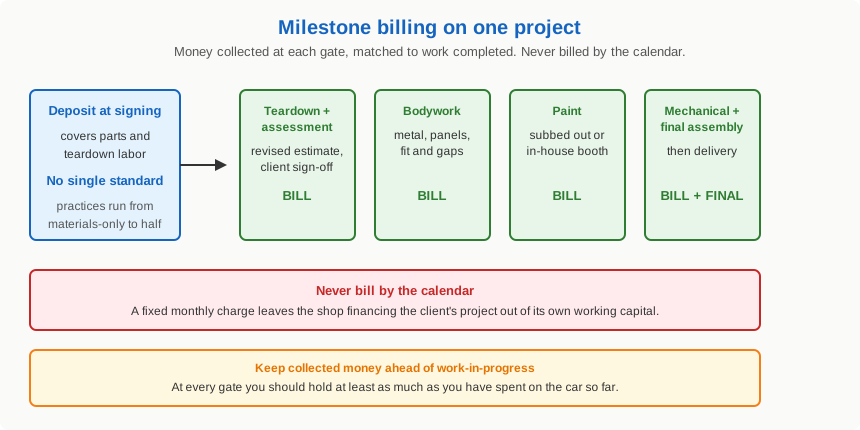
Restoration shops that survive bill against phases, not against the calendar: a gate at teardown and assessment, then bodywork complete, paint complete, mechanical complete, and final assembly. Each gate triggers an invoice for the work actually finished behind it. The fixed monthly alternative, a flat charge every month regardless of progress, is the pattern bookkeepers warn against, because it leaves the shop financing the customer's project out of its own working capital the moment anything stalls.
The working rule is simple: at every gate, the money you have collected should equal or exceed what you have spent on that car. Parts on your shelf bought with client money are fine. Parts on your shelf bought with your money, waiting for a milestone that slipped, are how a small shop quietly becomes an interest-free lender.
Change orders, in writing, every time
When the client asks for one more thing, and they will, the answer is yes with a signature. A change order states the added work, the added cost, and the schedule impact, and it is signed before the work happens. Verbal additions are the margin killer nobody reports, because they are individually small and collectively fatal. The same discipline protects the client: when teardown reveals the surprise you predicted with your contingency, the revised phase estimate is a change order too, not a conversation.
The trust objection
Classic car forums are full of advice to clients to hand over minimal money up front and pay for work completed, because the trade's history includes shops that took deposits and stalled for years. Your clients have read those threads.
You will not win by arguing with the advice. Win by structuring around it. Keep phase one small and its not-to-exceed modest, so the first leap of faith is a puddle. Document with photos from day one. Offer the walkthrough at each gate so progress is inspectable. Supply references from the first client onward. The shops that die on deposits are the ones asking for forty percent of a hundred-thousand-dollar number on a handshake. A five-hundred-dollar phase-one commitment with a written scope and weekly photos is an easy yes even for a client burned before.
Getting paid is a system, and so is feeding the car. The long tail of parts sourcing is where the course goes next.
Downloads for this lesson
Keep going — you're working through Start a Car Restoration Business.
All courses are free ↗