How to Start an Airbnb Cleaning Business
Turnover cleaning pays $75 to $250 per clean and repeats monthly under one host contract. Here is how to start for under $1,000, with honest money math from our verified course.
The short answer
An Airbnb cleaning business makes a short-term rental guest-ready in the gap between one guest checking out and the next one walking in. People in the trade call it turnover cleaning, and your customer is the host, not the guest. You can start for under $1,000 if you already own a car and a phone. Turnovers pay a flat $75 to $250 nationally, with most jobs near $150, and short-term rental cleans price 20 to 40 percent above comparable residential work because they are faster, judged harder, and tied to a host's reviews. One host under contract can mean four, eight, or more cleans a month, recurring, without you re-selling the job. First revenue usually lands within weeks.
That paragraph is the pitch. The rest of this guide is the honest version, distilled from our Airbnb cleaning course, where every number carries a source you can check.
What the work actually is
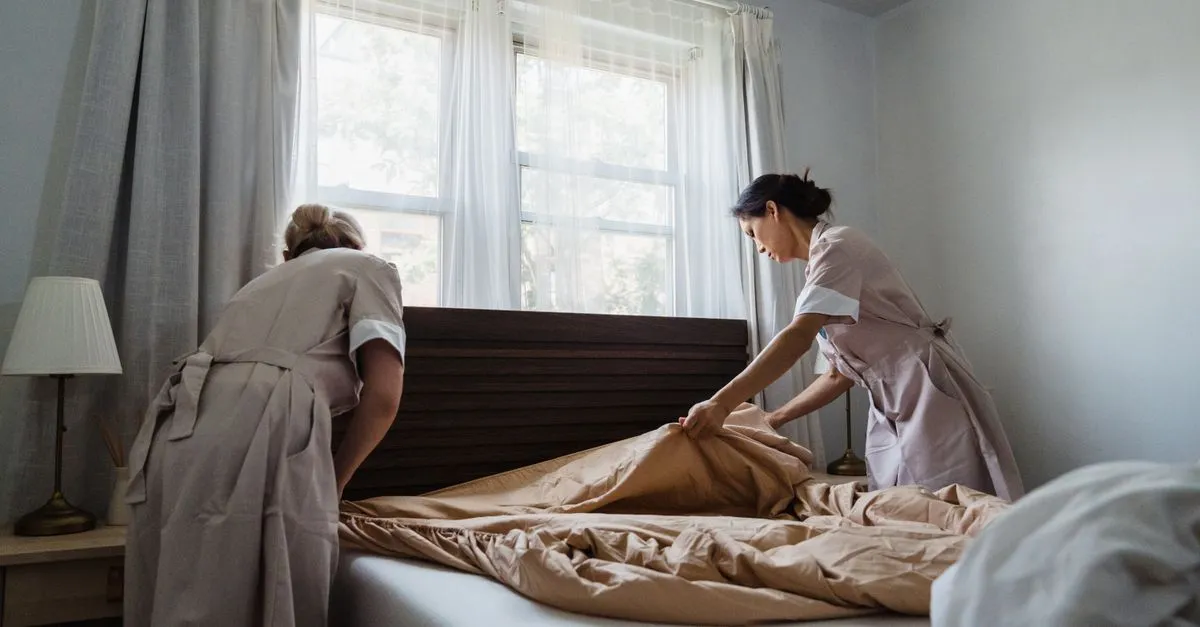
Checkout commonly lands at 10 or 11 in the morning. Check-in follows at 3 or 4, and where a host sets no times, Airbnb's defaults are 11 a.m. and 3 p.m. Your entire job fits inside that window: strip and remake beds the host's way, reset every room to the listing photos, stage the kitchen, restock to the list, handle linens, and photograph everything when you finish. The standard is not "clean." The standard is "indistinguishable from the photos, every single time," because the host's rating depends on it, and your contract does too.
Nearly nine in ten U.S. listings charge a guest cleaning fee, which averaged about $161 per stay in 2025, among the highest in the world. Your fee lives under that guest fee, and that matters more than it sounds. Platforms now display total prices up front, and fee fatigue pushes some hosts to lower the fee and negotiate your rate down with it. The hosts who pay best are buying relief from worry, not the cheapest scrub. Be visibly worth it and the squeeze softens.
One boundary worth setting early: this is not residential house cleaning. Weekly home routes are a different business with different economics. It is also not becoming a host or a property manager yourself, though small maintenance add-ons belong on your menu eventually.
What it costs to start
Under a thousand dollars, honestly, assuming a working car and a phone. The kit is a starter supply load (disinfectant, glass cleaner, degreaser, color-coded microfiber, trash bags), a vacuum you trust, a caddy, a flat mop, and a phone setup for door codes, mileage tracking, and photo proof. Consumables run $10 to $30 per turnover when you supply them yourself, and a first bulk buy of concentrate lasts many cleans.
Two costs are not optional. The first is the marketplace background check. Turno, the largest cleaning marketplace, requires U.S. cleaners to purchase one and renew it yearly. Turno does not publish the price, and cleaners currently report paying about $90, so verify the exact cost at signup; listing your cleaner profile itself is free. The second is liability insurance, which runs a median of about $48 a month for cleaning businesses. Hosts with units worth hundreds of thousands of dollars will ask for proof, and should.
We itemize every line, in three budget tiers, in our Airbnb cleaning cost guide.
The money, honestly
National pricing data puts the average turnover at $75 to $250 depending on unit size, and the size bands look like this:
| Unit size | Typical per-turnover rate | |---|---| | Studio or 1 bedroom | $50 to $100 | | 2 bedrooms | $100 to $150 | | 3 bedrooms | $135 to $200 | | 4 bedrooms | $175 to $275 | | 5 or more bedrooms | $250 to $400 and up |
Metro and resort markets price 20 to 50 percent above rural ones. Operators on host forums describe large-home quotes from $450 to $550 in high-cost markets, and one operator the course teaches from focused entirely on big homes, quoting around $350 for a nine-bedroom, four-bath turnover. Experienced turnover cleaners land between $25 and $65 an hour, and the top of that range belongs to fast, detail-perfect operators on large units.
Run one mid-range job through the arithmetic. A three-bedroom at $160, supplies at about $15, about $8 of platform fee if the job came from a marketplace (Turno takes 5 percent of marketplace-won jobs and nothing on clients you bring), and $12 set aside for insurance and car costs. You keep about $125. Five turns like that in a week starts to look like a wage you chose. Zero turns looks like a projection. No income promises here: every figure is a published average or a labeled worked example, and your market, your unit mix, and your speed set the real number.
The part that changes the business is frequency. A unit turning over every two to three nights generates 8 to 12 cleans a month, and the host needs every one of them. Two hosts like that and your calendar is fuller than most solo residential cleaners see in a quarter. Add-ons pad it: same-day rush premiums of $20 to $50, pet turnovers at $15 to $40 more, an extra full bathroom at $20 to $40, and deep cleans at $200 to $500 and up every three to six months.
There is a second way to run this business: win the host, subcontract the clean, keep the spread. One operator who built that model teaches the bidding arithmetic plainly. A cleaner charges $100 for a one-bed turnover, you bid the host $125, and you keep $25 per clean forever, for scheduling, quality control, and being the host's single point of contact. It scales, and it is how the biggest operators in the niche grow. It also leaves $25 as your entire margin for absorbing no-shows and re-cleans, and your best cleaners can eventually approach the host directly. Know the agency lane exists. Earn the solo lane first.
Your first month, week by week
Week one, exist. Register at the lightest legal level (sole proprietor and a separate bank account are fine to start), bind the liability policy, order the background check the same day because approval has lead time, and buy only the kit. Write a one-page price card, base rates through five bedrooms plus add-ons, and build your marketplace profile: service area, unit types, your photo-proof promise. No logo needed.
Week two, bid and walk. Read twenty marketplace listings in your area and learn your market's level with your own eyes. Start bidding, expect to lose most of them, and join the local host Facebook groups, answering posts helpfully without pitching. When a host bites, walk the unit before you name a number, narrating your standard as you go: beds reset their way, photos after every turn, damage flagged the same day. The host is asking themselves one question, which is whether they can stop thinking about cleaning. Answer it and the price discussion is short.
Week three, clean and prove. Run every turnover with the same order of operations, the same photo angles, the same completion message. Slow is fine. Inconsistent is not. Ask every completed host for a review the same day, because reviews compound into win rate and week three is when yours starts.
Week four, convert. Send one-page recurring terms (rate, add-ons, cancellation notice, access method, photo standard) to every host whose unit you cleaned well, and ask each satisfied host the one referral question: who else here needs a cleaner they can trust? A referral from a host is the strongest sales asset this business has. Then make the season decision on purpose, which we will get to.
The universal channel math behind all of this, what to post where and when to switch channels, is our first ten customers course, and the rate-setting mechanics every service business shares live in pricing and rates.
The hardest part
Two answers, one structural and one regulatory.
The structural one is the calendar's power over you. Hosts who set minimum stays of two or three nights cut their turnover frequency by 30 to 50 percent, and in a dead season your calendar can hollow out while your insurance bill does not. You survive on year-round hosts, off-season deep cleans, and a cash skim from peak months, which is why the course teaches a separate account with a skim configured from the first good month. The weekly habit for running that account is in money and bookkeeping.
The regulatory one is stranger: your hosts' regulator can end your business without ever regulating you. New York City's Local Law 18 effectively banned under-30-day entire-home rentals, and short-term rental listings fell from roughly 22,000 to around 3,000. The cleaners who served those hosts went down with them. Los Angeles caps rentals at 120 nights a year unless permitted, San Francisco and Washington at 90, and Houston requires hosts to register with the city. Before you build a book anywhere, read the local short-term rental rules, and never let one host or one property manager hold more than half your calendar.
The daily hardest part is coverage. Operators in this trade staff at least two cleaners per property so a single call-off never costs a contract, which means your first hire decision arrives earlier than you think.
Where this goes
One relationship can compound fast. One operator's first marketplace client turned out to be a property manager with about 30 properties paying roughly $150 per cleaning and eight cleanings to start, and that grew into covering more units in a second city. That is the upside case, common enough in this industry to plan for and too rare to count on. The ladder from solo cleaner to middleman to linen programs and restock services is real, and the course walks every rung of it, including the failure modes.
Start this week
The full Airbnb cleaning course is free, forever: the walkthrough and pitch scripts, the price card templates, the money worksheet, and the 30-day launch plan with a checkpoint at the end of every week. If you are not sure this is the right lane for your capital, schedule, and back, take the quiz and see what it suggests instead. Either way, week one costs you an afternoon and about two hundred dollars, and the first host who hands you their door code changes the math for good.