Route density: geography beats hustle
Lesson video in production
The full lesson text below is complete — the video version lands with launch.
Every cleaning business course tells you to work hard. This one tells you something more useful: where to work. The single decision that most separates thriving solo operators from exhausted ones is not effort, talent, or even price. It is the size of the map they said yes to.
Drive time is unpaid labor
When you quote $175 for a clean two hours long, you are also selling the drive there, the drive home, and the dead time between jobs. Nobody invoices for those minutes. They simply lower your real hourly rate, invisibly, every single day.
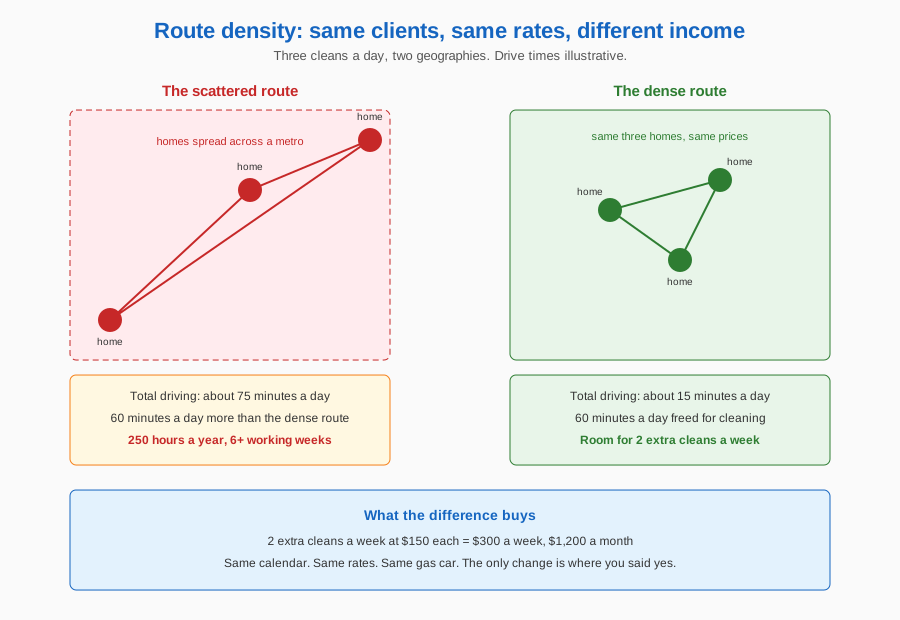
Three cleans a day at a scattered, metro-wide scale can carry seventy-five minutes of driving. The same three homes clustered in adjacent neighborhoods carry fifteen. The difference is an hour a day, five hours a week, which is two more standard cleans you could have sold: roughly $300 a week at survey rates. Over a year, the scattered operator donates 250 hours to the windshield, more than six working weeks. No amount of hustle buys that back.
Choose a territory before you choose a logo
Pick a service area now, on purpose: a contiguous cluster of three to five zip codes, ideally inside a fifteen-minute drive of your home base. The best territories share three traits. Homes dense enough that a biweekly route can fill, incomes high enough that $150 to $200 cleans are routine rather than luxuries, and a shape you can drive in a loop rather than a line.
Then enforce it. Every booking request from outside the territory gets one of two answers: a polite decline with a referral to whoever works that area, or a premium that makes the drive worth it. The first year is when discipline matters most, because every far-away yes feels like revenue and behaves like a tax. Operators consistently report the same regret among new owners: the calendar full of clients an hour apart, each one personally lovely, the week collectively untenable.
Grow density, not distance
The route-building sequence that works, drawn from how established operators actually expand:
- Seed anywhere in territory. Early on, take what the territory gives. Twelve clients scattered inside five zip codes is fine and normal.
- Cluster by day. As recurring clients sign, schedule them by geography: Mondays in the northern neighborhoods, Tuesdays in the east. New one-offs get booked onto the day their street belongs to. This is the habit that quietly compounds.
- Market to the seams. When a client's neighbor books, that visit costs you four minutes of driving instead of forty. Door hangers, neighbor referral credits, and "we clean on your street Thursdays" posts in local groups are all density weapons dressed as marketing.
- Prune the outliers. Once the route is full, the three clients at the far edge cost more than they pay. Raise their rate at renewal, or release them with grace. Pruning feels like losing; it is how a route becomes a business.
The density flywheel
Density does something subtle to every other number in this course. Shorter drives mean more cleans per day, which means more Google reviews per month, which means cheaper client acquisition, which lets you hold your prices and choose neighbors over strangers. The scattered operator runs the same flywheel in reverse: every mile spreads the next client further out.
This is also why keeping clients matters as much as finding them. A route you keep is a route that densifies. A route you replace is a route that scatters. The whole lesson transfers to the catalog's lawn care and landscaping course: same homeowners, same density math, different trade.
When density is not available
Rural operators live this reality: the territory is a county, not a cluster. The adaptations are known. Price the drive into the rate or a trip fee, book full days in each town instead of mixing, and lean on every-two-weeks and monthly cycles so each far client is worth a longer visit. Density is a lever, not a law. In thin markets, the lever is day-clustering.
With the map drawn, the money modeled, and the price list built, you are two mechanics away from opening: the legal setup and the insurance that lets a stranger trust you with a key. Both are thinner and cheaper than the fear suggests.
Downloads for this lesson
Keep going — you're working through Start a Cleaning Business.
All courses are free ↗