The Rules You'll Actually Use
Lesson video in production
The full lesson text below is complete — the video version lands with launch.
The limits on every single flight
Part 107's operating rules live in the regulation itself, 14 CFR 107.51 among them, and you will feel a handful of them on every job. Maximum altitude is 400 feet above ground level. Maximum speed is 100 miles per hour, which no camera drone in normal work approaches. Visibility must be at least three statute miles from the control station, and you must stay at least 500 feet below clouds and 2,000 feet horizontally from them. You must keep the aircraft within visual line of sight, unaided, your own eyes on the airframe, not the screen. And you always yield to manned aircraft; a helicopter on approach beats your real estate shoot every time.
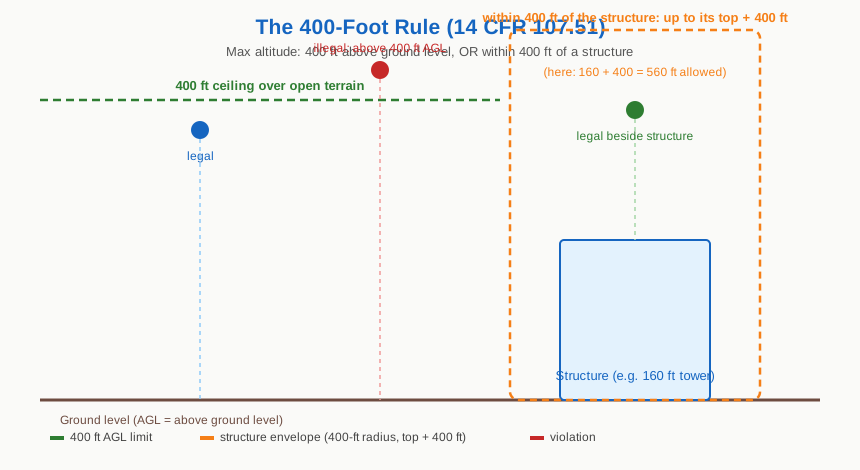
The altitude rule has one twist worth a diagram: within a 400-foot radius of a structure, you may fly up to 400 feet above the structure's highest point. That exception exists for tower and building inspection work, and it is why a pilot can legally hover well above 400 feet beside a cell tower while the same altitude over open ground is a violation.
What changed in 2021: night flights and people
Two rule changes from April 2021 reshape commercial work, and older training material still teaches the expired version of both.
Night operations are now legal without a waiver, provided you have completed the current initial knowledge test or the updated recurrent training, and your aircraft carries an anti-collision light visible for three statute miles. Night real estate and event work is real and billable. What remains prohibited without paperwork is flying over people: operations over people are sorted into Categories 1 through 4 based on the injury risk the aircraft presents, with requirements attached to each category, and standard practice for new pilots is simply to plan flights that never pass over non-participants. Circumnavigate, don't gamble.
Registration and Remote ID
Every aircraft you fly under Part 107 must be registered, at $5 per aircraft for three years, with the registration number marked on the airframe. One trap catches new pilots constantly: the 250-gram exemption you have read about is recreational only. A sub-250-gram DJI Mini flown for money must still be registered, because commercial operations fall under Part 107 regardless of weight. The fee is trivial. The violation is not.
Remote ID is the second requirement: your aircraft must broadcast its identification and location, either built in or via an attached broadcast module. Enforcement became strict in March 2024, and the FAA Reauthorization Act of 2024 raised the price of ignoring the rules: civil penalties for drone violations now run up to $75,000 per violation. Current-generation camera drones broadcast Remote ID natively. If you buy used or old stock, verify compliance before you buy, not after.
Controlled airspace and LAANC
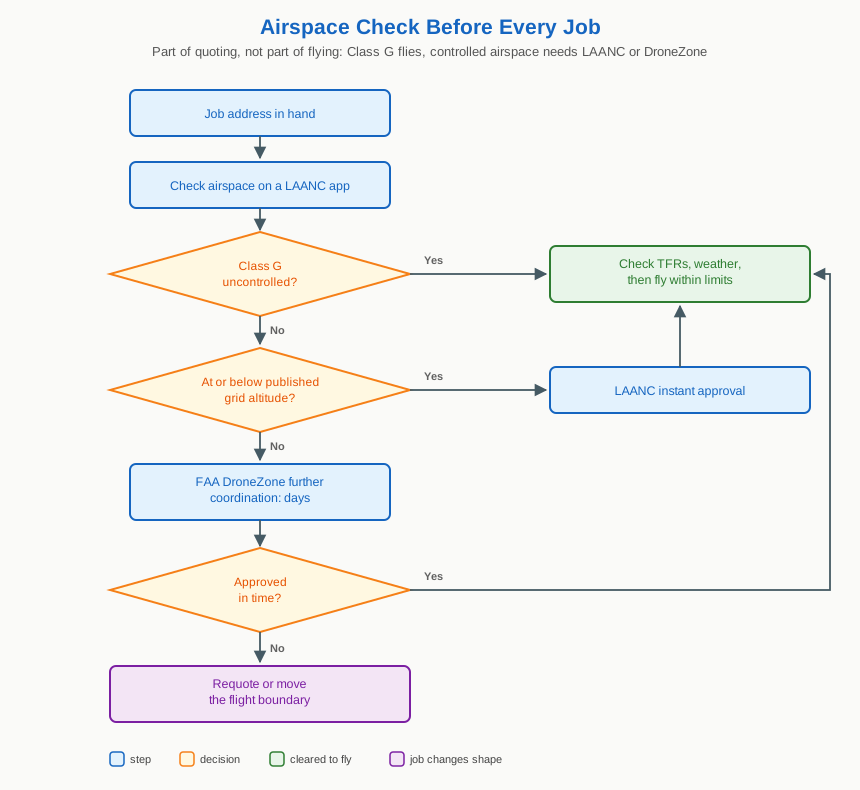
Airspace splits into two worlds for your purposes. Class G, uncontrolled, covers most rural and suburban America: no authorization needed, fly within the limits above. Controlled airspace, the shelves around airports, requires authorization before every flight. The tool is LAANC, the Low Altitude Authorization and Notification Capability, which approves requests in seconds through free apps like Aloft or AutoPylot for altitudes at or below the published grid value for that location. Look up a job address, check the grid on the FAA's UAS Facility Maps, request the altitude you actually need, and fly inside what was approved. Requests above the grid value go through FAA DroneZone as further coordination and take days, not seconds, so route and schedule around them.
Treat this check as part of quoting, not part of flying. A job inside a Class B surface area near a major airport may be capped at zero feet, meaning unflyable, and you want to know that before you promise a delivery date. One more habit: check for temporary flight restrictions, which appear around sporting events, wildfires, and VIP movements, on every job morning. They change weekly and they override everything.
These rules are the cage you work inside, and they are also a selling point: clients hire certificated pilots precisely because this compliance work is invisible to them.
Keep going — you're working through Start a Drone Services Business.
All courses are free ↗