The presale spine
Lesson video in production
The full lesson text below is complete — the video version lands with launch.
Somewhere in your town right now, a person is three months into recording a course nobody has offered to buy. They are choosing a microphone for week six. This lesson exists to make that person not be you. The presale inverts the whole sequence: describe the transformation, offer it at a founding price before it exists, and let real payments decide whether production begins. Money changing hands is the only validation that cannot be faked, and one operator in this market calls it the purest form there is, because compliments cost the giver nothing and dollars cost them dollars.
The founding-member offer
A presale is not a trick and it is not a fake storefront. It is an offer with its honesty on the label: the course is being built, founding members get it cheaper, and in exchange you get their money now and their feedback as you build. The standard shape is a discount from the future regular price, extra access to you while the group is small, and a published delivery schedule. The running example in this course: a course that will sell for two hundred forty-nine dollars, presold at one hundred forty-nine. Operators in this market commonly structure founding prices at a meaningful gap, with patterns like two ninety-seven presale against four ninety-seven later, precisely because the gap has to be large enough to reward the risk the buyer is taking on an unbuilt product.
What you must publish on the presale page, in plain type: what is included, what exists today (usually the outline and your credibility), when each module arrives, the founding price and the future price, and your refund promise. Nothing about a presale requires pretending the course is finished. The opposite. The founders know it is being built for them, which is exactly why they get the price and the access.
The gates
Run the presale for seven to ten days. Count founding members. Then apply gates. The numbers below are one operator's published rule of thumb, not physics, but they are a sensible starting bar:
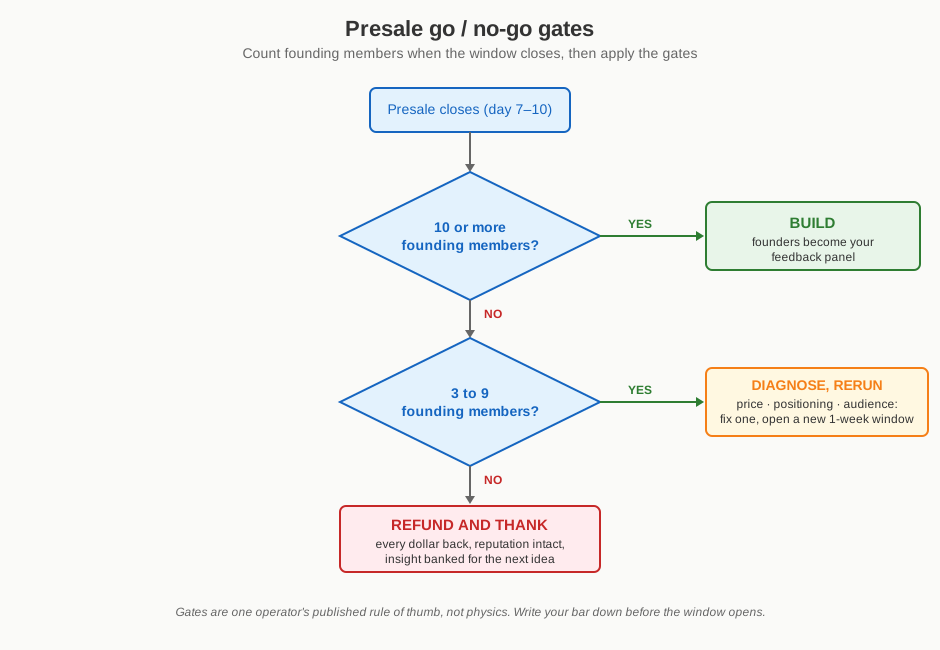
Ten or more founding members means build. You have proof, you have seed money, and you have a feedback panel that will make every module better than what you would have written alone. Between roughly three and nine, do not build yet and do not despair. Diagnose in order: price (was the gap not worth it), positioning (did the wrong buyer hear it), and audience (did too few people hear it at all). A small fix and a second presale window costs a week. Zero to two means the market spoke. Refund every dollar with a short, warm note, and count the whole exercise as the cheapest market research you will ever buy.
Presale readiness
Build with the lights on
Once the gate passes, the founding group becomes your production partner. Email them one question before you build: what is the number one thing you need help with? Tally the answers, and build module one around the tallest bar. This is the quiet superpower of the presale. You stop guessing what the course needs, because twenty paying humans just told you. Send module one to the founders the moment it is finished, then keep a steady drip: a module every week or two, on the published schedule, with a short note asking what confused them. Operators consistently warn against making paid students wait more than two to three weeks for their first real access, because excitement at purchase is a decaying asset, and decayed excitement becomes refund requests and unfinished courses.
Two mechanical notes. First, the presale needs almost no infrastructure: one sales page and one working checkout. A simple checkout link from a payment platform is enough for founding sales, and where the course should live once it exists gets its own arithmetic later in this course. Second, drip the content on purpose. Releasing modules on a schedule while you finish them is not a limitation. It is the standard founding-member experience, and it keeps you one honest week ahead of the promise instead of six fraudulent months behind it.
Why this spine holds the course up
Look at what the presale just bought you. Proof the transformation sells, at a price, to named humans. Seed revenue that pays for the microphone before the microphone exists. A feedback panel for every module. Testimonials ready before the public launch, because founders who got the result will say so in writing. And a kill switch that protects your season from the graveyard of courses built for audiences that never arrived. Every remaining lesson either feeds this spine or extends it.
The presale needs people to show up, though, and you do not have an audience yet. The good news: your first students can be found by hand, one conversation at a time, without a single follower to your name.
Downloads for this lesson
Keep going — you're working through Build and Sell an Online Course.
All courses are free ↗