Platform arithmetic
Lesson video in production
The full lesson text below is complete — the video version lands with launch.
There are two shelves you can put a course on. The first is a marketplace, Udemy being the biggest, where the platform owns the customer, sets the prices, and pays you a share. The second is your own storefront, a platform like Teachable, Thinkific, Podia, or Kajabi, or a simple checkout like Gumroad, where you own the customer relationship and pay rent in fees. The arithmetic between the two shelves decides your margin, and this lesson does that arithmetic with real, current numbers, because this is where beginners lose the most money without ever noticing.
The marketplace shelf
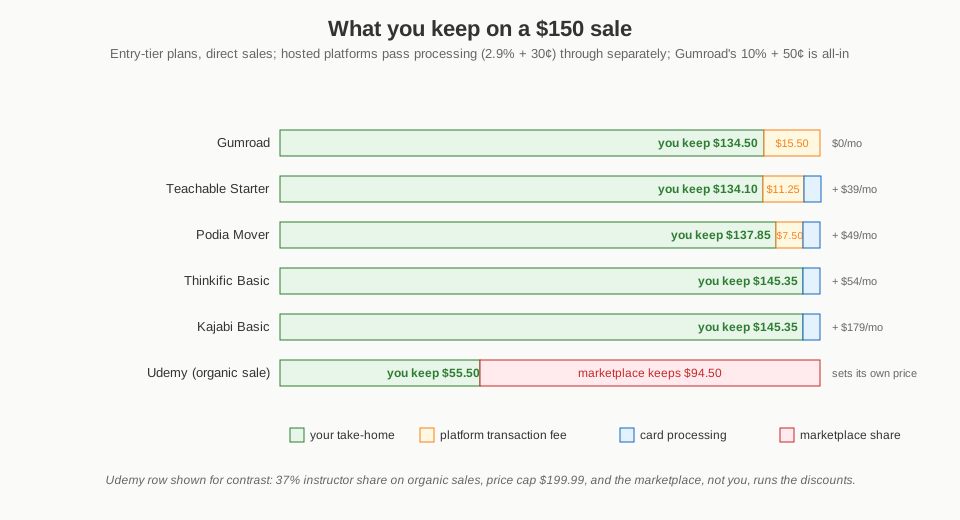
Udemy's published terms split course-sale revenue exactly two ways (Udemy's instructor revenue share): sales through your own coupon or referral links pay you ninety-seven percent, and every other sale pays you thirty-seven percent. That second bucket includes sales driven by Udemy's own advertising, which surprises instructors who assume the platform pays less when it does the marketing. There is no separate ad rate, and the thirty-seven percent marketplace share has held steady through every other terms change of recent years. The catches are structural, not hidden. Udemy caps list prices at one hundred ninety-nine dollars and ninety-nine cents (Udemy's price tiers), and the marketplace runs on discounting, with courses commonly selling in the twelve-to-twenty-dollar range during promotions (Ruzuku's 2026 marketplace data). You also do not get the buyer's email address, so the customer belongs to Udemy, forever. Subscription-plan payouts, a growing share of marketplace revenue, have been cut repeatedly, with the instructor share of that pool stepping down to fifteen percent as of January 2026 (Udemy subscription terms update).
On a one-hundred-fifty-dollar organic marketplace sale you keep about fifty-five dollars and fifty cents. Except there are effectively no one-hundred-fifty-dollar marketplace sales at the volume level, because the shelf runs on promotions that commonly price courses between twelve and twenty dollars. A marketplace can work as a top-of-funnel, where a cheap course feeds buyers toward your real products. As the primary business for a specialist charging real prices, the arithmetic fights you, and one creator's widely shared horror story, waking up to thousands of "sales" after a platform made their course free overnight, is the genre's cautionary tale about who really controls that shelf.
Your own storefront
The own-storefront shelf has two costs: a monthly fee, sometimes zero, and either a per-sale transaction fee or payment processing. Processing is roughly constant everywhere, about two point nine percent plus thirty cents per online card charge (Stripe pricing). The platform fee is where they differ. Current entry-plan pricing, verified at the platforms and industry comparisons:
| Platform | Entry monthly fee | Transaction fee | What you keep on a $150 sale | |---|---|---|---| | Gumroad (checkout only) | $0 | 10% + 50¢ per direct sale, all-in | $134.50 | | Teachable Starter | $39 | 7.5% | $134.10 | | Podia Mover | $49 | 5% | $137.85 | | Thinkific Basic | $54 | 0% | $145.35 | | Kajabi Basic | $179 | 0% | $145.35 |
Sources: each platform's own page where it publishes one (Gumroad, Kajabi, Thinkific, whose Basic plan runs fifty-four dollars a month billed monthly or forty billed annually), plus current-entry-tier comparisons at Podia and Ruzuku for Teachable and Podia. The four hosted platforms pass card processing through as its own line, so each of their figures above also eats the roughly four dollars sixty-five of processing, and their monthly fees sit on top of the per-sale math. Gumroad is the exception, and it matters: its ten percent plus fifty cents is all-in, processing included, a pricing page promise of no hidden fees, which is why the Gumroad row has nothing extra to subtract. Marketplace listings through Gumroad's Discover feed cost a flat thirty percent instead.
The decision rule
The rule that falls out of the table: your sales volume decides the shelf. Selling two courses a month on a fifty-dollar-a-month platform is a charitable donation to a software company. The same two sales through a zero-monthly checkout costs you thirty-one dollars in fees, total, at ten percent plus fifty cents per sale. The crossover point is low: at roughly ten to fifteen sales a month, the zero-transaction-fee platforms start beating the percentage checkout, and you should graduate then, not before. Concretely, for this course's sequence: run the presale on a simple zero-monthly checkout, because founding sales are few and the fee gap costs you little, and move to a full course platform when the public launch is real. Operators commonly run exactly this pattern, preselling on lightweight tools and graduating to a hosted platform for delivery.
The other rule is about control, and it costs nothing: the buyer's email address must end up in a list you can export, whatever shelf you choose. Platforms get acquired, change terms, ban accounts, and the subscription-payout cuts above are what term changes look like in practice. Your email list is the only asset in this business that no platform can reprice. That rule comes back with teeth later in the course.
With the shelf chosen, the price tag is next. Fees shrink margins, but price creates them.
Downloads for this lesson
Keep going — you're working through Build and Sell an Online Course.
All courses are free ↗