The Climb, Not the Leap
Lesson video in production
The full lesson text below is complete — the video version lands with launch.
A packaged food brand is a manufacturing business wearing an apron. You convert a recipe into a specification, the specification into identical units, and the units into cash through four very different customers: the person at your market table, the shopper on a website, the independent store owner, and eventually a grocery buyer who has never tasted your product and never will until the numbers say it matters. Almost everything that goes wrong in this industry goes wrong because someone treated it like a cooking passion project instead of a supply chain with a day job.
The core mental shift is this: your product has to sell itself when you are not in the room. At a farmers market you are the packaging. You answer objections, you hand samples, you close. On a shelf, the jar is alone. Operators with thousands of store placements describe packaging as the single thing that decides whether a stranger picks the product up, and they mean the whole message: what it is, who it is for, why it is different, readable in about two seconds from a moving cart. You will keep hearing this for the rest of this course, because the entire economics of retail only work when the unit moves without a salesperson attached.
Second shift: this is an inventory business, not a service business. A house cleaner sells hours and gets paid the same week. You buy ingredients and packaging now, pay to produce now, and get paid weeks or months later, minus retailer margins, distributor cuts, promotional discounts, and chargebacks for product that did not sell. The money lesson is not "food has thin margins." It is that a product business ties up cash in boxes that can expire. Plan the climb around that fact or it will decide your schedule for you.
The climb itself has a shape, and it is close to universal:
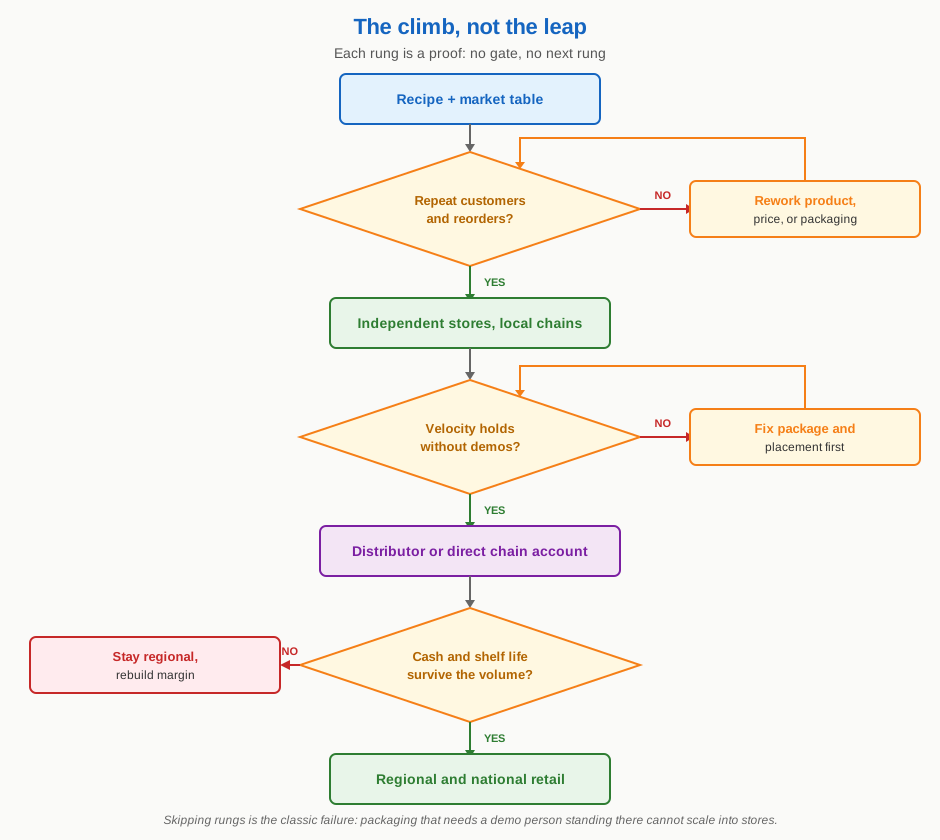
Each rung is a proof. The market proves strangers will pay your price. Independent stores prove the product moves when you are absent. A distributor proves a warehouse and a delivery chain can carry you. A chain account proves a professional buyer believes your velocity numbers. Skipping rungs is the classic failure: brands that landed two hundred stores off a good market run, then discovered their packaging did not sell without a demo person standing there, and burned their cash trying to substitute labor for design. That story returns later in this course, in full.
Two boundaries before we go further, because they decide whether this is even your course. If what you want is to bake and sell from your home kitchen under cottage food law, that is a different business model with different laws, and the home cottage-food baking course covers it properly; home cottage production cannot legally cross state lines or into most retail distribution, and this course's climb starts where that one's ceiling sits. If what you want is made-to-order food, cooking for events or running a truck, that is food service, with service economics, and it is not covered here.
What is covered here: product development for shelf stability, the legal and labeling regime, unit economics, production options from shared kitchens to co-packers, market and store selling, the online channel, and the retail-readiness climb. The promise of the course is that you can start the business with it. The promise of this lesson is narrower: by the end you can tell a recipe from a product. That distinction is the first rung of the climb.
Keep going — you're working through Start a Packaged Food Brand.
All courses are free ↗