Trademark discipline
Lesson video in production
The full lesson text below is complete — the video version lands with launch.
The habit that separates professionals
Here is the routine. You think of a phrase for a shirt. Before you ever open the design tool, you open the trademark database. Ten seconds to a minute per phrase. Every phrase, every time, no exceptions for phrases that feel obviously safe, because the obviously safe ones are exactly where surprise registrations live.
The tool is the USPTO's trademark search at tmsearch.uspto.gov. It is free. The old system, TESS, was retired in November 2023 and this newer search replaced it, so older tutorials pointing elsewhere are out of date. A free USPTO.gov account unlocks saved searches and fuller results.
Reading a search result
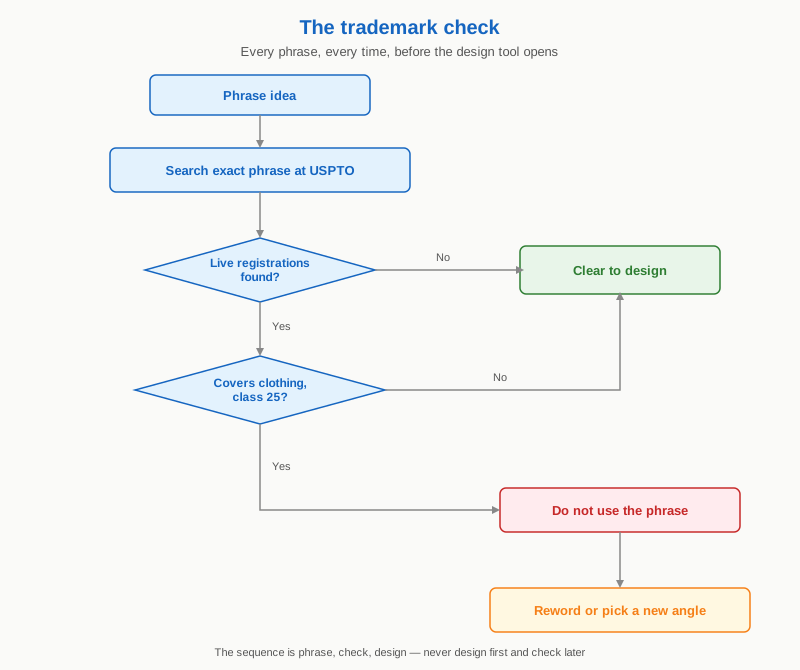
Search the exact phrase in quotes. You will get a list of records. For each live record, open it and find two fields: the status, and the goods and services description. Control-F the detail page for "shirt" and "clothing." If no live registration covers apparel for your phrase, you are clear on the federal register. If a live registration lists shirts, apparel, or class 25 goods, the phrase is off limits. No lawyers needed for this reading, just attention.
The flow, once practiced, looks like this:
Two limits on the check. A USPTO search does not catch unregistered common-law marks, and it covers the United States. Other countries run their own registries. For a hobby shop the USPTO check plus basic caution is the practical standard. If a design ever starts selling seriously in other markets, check the major ones too.
The red zones
Some categories are not worth the risk even when a search comes back clean.
Celebrity names and likenesses. Athletes, actors, musicians, streamers. A shirt referencing a famous person trades on their name, and platforms remove these on complaint. One operator reviewing a banned shop put it bluntly: the seller had tagged listings with an NBA star's name, the team name, and the city, then wondered why the account died. The tags were the confession.
Brands, teams, movies, games, franchises. Pokemon, Disney, Star Wars, your local NFL team. All owned. All enforced.
Phrases from current pop culture. Catchlines from shows, memes built on someone's IP, song lyrics. Lyrics are copyrighted separately from trademark, and both apply.
Borderline political and topical phrases. These can carry registrations, and marketplaces enforce content policies on top of trademark. Enforcement on Amazon's Merch on Demand is algorithmic, meaning code reviews your submission, not a person. The appeal process after a takedown is slow and usually unsuccessful.
What violation costs
Amazon publishes no fixed strike count. In practice, an intellectual property complaint from a rights holder can terminate a Merch account immediately, with royalties withheld. Content policy rejections, the milder kind where a design simply never goes live, also accumulate against account health. Etsy and Redbubble follow similar patterns: repeated takedowns end accounts. The catalog you spent a year building disappears with it.
That is why this lesson sits before the design lesson, not after. The sequence is phrase, check, design, upload. Never design first and check later, because sunk effort pressures you into bad decisions.
One more discipline point: your tags and titles count as use. Tagging a shirt with a trademarked term to farm its search traffic is infringement with extra steps, and it is how the platform finds you.
Clear phrases in hand, you get to make things, and the making does not require you to draw.
Downloads for this lesson
Keep going — you're working through Start a Print-on-Demand Business.
All courses are free ↗