Onboarding and the first thirty days
Lesson video in production
The full lesson text below is complete — the video version lands with launch.
The first month decides the relationship. Recall from the honest money that peak firing risk sits in the first ninety days, and the driver is unmet expectations. Onboarding is where expectations get met early, on purpose, in writing. A smooth start also protects you operationally: access collected once, baselines recorded once, questions answered once.
Get paid, get access
Two rules before any work flows. First, the pilot invoice goes out the day the client says yes, and work starts when it's paid. Not because you distrust them, but because the pattern of pay-first-then-deliver, established at the start, is the pattern that survives month fourteen. Second, access happens through proper roles, never shared passwords. For Meta platforms, that means Business Manager: the client grants your business profile a partner or admin role on their page and Instagram account. It takes ten minutes, it preserves the client's ownership of their own assets, and it means your exit, someday, is a permission revocation instead of a password scramble.
Week one: onboarding checklist
The voice questionnaire looks minor and is not. Three questions about tone, banned words, and admired competitors save you the revision cycle that burns new account managers most: content the client "just doesn't like" with no vocabulary to say why.
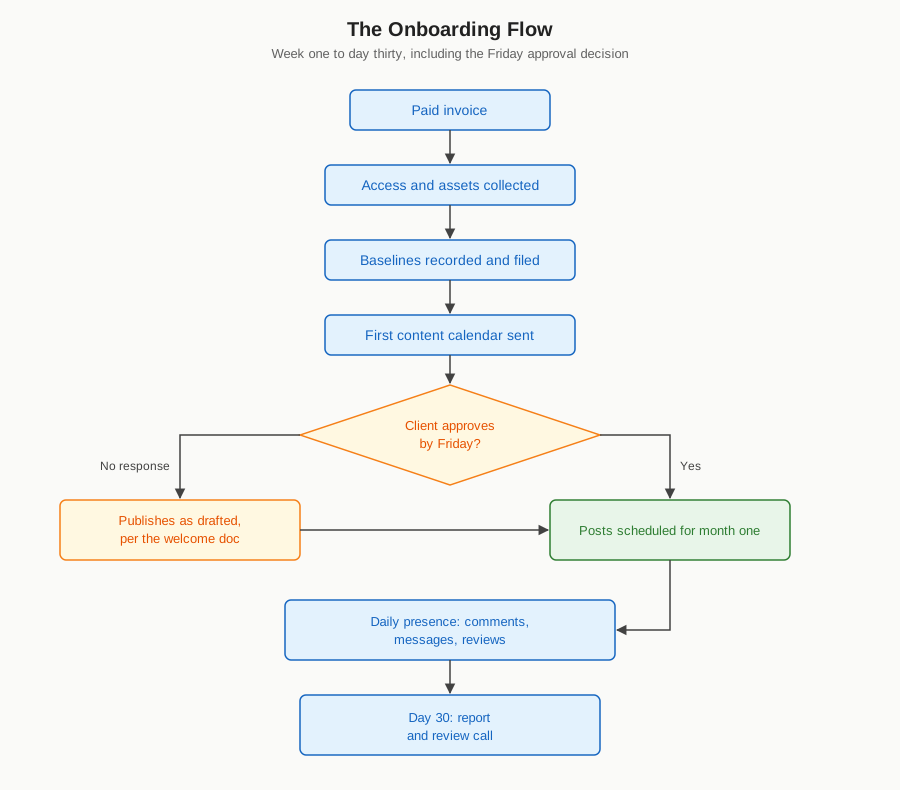
The onboarding flow
The sequence below is the whole first week. The loop in the middle is where beginners stumble: approval cycles without a deadline stall forever, so every calendar you send carries a line stating that no response by Friday means it publishes as drafted.
The welcome document
Alongside the calendar, every new client receives a one-page welcome document. It is the cheapest churn insurance that exists, because it sets the expectations that month one otherwise invents on its own. Four sections:
What I do: cadence per platform, response window for messages and comments, report date, and the single success metric in their words from the sales call.
What I don't do: the hard one, written kindly. Social media compounds rather than detonates: month one is cleanup, consistency, and baseline, months two and three are where patterns appear in the numbers. No revenue guarantees. No buying followers, ever, including when a competitor's numbers look suspiciously round.
What I need from you: photos and answers within two business days, a monthly photo batch if the tier includes shoots, and one decision-maker for approvals. Two decision-makers with opposite tastes is the classic account killer, and saying so now prevents it.
How we end, if we end: thirty days notice either way, files and access returned cleanly, scheduled posts handed over. Naming the exit at the start makes the relationship feel professional instead of trapped, and clients consistently respond better to that honesty than agencies expect.
The calm first month
Month one delivery is deliberately modest: cleanup, cadence, and presence. Fill the profile gaps, fix the hours, answer the review backlog from your specific observation, get the posts flowing on schedule, and reply to everything within your stated window. Nothing in month one needs to be clever. The client is not yet evaluating your creativity. They are noticing, consciously or not, whether the anxiety they handed you is being handled. Reliability in week two is what earns the trust that lets your month-three content take risks.
The thirty-day review call you scheduled in week one is the pilot's exit gate, and its agenda writes itself: the baseline you recorded, the numbers now, what you learned about their audience, and the retainer decision. Run it well and the pilot does what pilots exist to do: it converts.
Keep going — you're working through Start a Social Media Marketing Agency.
All courses are free ↗