The Discovery Call and the Pilot
Lesson video in production
The full lesson text below is complete — the video version lands with launch.
Everything before this lesson was preparation to sit in one twenty-minute conversation. The discovery call is where a warm introduction becomes a diagnosis, and the diagnosis becomes a paid pilot. Do this well and closing stops feeling like selling, because you are never persuading anyone of anything; you are describing their own week back to them and offering the fix.
The structure
Twenty minutes, three movements. Open with three minutes of context, who they are, how they work now. Spend twelve on diagnosis, which means questions, which means you mostly listen. Close with five on the pilot offer and next steps. Video on, notes visible, no pitch deck in sight.
The diagnostic questions that earn their keep:
Walk me through what happens when a new customer reaches out. Who answers, and how fast?
What's on your list right now that keeps sliding to next week?
When you lose a customer or a deal, what usually caused it?
What did you already try for this, and why did it stop?
If I took three hours a week off your plate starting Monday, what would those hours be?
The last question is the whole call compressed. Owners can rarely name their operations bottlenecks in the abstract, but they always know what they would hand off first on a Monday. Whatever they answer is your pilot scope, in their words, which is the only phrasing that counts.
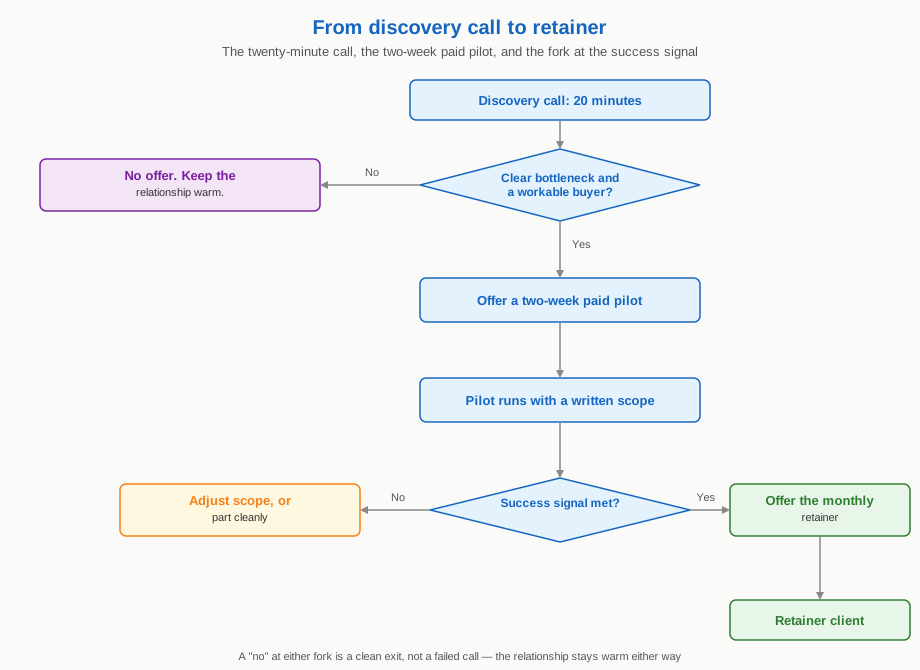
Your job during the answers is sorting. Some of what they say is capacity work you can retain, inbox, scheduling, follow-ups, billing chases. Some is a different business entirely, the writing-heavy requests belong to writers who do that for a living, the strategy questions to consultants. Some is a red flag, the buyer who wants a full-time employee at gig prices, or the one who cannot describe what they need because they want someone to want the job. Diagnosis includes diagnosing the buyer.
The pilot
A pilot is a two-week paid engagement with a written scope and a named success signal. It exists because "hire me monthly for support" is a big ask from a stranger, and "pay me for two weeks to fix this one thing" is a small one. Small asks get answered.
The scope is three or four lines built from their Monday answer: which inbox or inbox categories, which scheduling, which follow-ups, roughly what response time. The success signal is one measurable sentence agreed by both of you: quote requests answered inside an hour during business windows; the backlog cleared and daily by Friday; every lead called back within a day. The signal is what lets week two end with "we hit it," which is the cleanest possible setup for a retainer offer.
Price the pilot at your hourly rate from The Retainer Ladder, prepaid, cap stated in writing. No free pilots. Free work reads as free work, and a buyer who will not pay for two weeks was never going to pay monthly.
The close, said plainly:
Here's what I'd suggest. Two weeks, paid up front at my hourly rate. Scope is what we just discussed, and we'll know it's working if [the success signal]. At the end of two weeks, if it's working, I'll show you what a monthly version looks like. If it's not, you'll have a clean inbox and no obligation. Want me to send the agreement today?
Onboarding
The agreement from Legal, Money, and the Contract goes out same-day while the conversation is warm. Access arrives through the least-privilege habits from Your Tool Stack, credentials via the password manager, never email. The first ninety minutes of week one are a working session, screens shared, learning their systems in their presence. It front-loads trust and it prevents the silent week-one drift where nobody is sure what you are doing.
End day one with a two-line note: what you did, what you need. That note, daily, becomes the weekly report, becomes the renewal, becomes the referral. Retention starts on day one, not at the contract's end.
When the pilot succeeds, the offer that follows is a rung-two hour block or a rung-three package, priced off the floor you already computed. Delivery is a rhythm of its own, and it decides whether the retainer renews.
Downloads for this lesson
Keep going — you're working through Start a Virtual Assistant Business.
All courses are free ↗