How Much Does It Cost to Start a Car Restoration Business?
A home-garage restoration start runs $3,000 to $5,000. Here is the itemized tool list, insurance, and the project costs clients fund instead of you.
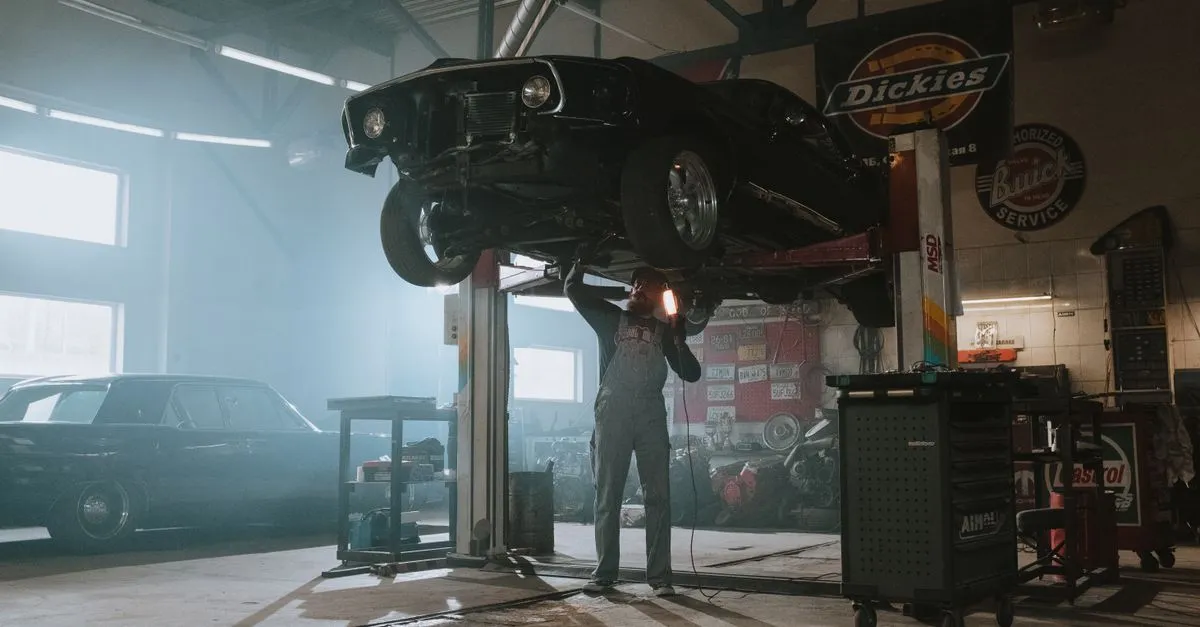
Starting a car restoration business from a home garage costs about $3,000 to $5,000. Tools and safety gear run $3,000 to $4,000 of that, insurance adds roughly $92 per month combined, and the remainder is working capital for your first project's parts. Paint, machine work, and upholstery are subcontracted pass-throughs the client funds, not startup costs. Every figure below comes from the verified car restoration course.
The tool list, itemized
Two machines eat most of the budget. A 140-amp, 120-volt MIG welder, the standard entry machine for sheet metal patch work, runs about $700 new, with name-brand MIG units starting lower. A 60-gallon compressor, enough to run sanders and eventually a paint gun, lands around $1,000 to $1,500 at the entry level.
| Item | Cost | |---|---| | 140-amp 120V MIG welder | about $700 new; name-brand units start lower | | 60-gallon air compressor | $1,000 to $1,500 | | Hand tools, jack, stands, grinder, workbench, safety gear | roughly $1,000 to $1,800 | | Working start total | about $3,000 to $4,000 |
A widely read garage-budget thread on a tool forum shows where home-shop money goes: hand tool sets, a floor jack and stands, cordless tools on one battery platform, and tool storage. The advice that repeats is to pick a battery system and let each project dictate the next purchase. Bodywork tips the scale back toward air tools, because sanders and grinders are what starve an undersized compressor.
Everything else waits. Bead rollers, English wheels, frame pullers, media blasters, and paint booths are later-stage tools. Buying them early converts cash you need for project materials into steel that sits idle. The buy order and the reasoning are in the shop setup lesson.
If five thousand is the ceiling, the course prescribes a strict order. Compressor and welder first, because they unlock billable metal work. Hand tools and safety gear second, because they are the business. The first project's parts third, funded by a deposit if it is client work. Bench toys last, or never.
Insurance
Small auto-service businesses average about $38 per month for garagekeepers coverage and about $54 per month for general liability. You are holding other people's valuable cars, so both policies get sized to the vehicle values you will actually hold and bound before the first client car arrives.
What you do not buy
The five-thousand-dollar shop works because three expensive capabilities stay outside it. Paint is subcontracted to an existing booth, partly because commercial spray application triggers the federal 6H emission rules. Machine work, meaning boring, valve jobs, and balancing, belongs to machine shops with the equipment. Heavy upholstery and seats go out while you keep the disassembly, mechanical, and metal work where your labor margin lives. Every subcontracted line goes into the estimate as a pass-through the client funds.
Project costs are the client's, not yours
This is the distinction that keeps startup costs low. Once running, the big numbers in restoration are inside the job, funded by deposits and milestone payments. Engine rebuilds run $2,500 to $10,500, transmissions $1,500 to $3,500, differentials $800 to $2,000, paint $2,000 to $20,000, interiors $5,000 to $15,000, and rocker rust repair $2,000 to $6,000 per panel. Shops typically mark up supplied parts about 25 percent, and every estimate carries a 10 to 20 percent contingency. The billing method that keeps you from fronting any of it is covered in the deposits and milestones lesson.
If you take the buy-improve-sell fork instead of client work, the car purchase is your capital at risk. Budget for the state rules too: most states cap unlicensed resales at 4 to 5 vehicles per year, and Texas resale purchases can still owe 6.25 percent sales tax per vehicle.
Capital bands
| Band | What it buys | |---|---| | Under $1,000 | Not realistic. The welder and compressor alone exceed it | | $1,000 to $5,000 | The working start described above, with room for first-project parts | | $5,000 to $25,000 | Same shop plus deeper parts inventory, or a condition-ladder flip purchase | | $25,000 plus | Multiple concurrent projects or heavier fabrication equipment |
Common questions
Can I start with hand tools only?
You can start disassembly and mechanical work, but a shop that bills for metal work needs the welder and the compressor. That pair runs $1,700 to $2,200 and unlocks the billable work.
Is the garage itself a cost?
If you already have a two-car garage, no. The requirements are one car in work, a workbench, parts shelving, and ventilation you can improve with fans. Check zoning and HOA rules by phone before the first project arrives.
What recurring costs should I plan for?
Insurance at roughly $92 per month combined, consumables like sandpaper and abrasives, and subcontract balances that float between client payments. The honest money lesson works the full margin picture.
The complete launch sequence, from entity filing to first milestone invoice, is in the free car restoration course. The ninety-day version is summarized in our startup guide.