Four destinations: sorting every load
Lesson video in production
The full lesson text below is complete — the video version lands with launch.
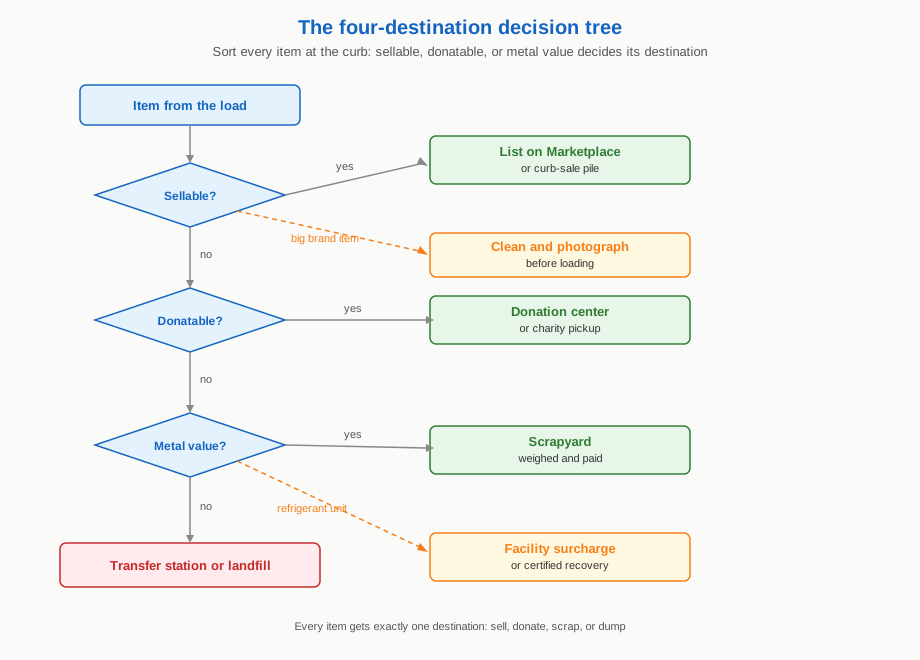
Untrained operators see two kinds of stuff: junk, and junk. Trained operators see four streams, and the difference is worth real money. Every item in every load gets one of four destinations, and you decide at the curb, not at the dump.
Destination one: sell
A meaningful share of what people pay you to remove has resale value, and this stream is why junk removal margins beat what the raw arithmetic suggests. Solid wood furniture, working appliances, tools, exercise equipment, patio sets, mid-century anything. Photograph it before it touches the trailer, list it the same day on Facebook Marketplace or Craigslist, and price it to move in a week. A $75 dresser pulled from a job you were already paid to clear is pure margin with no disposal cost attached, because you were going to pay to dump it.
The counter-skill is refusing trash with ambition. Water-damaged particleboard, mattresses, tube TVs, and 1990s entertainment centers do not sell, and every hour spent listing them is an hour not spent hauling. List in batches, batch your no-shows, and drop prices fast. Anything unsold in two weeks goes to destination two, three, or four.
Destination two: donate
Donation centers take clean, working items and the list is stable across the country: furniture, housewares, clothing, toys, books, working appliances, building materials. Habitat for Humanity ReStore takes building materials and fixtures specifically. Some charities offer pickup for larger items, which can even save you a stop. The rule is simple: donation is for items in good enough condition that someone would use them. Donation is not a dump with better lighting, and centers reject loads that treat it like one.
The quiet benefit is cost. Donated items never cross the scale, so every donated couch is a saved disposal fee plus the good-will line customers notice in your truck.
Destination three: scrap
Metal is where dead appliances go to get paid instead of costing. Steel scrap runs on the order of $120 to $230 per ton depending on grade and yard, light iron at the low end, prepared steel and cast at the high end. A washing machine weighs around two hundred pounds, a tenth of a ton, so call it twelve to eighteen dollars. A truckload of appliances adds up to real money on a job you were paid to clear, and non-ferrous metals, copper, brass, aluminum, are worth several times steel by weight. Keep a scrap bin on the trailer for cords, radiators, and copper pipe, because the yards pay cash and the weights are honest.
One boundary: refrigerant appliances. Facilities and yards charge extra for units with Freon unless the refrigerant has been recovered by a certified technician. Either pass that surcharge through by name, from the fee schedule you collected during setup, or make certified recovery your eventual add-on service.
Destination four: dump
What remains goes to the transfer station or landfill, at the rates you have in the glovebox: a national average around $62 per ton, plus gate minimums, plus per-item surcharges. This is the stream you shrink. Every item moved up to destinations one through three is a fee avoided and sometimes cash collected, and operators report resale and recycling offsetting a meaningful share of disposal costs when sorting is done consistently.
Sorting is also where the surcharge math lives, because the items landfills charge extra for are exactly the ones that cannot be sold, donated, or scrapped cheaply. Common patterns from published county fee schedules:
| Item | Typical surcharge pattern | Example | |---|---|---| | Mattress/box spring | per piece, commonly $10 to $35 | $30 each, Dodge County MN; $30.00 to $33.39 per item, King County WA | | Tires | per tire, passenger sizes | a few dollars to $20 each | | CRT TVs | per inch of screen or flat fee | $1 per diagonal inch at Recycle Ann Arbor | | Refrigerant appliances | per unit | extra at most facilities; some waive for small counts |
Your county publishes its own schedule. Yours, not these, goes on your price card.
Sorted, routed, and paid. What remains is the physical craft: getting the load out of the house and onto the trailer without breaking the house or yourself.
Downloads for this lesson
Keep going — you're working through Start a Junk Removal Business.
All courses are free ↗