Building a Price Sheet That Survives Math
Lesson video in production
The full lesson text below is complete — the video version lands with launch.
Anchor to the market first
Your price exists inside a real, observable market. Wash-and-fold pickup service across the United States runs roughly $1.50 to $3.00 a pound, with expensive metros higher. Rinse, the national player, prices by the bag rather than the pound: $45 for a 15-pound Flex bag, $75 for a 30-plus-pound bag, subscriptions from $59, which divides out to about two to three dollars a pound. 2ULaundry sells by the bag too: about $55 for a standard bag and $40 for a linen bag, dry cleaning at about $5 a garment. Subscription plans across the industry cluster around $60 to $100 a month. And operators publishing their own numbers land between $2 and $2.69 a pound on independent routes.
Take one more data point from the market's structure: nearly every serious service enforces a minimum. Ten-pound minimums are common on published price pages, dollar minimums typically run $25 to $50, and some services publish both kinds at once. The industry has already learned what the small-order trap does to margins.
| Structure | Typical shape | Who it fits | |---|---|---| | Per pound + minimum | $1.75–$2.50/lb, $30–$40 order minimum | residential weekly route, solo operator | | Per bag | $40–$55 per standard bag | customers hate scales; you love predictability | | Subscription / bag plan | ~$60–$100/mo for a weekly bag | your best weekly regulars, cash flow you can plan | | Per-piece (linens) | flat per towel set, per bed set | hosts and commercial accounts |
Why the minimum is the whole game
Recall the trap from The Honest Money: a twenty-pound order and a forty-pound order can cost you the same drive. Per-pound pricing alone charges the small customer half for the same fixed cost, which is why small orders quietly bleed a route. The minimum order fixes it: publish, say, $2 a pound with a $35 minimum, and the small customer either bundles into a biweekly schedule that's worth the drive or self-selects out. Either outcome is a win. The operator consensus and the national services point the same direction: set the minimum high enough that your worst-order margin still pays you for the trip.
The same logic governs frequency discounts. A biweekly customer at forty pounds is often better for you than a weekly customer at fifteen, and a weekly family at thirty-five pounds is the crown jewel. When you build your sheet, price for the customer you want to keep, not the customer who calls the most.
The worked order, visually
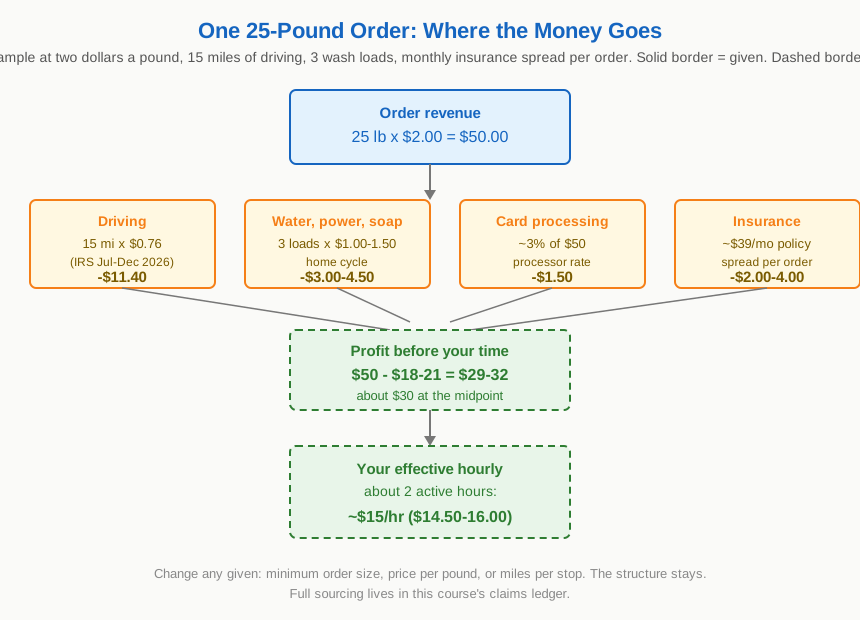
This is the same cost model from the honest-money lesson, drawn as a cascade. The power of the picture is that each box is a lever you control. Raise the price per pound and revenue moves; cluster stops and the mileage box shrinks; batch a second customer onto the same drive and the fixed driving cost splits in half. Run your own numbers in the Money Worksheet until the cascade is muscle memory, because every pricing mistake in this business is a failure to see one of these boxes.
Presenting the price
Put per-pound pricing on the flyer, because it's how customers comparison-shop, but present invoices in flat dollars: "38 pounds at $2.00, $76.00" reads honest and done. State the minimum in the same breath as the rate, so nobody discovers it at the door. Dry cleaning goes on the same sheet as per-piece prices with your markup built in and your partner cleaner's name kept private. And the first price increase, when it comes in month six or a year, goes out with thirty days' notice and a short honest sentence about costs; operators report that routes lose far fewer customers to a clear increase than to a vague one.
Your price sheet is a promise your route has to keep. Keeping it is a matter of route design, which the course takes up later.
Downloads for this lesson
Keep going — you're working through Start a Laundry Pickup and Delivery Service.
All courses are free ↗