What setup actually is
Lesson video in production
The full lesson text below is complete — the video version lands with launch.
Business setup has a branding problem. Sold as a mountain, it is four decisions. Everything else is paperwork hanging off those decisions, and most of that paperwork takes an afternoon. People spend three weeks comparing entity names in a browser tab and zero minutes asking their county what a license costs, then call the whole thing overwhelming. It is not overwhelming. It is unmapped.
Here is the map. Every business, from pressure washing to podcast production, faces the same four layers:
- Entity. Who owns the risk: you personally, or a company the state recognizes as separate from you.
- Registrations. The ID numbers: your federal tax ID, your state tax accounts, your trade name if you use one.
- Licenses and permits. Permission to operate, issued at three levels: state, county, city.
- Insurance. Who pays when something breaks: a client's property, your tools, an injury, a lawsuit over your policy limit.
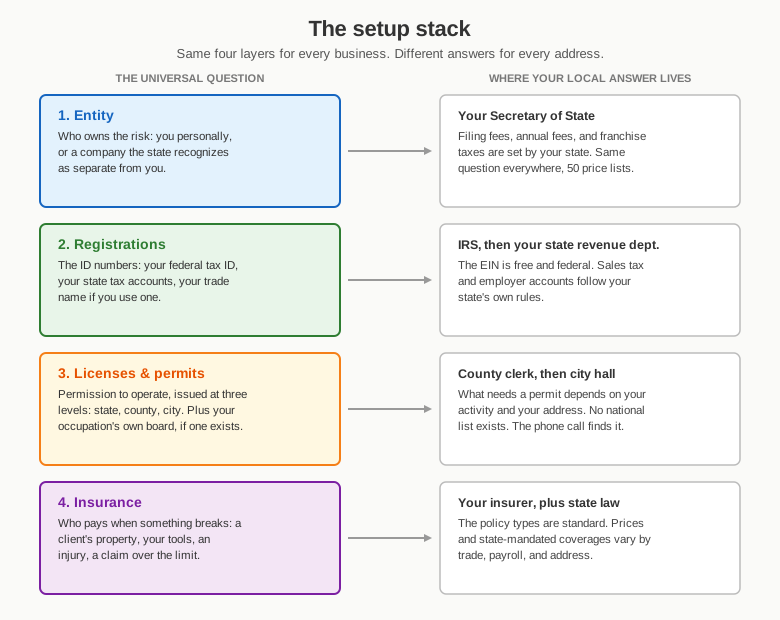
Notice the split running down that diagram, because it is the spine of this whole module. The questions are universal. The answers are jurisdictional. Whether you need general liability insurance is a question you can reason about from your couch. What it costs, whether your city requires proof of it for a license, and whether your state makes you carry workers' compensation at one employee or four: those answers live in your state's statutes and your insurer's rating book, not in any article, including mine. Any source that hands you a universal answer about permits or insurance prices is either guessing or selling you a filing service. Both are worth walking away from.
That split is also why this module cannot be a list of rules, and I will not pretend otherwise. I am not your lawyer and not your insurance agent. What I can give you is better than a canned answer: the exact questions to ask, who to ask, what a standard answer sounds like, and how to tell a real requirement from an upsell. Your state's answer beats my guess every single time. Your job is to learn to go get it.
Two failure modes bracket this territory, and I want you to see them now, before you pick either one.
The first is setup theater. Forming an LLC, ordering business cards, building a logo wall, buying a three-hundred-dollar filing package, all before a single customer exists. I have seen people spend real money becoming official and zero minutes finding out whether anyone wants what they sell. Customers come first. The work of finding your first ten is its own discipline with its own method, and this module assumes you are building toward it, not hiding from it. Setup exists to protect a business that is starting to work, not to substitute for one.
The second is avoidance. Operating for two years with nothing filed, no entity, no license check, no insurance, because it all felt vague and nobody came knocking. This one is quieter and more expensive. The county does not warn you before it fines you, and a client's hardwood floors do not care that you meant to look into coverage. Avoidance feels free because the bill arrives later, with interest.
The honest path runs between them: a weekend of phone calls and a folder of documents, done in the right order, priced before you pay. That is what the rest of this module builds. And if a layoff is what put you on this path, the transition timeline shows where this weekend of setup sits in the wider exit sequence. Of the four layers, the entity question comes first, because it is the one people get preached at about, and the preaching is usually wrong in a specific, fixable way.
Keep going — you're working through Legal, Licenses & Insurance.
All courses are free ↗