The claim, end to end
Lesson video in production
The full lesson text below is complete — the video version lands with launch.
Here is the whole machine on one page. Everything else in this course hangs off this diagram.
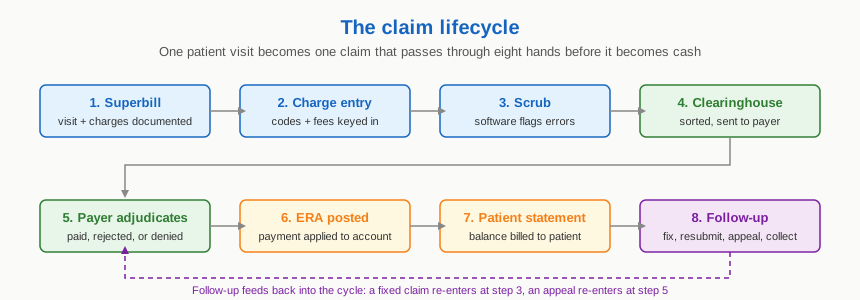
Walk it with me once, slowly, because each handoff is a place money leaks.
Before the claim: the superbill
After a visit, the practice produces an encounter form, called a superbill in physician offices: patient name, date, the diagnoses, the services performed with their charges. Increasingly the EHR generates it, but the substance is unchanged. The superbill carries two kinds of codes that you must read fluently even though, unless you hold a coding credential, you are not the one assigning them:
- ICD-10-CM codes describe diagnoses. Three to seven characters, starting with a letter.
- CPT and HCPCS Level II codes describe procedures, services, and supplies. Five characters, numeric or alphanumeric.
The coder's job is translating the clinical record into codes. Your job is taking those codes and getting them paid: checking that the diagnosis actually supports the procedure, that modifiers are present, that the units are right, that the patient's policy covers the service. When the linkage between diagnosis and procedure is wrong, the payer denies for medical necessity, and that is the single most fixable category of denials in the business. The boundary between billing and coding matters legally too, and the course draws it precisely later on.
Charge entry and scrubbing
You key or import the superbill into the practice management system as charges against the patient's account. Then the claim goes through a scrubber, software that checks each claim against hundreds of rules before it leaves the building: is the diagnosis code valid for this procedure, is the patient's age consistent with the diagnosis, is the provider's NPI present, is the date of service in the right window. A scrubbed claim is not guaranteed to pay. An unscrubbed claim is guaranteed to bounce eventually.
The clearinghouse
Your software transmits claims to a clearinghouse, which is the post office of medical billing. It validates the electronic file against the standard format (the ANSI 837 formats for professional and institutional claims), reformats for each payer, and routes. The clearinghouse sends back acceptance reports and, importantly, rejection notices, usually within hours. You will live in this queue. A claim that fails at the clearinghouse never reached the payer at all, which sounds bad but is actually the cheapest place to fail, because it never consumed a payer's adjudication or started any clock.
Adjudication, ERA, and posting
The payer adjudicates the claim: checks eligibility, applies its payment rules, and decides to pay, reject, or deny. Payment arrives with an electronic remittance advice, the ERA, which lists every claim paid, adjusted, or denied with codes explaining each line. You post the ERA, which applies payments and adjustments to patient accounts automatically. The patient's share, the deductible and coinsurance left over, goes out on a patient statement.
Two words that beginners use interchangeably and must not:
- A rejection never finished processing. Data was missing or wrong. Fix it and resubmit; it never truly reached adjudication.
- A denial was processed and refused, for a reason: not medically necessary, no prior authorization, bundled into another service, past timely filing. Each denial carries a claim adjustment reason code, a CARC, often with a remark code beneath it, and each category has its own response. Corrected claim, appeal, or write-off. That decision tree comes later in this course.
Where you actually spend your day
Submission is minutes. The living part of this business is the follow-up loop at the bottom of the diagram: the rejection queue, the denial stack, the claims aging past thirty and sixty days, the phone calls. The course makes that concrete later, one full week of it.
Keep going — you're working through Start a Medicare Billing Business.
All courses are free ↗