The license decides your menu
Lesson video in production
The full lesson text below is complete — the video version lands with launch.
Every state in the US licenses beauty work. The license you hold, or choose to get, is literally your menu. Cutting hair without a cosmetology or barbering license is against the law in every state, a misdemeanor in many of them, and the complaints that trigger investigations often come from licensed competitors who notice a new name advertising in their zip code. This is the least glamorous lesson in the course and the one that protects everything else you build.
The three licensed lanes
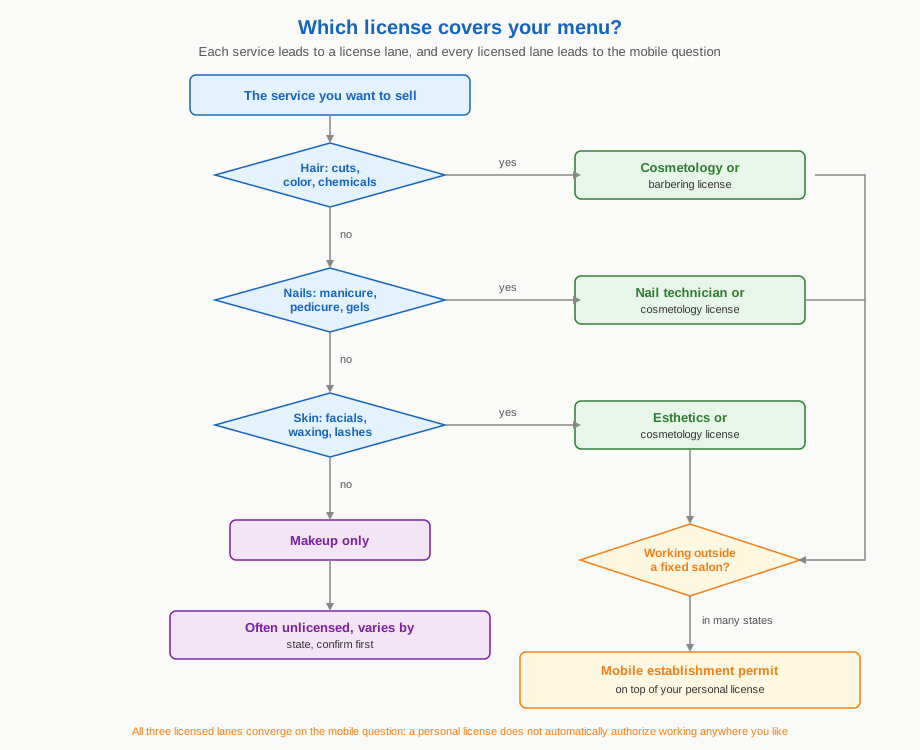
Cosmetology is the broad license: hair cutting, color, chemical treatments, and in most states basic nail and skin services too. Training requirements run from about 1,000 school hours to 2,100 depending on the state, usually nine months to two years full time, with a written and practical exam at the end.
Esthetics covers facials, waxing, and most skin work. Hour requirements swing wider here, from roughly 220 hours in Florida up to 1,000 or more in states like Georgia, with around 600 hours being the most common standard.
Nail technology is the fastest licensed lane. Requirements range from about 100 to 750 hours by state; California requires 400, and several states accept roughly 300 to 600. A motivated student can clear a nail program in a couple of months of full-time study.
| License | Typical hours by state | What it lets you sell | |---|---|---| | Cosmetology | 1,000 to 2,100 | Hair, plus most nail and basic skin services | | Barbering | 1,000 to 2,100 in most states | Hair cutting and shaving, some chemical work | | Esthetics | 220 to 1,000+ | Facials, waxing, lash and brow services in most states | | Nail technology | 100 to 750 | Manicures, pedicures, gel and artificial nails |
Makeup artistry sits in a gray zone. Many states do not require a license for makeup application alone, which is why bridal makeup artists often operate without one. But the moment you touch lashes with adhesive, wax an eyebrow, or perform a facial, you are usually inside esthetics territory. Check your state board before you advertise a single word of your service menu.
The mobile layer nobody warns you about
Here is the part that surprises even experienced stylists leaving a salon. Your personal license authorizes you to practice the trade. It does not automatically authorize you to practice it anywhere you like. State boards regulate establishments, salons as places, and several states extend that thinking to mobile work.
The pattern is real and checkable. Massachusetts issues a specific mobile aesthetician, barber, cosmetologist, and manicurist license for practitioners serving clients at locations the client chooses. Florida requires a mobile salon license to be issued and posted before a mobile cosmetology salon can open. Nevada charges 200 dollars for a two-year mobile establishment license with an inspection before you operate. Texas regulates mobile establishments and separately defines rules for digitally prearranged remote services. California maintains a mobile unit license article in its regulations.
Other states are looser and treat a house call as a licensed practitioner simply working. Several states have loosened these rules in recent years. But "most states" is not your state, and the fine for guessing wrong lands on you, not on whoever told you.
Your one-hour homework
Do this before you read another word of this course. Find your state cosmetology board's website. Write down three things in one note on your phone. One: your license status, or the exact program and hours your state requires for the lane you want. Two: what your state says about working in clients' homes, search the board site for "mobile" and read the actual rule, not a forum summary. Three: any mobile establishment permit, its fee, and its inspection requirements. That note is worth more than every other paragraph in this lesson, because it is the version with your state's name on it. If you are starting unlicensed, it is also a calendar: nine months to two years of school is a household timing decision before it is a business one, and runway math and the decision to start is the guide for it.
The menu is set and the paperwork is understood. The question that follows is arithmetic: what this work pays, what it costs to deliver it, and whether a full calendar actually feeds you. Run it before you book anyone, because a calendar that ignores the drive can look full and still starve.
Keep going — you're working through Start a Mobile Beauty Care Business.
All courses are free ↗