Inside the Loan Package
Lesson video in production
The full lesson text below is complete — the video version lands with launch.
The difference between a new agent and a trusted one is document fluency. You do not need a mortgage license. You need to open any package, know what each document is for in one sentence, know which ones you notarize, and know which one can burn the whole loan if its dates are wrong. This lesson is that fluency, built document by document.
Package types set the shape
Three packages cover most of what you will see, plus smaller hybrids.
A refinance package is the classic big one: a hundred-plus pages, the owner is refinancing an existing loan on their own home, and it contains the full stack including the right to cancel. A purchase package is for a buyer, similar size, with purchase-specific documents like the deed and occupancy affidavit, and no right to cancel because purchase loans do not get one. A seller package belongs to the person selling: notably smaller, with a deed, a settlement statement, tax forms, and affidavits, and no note or deed of trust because the seller is not borrowing. Beyond those, home equity lines, reverse mortgages, loan modifications, and debt settlements each arrive with their own quirks; agents report being handed easier package types first and meeting reverse mortgages only after proving themselves.
The core documents
The promissory note is the borrower's actual promise to repay: amount, rate, payment schedule. Usually not notarized. If the borrower asks what happens if they stop paying, that is a loan officer question, and you decline it cheerfully.
The deed of trust or mortgage is the security instrument: it pledges the property as collateral and is the document the county records, which is why it must be notarized and printed at full size on the right paper. It may carry riders, short addenda for planned unit developments, condominiums, or second homes, each needing initials.
The Closing Disclosure, the CD, itemizes the entire deal: loan amount, rate, projected payments, and every closing cost. Federal rules require that the borrower receive the CD at least three business days before closing, which is why borrowers are often holding questions about it when you arrive. Those questions go to the loan officer, every time. The CD pairs with the settlement statement (ALTA forms are common), which lays out who pays what at the table.
The Uniform Residential Loan Application, Form 1003, is the original loan application, re-signed at closing to confirm nothing changed. It is long, it mostly needs a signature and date, and incomplete applications are a classic source of missed initials in obscure corners.
The Notice of Right to Cancel appears in refinances and home equity loans on a primary residence, and in a standard reverse-mortgage refinance as well — reverse mortgages are not exempt as a class; the exception is the HECM for Purchase, which carries no rescission because purchase money never does (NRMLA). This document deserves its own section, because it is the one that ends careers.
The right to cancel, handled properly
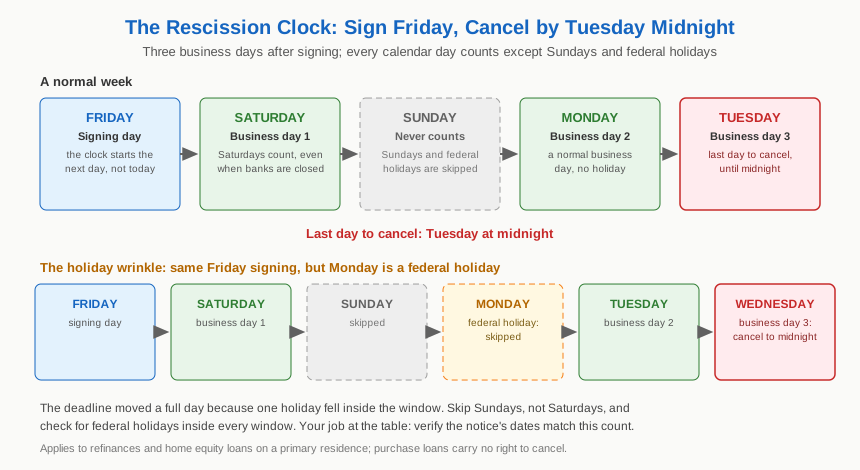
Federal rescission rules give the borrower three business days to cancel certain loans after signing, running to midnight of the third business day. For this clock, every calendar day counts except Sundays and federal holidays; Saturdays count even though banks may be closed. Sign on Friday before a normal Monday, and the last day to cancel is Tuesday at midnight. The notice usually carries pre-printed dates, your job is to verify they match reality, because packages get printed before appointments move.
If the dates are wrong, the borrower fixes them: single line through the error, correct date written in, borrower initials the change, on both the signing date and the expiration date. Never alter a date yourself; you witness and notarize, you do not edit. Get every copy in the package signed, because there are usually several, and leave two signed copies with the borrower while keeping one for the returned package. And watch where the pen goes: the form has a line that says "I wish to cancel this transaction," and nervous borrowers have signed exactly that line by mistake. Point at it before they get near it.
The supporting cast
You will meet these at nearly every closing: the Patriot Act identity form, where you record ID details for the lender's customer identification file; the occupancy affidavit, where the borrower swears they will live in the property; the 4506-T, authorizing the lender to pull tax transcripts; the compliance agreement, promising to fix clerical errors later; the signature and name affidavit, reconciling name variations (the "AKA statement"); and the first payment letter with its due date. None of these need your legal opinion. Each needs the right signature, the right initials, the right date.
Stack order is a real skill, too. The company's instructions tell you their preferred order, and agents who return packages collated the way the escrow officer sent them get rehired, while agents who return a shuffled pile create work for the person deciding whether to call you again. When you print, keep the order you were given.
How to describe without advising
Your table language is a formula you will repeat hundreds of times: name the document, give its one-sentence purpose, point to where they sign. "This is the note, your promise to repay the loan. The amount and rate are here on the first page. I need your signature here and here." What questions you can answer with a definition. Why questions, should-I-sign questions, rate questions, and payment questions belong to the loan officer, whose number you should already have from the confirmation step. The role boundary from "Two Lanes, One Credential" is enforced one sentence at a time, at a real table, with a real borrower watching your face.
Knowing the paper is half the craft. The other half is running the appointment around it, from the confirmation call to the shipping cutoff, and that half is a loop you learn to run the same way every time.
Downloads for this lesson
Keep going — you're working through Become a Mobile Notary and Loan Signing Agent.
All courses are free ↗