Running the Appointment
Lesson video in production
The full lesson text below is complete — the video version lands with launch.
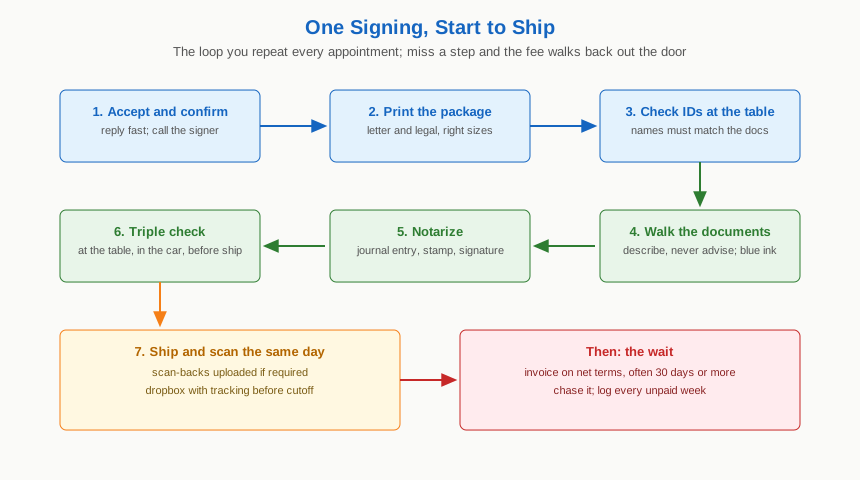
A signing appointment is a small production with a hard deadline attached: somewhere, a rate lock is ticking. Agents who run it as a checklist get rehired; agents who improvise create the kind of mistakes that end commissions. Here is the loop, start to ship.
Before you leave home
The order comes in by text, call, or platform notification. Accept quickly; operators stress that leads go to several agents at once and speed wins the job. Once assigned, call the signer to confirm date, time, and place. This one call prevents the classic disasters: the borrower who forgot, the one out of town, the one expecting you tomorrow. If you cannot reach them, tell the company that hired you and keep trying. Ask whether all signers will be present, because a missing spouse at a two-signer closing is a wasted trip.
Printing windows are tight. Companies commonly have documents ready about two hours before the appointment, and experienced agents communicate their cutoff rather than gamble: if you need the package by four for a six o'clock signing, say so when you accept. Print on the correct sizes, check the page count against the instructions, and flip through for blank pages and misprints. Read the company's instructions completely, every time: witness requirements, scan-back requirements, ID copies, check payment details. The instructions override habit, and the day you skip them is the day they changed something.
Phone script for the confirmation call:
"Hi, this is [name], I'm the notary signing agent for your loan closing [tomorrow] at [six o'clock]. I'll meet you at [address]. Both signers will be there? Great. Please have driver's licenses or passports ready for each signer. I'll walk you through everything, and it usually takes about an hour. Anything I should know about the location, gate codes, parking?"
At the table
Arrive on time, dressed like the professional the borrower expects. Introduce yourself as an independent signing agent, not a lender employee. Pick a workable surface, the dining table, not the couch, and set up your clockwise flow: documents move from your side to theirs and back signed. Hand over nothing to keep until the end; the borrower's copy leaves with them only after everything is complete.
IDs first, before a single page turns. Names on the documents must match the IDs, and if they do not, that is a call to the hiring company, not a judgment call at a kitchen table. Record the ID in your journal per your state's rules. Then give the borrower the arc of the next hour, starting with the documents that matter most, the Closing Disclosure and the right to cancel, while attention is fresh. Borrowers who understand the rescission window up front sign the rest with less hesitation.
Walk documents with the describe-don't-advise formula from "Inside the Loan Package." Manage the pace: point to signature lines, keep pages in order, and never rush a reader. Some borrowers read everything; that is their right, and your calendar problems are not their problems. Notarize as you go or in a batch at the end, but complete every journal entry and every notarization before you pack up, because you cannot fix an incomplete acknowledgment from your driveway.
The triple check
The check that saves you happens three times. At the table, ask for two minutes and flip every page for signatures, initials, and dates. In the car, before you leave the street, run it again; catching a missing initial while the borrower is still home is a knock on the door, not a catastrophe. Before you ship, the third pass, especially the notarized documents and the right to cancel copies. Agents who skip the ritual eventually eat a redraw fee or worse, and the title company never remembers the reason, only the miss.
Ship and close the loop
Originals go out the same day via the carrier and account the instructions specify, which usually means the shipper's system holds a billing account, you are not paying postage. Find the latest drop location that makes cutoff, keep the tracking receipt, and update the order status in the company's portal. Then log the job in your own records: company, fee, miles, date, invoice submitted. That log becomes your invoice-chasing list when payments run slow and your tax file at year end.
One appointment is a checklist. A week of them is logistics, and logistics is its own skill: the routing, the printing windows, the gas tank, the sleep. Build the week deliberately, or the week builds you.
Downloads for this lesson
Keep going — you're working through Become a Mobile Notary and Loan Signing Agent.
All courses are free ↗