Your runway number
Lesson video in production
The full lesson text below is complete — the video version lands with launch.
Everything so far was inventory. Now we divide. This is the number the whole guide promised you in its first paragraph, the one most laid-off people never write down: how many months you can live like this. Not estimate, not vibes. One number, on paper, recomputed on a schedule. Once you have it, every decision for the rest of this guide, job search, business, both, neither, gets made against it instead of against your anxiety, which is a terrible accountant.
The formula
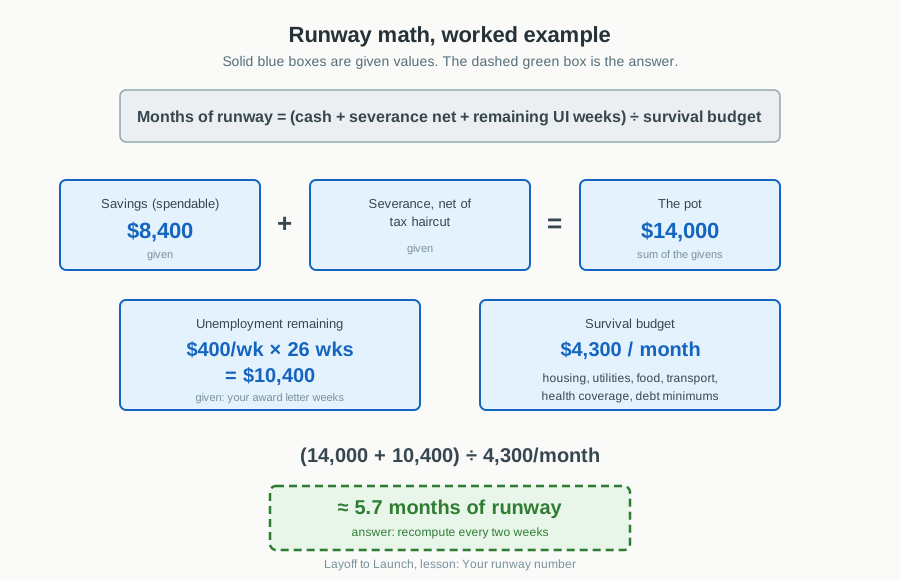
Total resources is everything that reliably arrives: spendable cash in checking and savings, plus the severance that cleared, minus a haircut for the tax true-up the severance lesson warned about, plus your remaining unemployment benefits, weekly amount times weeks left in your eligibility. If a partner's income reliably covers part of the monthly budget, handle it on the budget side instead: subtract their share from the monthly number rather than inflating the pot. Keep each input honest and the formula stays boring, which is the goal.
The example in the diagram runs like this. Eight thousand four hundred in savings, five thousand six hundred net from severance, so the pot is fourteen thousand. Unemployment pays four hundred a week with twenty-six weeks of eligibility, which is ten thousand four hundred more. Total resources: twenty-four thousand four hundred. The survival budget from the last lesson came to four thousand three hundred a month. Divide. That household has about five point seven months, call it five and a half, before something has to change.
Your inputs will differ. That is fine. What matters is that the division happens, on paper, today. Do it with your real numbers before reading further. I mean that literally: stop reading, open the spreadsheet from the budget lesson, and type the four numbers.
The refinement that matters
The formula assumes benefits stop when your state says they stop, in twelve weeks, twenty-six, thirty, whatever your award letter says. It also treats your budget as flat. Reality will bend both: a part-time contract lowers the burn, a car repair raises it, extra work-search weeks extend nothing. That is why the number gets recomputed every two weeks, the same day, from live balances, not from memory. Put it in the calendar as a recurring appointment called "the number." Fifteen minutes. When the number moves, you will know why, and the plan in the second half of this guide tells you what to do about it.
What is not runway
The retirement account deserves specificity, because it is the most tempting and the most expensive. Pulling from a 401(k) or IRA before fifty-nine and a half generally means ordinary income tax plus a ten-percent early-withdrawal penalty, which together can eat a quarter or more of the withdrawal, and the money is gone from the compounding that was supposed to handle your actual retirement. There is one exception worth knowing: if you separate from service during or after the year you turn fifty-five, you can take penalty-free withdrawals from the 401(k) of the employer you just left. Not from old 401(k)s at other employers, and not from an IRA, which is why rolling this particular 401(k) into an IRA on autopilot, a move that is normally routine advice, can quietly destroy that exception. The tax still applies. This exception is a last-resort valve for people fifty-five and over, not a plan, and it gets its full treatment near the end of the guide.
Home equity fails differently: it is real wealth that cannot pay a phone bill without a sale or a loan process measured in weeks, at rates you will not love. Credit is not runway; it is negative runway, a number that gets worse monthly. Keep all three out of the formula.
What can honestly join the formula: a cash signing situation you can document, expected tax refunds, the sellable second car, and anything with a date and an amount you would bet the household on. Optimism is not a line item.
Write it where you will see it
The number wants to be visible. Whiteboard, fridge, a note pinned above the desk: five point seven months, dated. Then tell whoever shares the budget, tonight, the way "The first seven days" promised. The number is not a verdict on you. It is a schedule for decisions, and a schedule shared is a household rowing in the same direction.
Here is what you now hold that most people never assemble: a true count of resources, a survival budget you believe in, and a single honest number with a recompute ritual attached. That combination does more for the dread than any affirmation, because dread is usually just arithmetic you have been avoiding.
The rest of the guide is about spending those months well, and it starts with the question that has been circling since the parking garage: is your job coming back at all? It is more answerable than it feels.
Downloads for this lesson
Keep going — you're working through Layoff to Launch.
All courses are free ↗