The Check-In Machine
Lesson video in production
The full lesson text below is complete — the video version lands with launch.
Recall the number from "The Honest Money": a good month in this business loses a few clients out of every twenty. The check-in machine is what separates the coaches who lose one from the coaches who lose five. It is also, not coincidentally, what actually produces client results, because the weekly report is where you see stalls while they are still fixable.
The weekly cycle
Each client runs the same loop, and your whole practice is the same loop staggered across people:
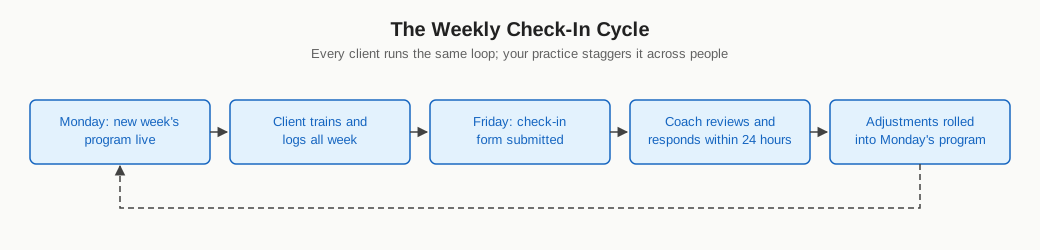
The form is five questions, never ten. Long forms get skipped, and a skipped check-in is the first domino of churn. The working set, in some version used across the whole industry:
- Sessions completed this week, out of how many planned?
- One word for energy and one for soreness.
- What got in the way, if anything did?
- Any pain, new or old, worth telling me about?
- One win, however small.
Question three is the coaching question. The answers tell you exactly which part of the program to redesign. Question five trains the client to notice progress, which is the retention skill.
The Friday workflow
Your check-in day is a production process, and it should take a predictable block, not leak across the weekend. Sort responses into three bins as you read. Green: on track, respond with progress and one adjustment. Yellow: missed sessions, flag it, respond with one logistics fix and zero guilt. Red: pain reported, nothing submitted, or two bad weeks running, escalate to a call. Respond to every client within twenty-four hours of submission, every week, without exception. The response is the product; a check-in that gets no answer teaches the client that the form goes nowhere, and skipped forms follow within a month.
Batch your responses in one sitting. Ten replies in a focused block take ninety minutes and leave your weekend whole. Ten replies scattered across Saturday take twice as long and feel twice as heavy.
The rescue ladder for quiet clients
Every client goes quiet eventually, and there is a known escalation for it, because this pattern is universal:
- Day 1 of silence: nothing. People have weeks.
- Day 4: a light message. "No check-in this week, all good. What happened?" Blame-free, five words.
- Day 10: a direct call offer. "I don't want to guess at what's going on. Fifteen minutes this week?"
- Day 21: the decision message. "I'm going to pause your billing until you're ready to come back. Message me anytime and we restart the same week."
That last message, billing pause instead of silent billing, is counterintuitive and correct. Coaches who keep billing quiet clients collect one or two months of fees and generate one refund demand, one chargeback, or one scathing review. Coaches who pause billing see enough clients come back, and enough referrals come out of the pause, that it pays for itself; the pause is the most impressive act of professionalism the client has experienced in fitness.
Renewals and the three-month wall
The average training client lasts three to six months, and month three is where the question forms in their head: "Am I still getting value?" Do not wait for it. At the ten-week mark of every client relationship, send a progress summary: where they started, the numbers now, the photos side by side, what the next twelve weeks target. The summary reframes the decision from "am I bored" to "am I finished," and finished is a much better frame to sell continued coaching from.
The downgrade is your friend at this wall. A program-only tier at a lower rate, or a one-session-a-week maintenance structure, keeps the client in your world at their budget instead of losing them entirely. Half of a fee beats none, and downgraders return to full service when life improves.
Referrals, asked on time
Ask for referrals at the emotional peak, not at month six. That peak is the week they send you the "I did it" message: the chin-up, the hiking trip their knees survived, the wedding photo. Your reply: "That's huge. Two things: can I use this in my testimonials, with your words? And do you know one person who'd want what you just got?" The clients who refer are the clients who were asked.
The machine runs, clients stay, the business compounds. It is not a smooth line upward, though, and the parts that hurt are worth knowing before they arrive.
Downloads for this lesson
Keep going — you're working through Start an Online Fitness Coaching Business.
All courses are free ↗