A Real Weekend
Lesson video in production
The full lesson text below is complete — the video version lands with launch.
The weekend starts Thursday
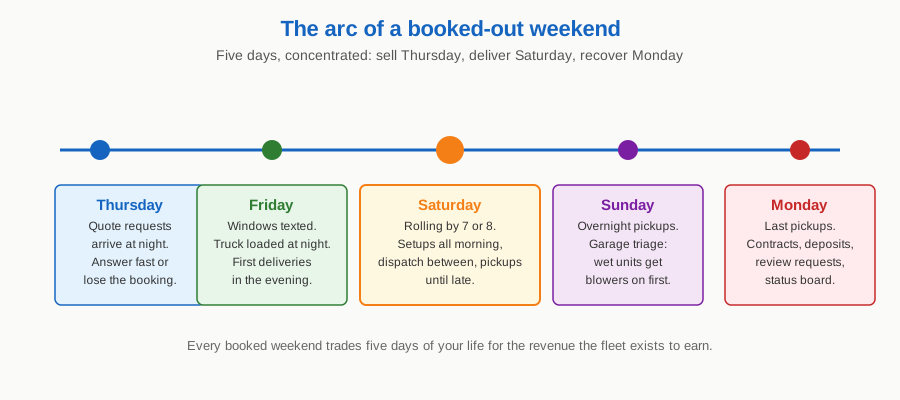
The money in this business concentrates into a seventy-two-hour window, and the window opens before the weekend does. Thursday evening is when parents plan parties. Your phone lights up after dinner: a quote request for Saturday, a question about ages and unit sizes, a mother of twins deciding between two themes. Every message answered within minutes is a booking; every one saved for Sunday is a booking for whoever answered faster. Operators describe this as the least glamorous and most decisive habit of the whole trade. You are not selling vinyl, you are selling responsiveness to someone in the middle of planning logistics for their kid.
Friday is load-out and confirmation day. You text every customer their delivery window in writing, the same one from your policies, and you stage tomorrow's route: straps checked, blowers loaded, dolly, tarp, stakes, sandbags, cleaning kit, spare extension cord, patch kit. Loading the night before is the difference between a 7 a.m. start and a 9 a.m. scramble. Then you drive the first wave, a few Friday-evening deliveries for the customers whose parties start tonight.
Saturday is the product
Saturday morning you are rolling by seven or eight, following the route in the order that geography and setup surfaces dictate. At each stop the sequence is the same one every time: site check, tarp, unroll, blower, anchor, sanitize, walkthrough, card, next. Two people move through a bounce house setup in about forty minutes; solo takes longer and costs your back. Between stops you are on the phone, because today's callers are booking next weekend.
The middle of Saturday is the strange quiet part. Deliveries done, pickups not yet started, and you are a dispatcher: answering quotes, confirming tomorrow, fielding the customer whose outlet is farther from the yard than expected. Then the evening arc reverses. Pickups start around six or seven and run late, because parties end late and wet units are heavy. Each pickup is its own procedure: kids off the unit, blower off, deflate, walk the air out, fold, roll, strap, load, inspect for damage in the truck's light. By the third one it is dark and your shoulders have opinions.
If you run water units, the smart pattern operators converge on is leaving them overnight: the customer turns off the water in the evening and runs the blower in the morning so the unit dries, and you collect a lighter vinyl balloon Sunday instead of a waterlogged one Saturday night. Customers like it. Your spine likes it more.
Sunday and the Monday bill
Sunday is the mirror of Saturday: morning pickups from yesterday's overnighters, possibly a Sunday party delivery, then the garage. Everything that came back gets its triage, clean, dirty, wet, damaged, and the wet ones get blowers on them before anything else happens, because mold starts on a schedule you cannot see. The full triage and repair system comes later in the course.
Monday is admin: the last pickups, the deposits and contracts for next weekend, review requests sent to everyone who rented, the status board updated, repairs scheduled, and the one thing operators always forget until April, ordering the replacement blower tube strap you lost on Saturday.
Now the honest paragraph. This weekend I just described is a good one, close to capacity, the kind you work toward. It is also five days of your life, Thursday through Monday, mostly outside, mostly physical, in whatever weather your region provides, with a phone that does not stop. If you have young kids, Saturday mornings and Sunday evenings belong to the business during season, which is the central tension of building a business alongside employment. Some operators love exactly this: tangible work, happy customers, a photo of a full truck. Some burn out by August. Both reactions are normal, and knowing which one is you before you buy equipment is the entire point of this lesson.
The weekend is the container. What fills it is the actual craft of setup, the field work that earns the review.
Keep going — you're working through Start a Party Rental Business.
All courses are free ↗