Pickup, Cleaning, and Repair
Lesson video in production
The full lesson text below is complete — the video version lands with launch.
Pickups are harder than deliveries
Deliveries happen in daylight on your schedule. Pickups happen at night, after parties, on the customer's drifting sense of time, on equipment that has spent six hours being loved by children. Every unit comes back heavier than it left: grass tracked in, spilled drink weight, rain, or the hose the kids found. Operators agree on this ranking without exception: unrolling is easy, rolling up is the job.
Call or text before you arrive, and ask wet-unit customers for the one favor that saves your back: water off, blower still running, so the unit starts drying itself before you get there. When you arrive, confirm someone is home or that you have permission to be on the property, then do the inspection walk before anything is deflated. Inside and out: trash, food, silly string, gum, the condition of seams and anchor points, anything left behind by small guests.
Then the teardown sequence. Blower off, zippers and tubes open, stakes or sandbags pulled as the air leaves. Walk the air out of the unit barefoot or in clean socks, fold the sides in, roll tightly from the far end, strap it, and load. A tight roll is a learned skill and worth practicing, because sloppy rolls cost garage space and hide wet spots from you.
Triage every unit, every time
The moment a unit comes back, it gets sorted, because "looks fine" is how a two-thousand-dollar asset quietly dies in a garage. Operators use a simple color-tag discipline, and the whole system is one decision tree:
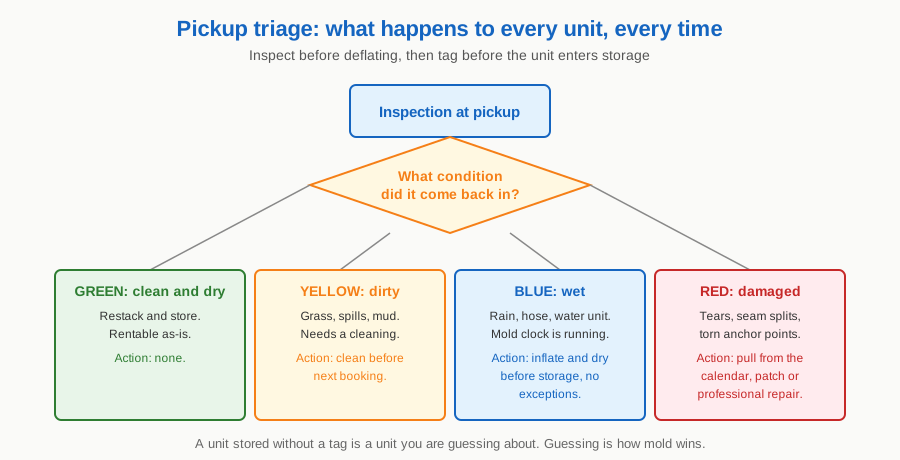
A green tag means clean and dry, restack it, it is rentable. Yellow means dirty, clean it before the next booking, today if possible. Blue means wet, and blue is the clock-starting tag. Red means damaged: pull it from availability immediately, swap the affected customer to another unit, and schedule the repair before you need the revenue.
Mold is the silent killer of this business
Wet vinyl rolled up in a dark garage is a mold farm, and mold does not negotiate. Operators report the failure pattern with striking consistency: a unit rolled damp and left even a couple of days grows black spots that stain permanently, smell unmistakably, and end the unit's rental life, because nobody puts a moldy castle in front of a birthday party, and no insurer or parent should. In humid climates the clock runs faster.
The discipline is mechanical. If a wet unit is going back out within a day or two and will be used wet anyway, clean it and deliver it damp with a friendly heads-up to the customer, which parents of summer water-slide kids universally accept. If it is not going out soon, inflate it fully, open the vents opposite the blower for airflow, tilt it so trapped water drains from the low points and slide liners, towel the seams and corners by hand, and give it sun. Just because the outside feels dry does not mean the inside is. At the end of your water season, every unit gets the full dry-down before storage, no exceptions, and never store wet units pressed against walls.
Repairs you do, repairs you don't
Small tears and seam pinholes are normal wear, and patching them yourself is a core operator skill that keeps a unit earning instead of sitting.
The procedure is simple and specific. Clean the area around the tear with water or glass cleaner and dry it fully. Cut two patches with rounded corners, one for inside the tear and one for outside, because rounded edges do not peel the way square corners do. Apply vinyl cement to both patches and to the surface, following the product's directions. Slip the inside patch through the tear and press it flat, then lay the outside patch over it. Weight it evenly with a board and something heavy and let it cure for half an hour before the unit sees pressure again. Keep patch material and cement on the truck at all times, because a repair done at pickup saves a Saturday.
The boundary: patch kits fix small cuts and pinholes in the vinyl skin. They do not fix torn seams along stitching, damaged anchor points or webbing, blower-tube attachment failures, or anything structural. Structural damage goes to a professional vinyl repair shop or back to the manufacturer, and until it is fixed the unit is red-tagged, unavailable, no matter what the calendar says. The unit that should have been retired is the one that fails with children on it.
Everything in this lesson protects the asset. Protecting the people on it, including you, is the other half of the craft.
Downloads for this lesson
Keep going — you're working through Start a Party Rental Business.
All courses are free ↗