The Retention Craft
Lesson video in production
The full lesson text below is complete — the video version lands with launch.
The Retention Craft
Every platform that matters, YouTube, TikTok, Instagram, pays attention the same way: it shows the video to a few people, measures how long they stay, and decides the video's reach based on that measurement. Your client's growth lives or dies on that number. So the thing you are actually crafting, clip by clip, is the next fifteen seconds of a stranger's attention.
This is why two editors with identical software can price five times apart. One delivers a cleaned-up version of what was filmed. The other delivers a constructed experience that keeps a thumb from swiping. Clients cannot always articulate the difference, but they can see it in their analytics, and they keep paying the editor who moves the line.
Anatomy of a clip that holds
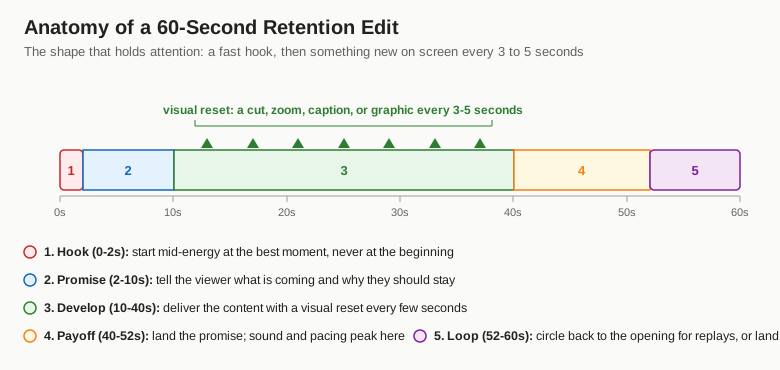
Walk the timeline from left to right, because this is the universal shape of short-form video that performs.
The hook, seconds zero to two. The clip starts mid-energy, at the most interesting sentence in the section, not at its natural beginning. Viewers decide with their thumb in that window. If the payoff idea cannot start the clip, restructure until it can.
Constant visual change. Working editors apply a rule of thumb: something new appears on screen every three to five seconds, a cut, a zoom, a graphic, a caption emphasis, a background shift, anything that resets the eye. Go longer and the viewer's attention quietly leaves the room. The exact rhythm varies by audience, which is a point this lesson returns to.
Sound as structure. Music that rises at the payoff, a soft whoosh on scene changes, a deliberate silence before the key line. Viewers experience sound design as "this feels professional" without ever knowing why. It is also the cheapest craft upgrade available to you this week, since basic sound design is placement and restraint, not expensive tools.
Captions as attention anchors. On social video, a large share of viewing happens with sound off or eyes down. Captions carry the message and add visual change on their own. The craft standard is unforgiving and simple: every word correct, timed to the voice, styled to the client's brand.
The loop or the landing. Short-form clips can end by circling back to their opening frame, which lifts replays and therefore retention statistics. Long-form lands on a resolution that satisfies the promise the hook made. Both endings are decisions you make at the start of the edit, not effects you add at the end.
Style must match the audience
Retention rules bend to who is watching, and this is where new editors overcook. A clip built for a young gaming audience, with cuts every second and layered motion graphics, will actively annoy a fifty-year-old attorney's clients watching a legal explainer. Operators who manage editing teams for different niches describe this directly: the editing style that retains one audience can repel another.
So before editing for any client, answer two questions in writing. Who watches this channel, on what device, in what mood? And what do the top-performing videos in that exact niche do that mediocre ones do not? Your answers become the client's style guide, and the consistency they buy is the consistency of you following it every single delivery.
Building taste on purpose
Taste is trainable, and the method is unglamorous: reverse-engineering, in volume. Pick ten high-performing videos in a lane you want to serve. For each one, watch it three times. First as a viewer, noting where your attention dipped. Second at quarter speed, marking every cut, zoom, caption, and sound choice on a paper timeline. Third with the sound off, to see what the visuals carry alone.
You will find the same shapes recurring: hooks starting mid-thought, visual resets clustering around a rhythm, sound landing half a beat before the cut it emphasizes. This study habit is also your quiet advantage in sales: the observations you just wrote down are exactly what you will send prospects, and specificity is what separates you from every generic editor DM they ignore.
Craft is now in your hands in outline form. Before any of it turns into money, one decision still shapes everything else about the business.
Keep going — you're working through Start a Video Editing Service.
All courses are free ↗