First Clients Without Spam
Lesson video in production
The full lesson text below is complete — the video version lands with launch.
First Clients Without Spam
Every creator with an audience receives editor pitches, and every pitch says the same thing: "Hi, I'm a video editor, do you need editing?" They are deleted in bulk. The method in this lesson is the one operators in editing communities describe landing client after client, and it works because it is the opposite of a pitch. You send the work first.
Building the list
Start with people who already publish in your lane and position. Forty names, gathered in one sitting, in a spreadsheet with three columns: who they are, what they publish, and the specific gap you noticed. Three patterns produce the best prospects.
Podcasters and show hosts with no clip output, or whose clips stopped months ago. They sit on the richest footage supply in the market and feel the guilt about it weekly. Creators publishing inconsistently, whose gap weeks are visible in public. They already know the problem; the algorithm tells them. And businesses posting raw, unedited footage, webinar recordings, event clips shot on a phone. Nobody inside those companies wants the editing job, which is exactly your opening.
Notice the filter doing quiet work: every prospect must have a publishing habit already. Convincing someone to start video is a different, slower sale than serving someone already committed.
The free-sample loop
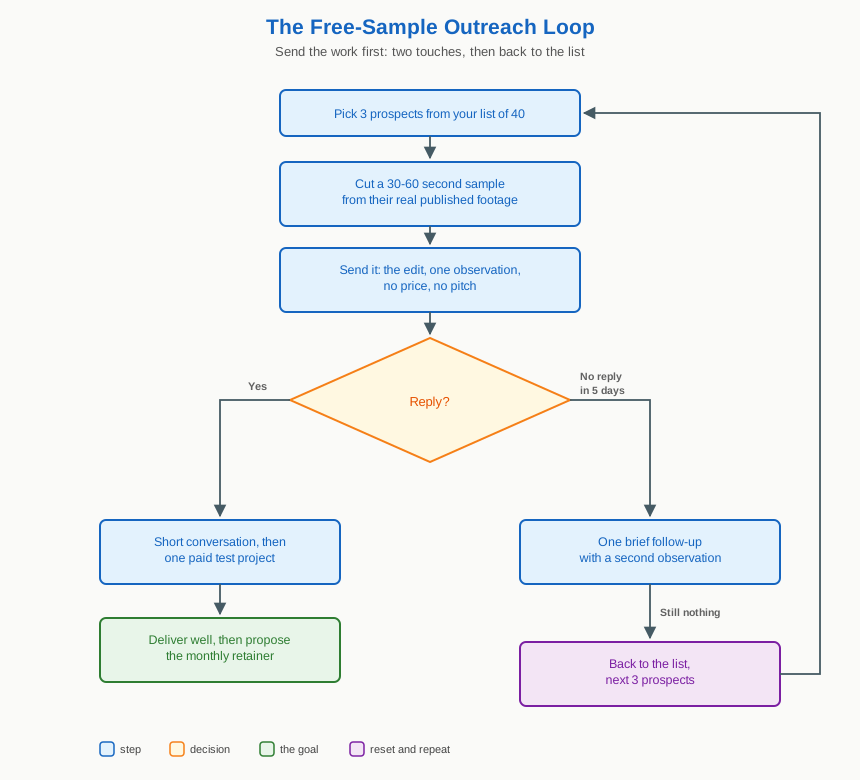
The sample is small on purpose: thirty to sixty seconds cut from footage they already published, done in your best style, exactly like your portfolio pieces. The message is three sentences and an attachment or link.
The message that works:
"Watched your episode with the retirement-planning anecdote. That story deserved to be a clip, so I cut it: [link]. If it's useful, post it. If you'd want a batch like this every week, I do this for [client type] and I'll show you what that looks like."
Why this converts when pitches do not: it leads with value they can hold, it names something specific from their actual work, and the ask is nearly frictionless. Editors running this method at volume report it outperforming every cold script, and the community consensus is blunt about the reason: almost nobody is willing to do the work first, so the ones who do stand out completely.
The follow-up, five days later, one sentence:
"Following up on the clip. If it's not a fit, no worries at all; I'll keep watching the show."
Then stop. Two touches total. Anything more converts you from helpful stranger into the thing you swore not to be.
Marketplaces: the on-ramp, not the destination
While samples go out, stand up a marketplace profile on Fiverr or Upwork. Treat it as paid training. The first five jobs buy reviews, delivery experience, and calm under deadline, at prices you would not accept twice. One editor's public trajectory tells the real story: he crossed his first $5,000 on Fiverr after about ten months, with video editing orders running from $20 to $650, averaging $80 a gig, and clearing only $100 to $300 a month in the early going before the reviews compounded. Read the fine print on how he did it: he found clients off-platform and brought them into Fiverr himself until his seller level rose and the marketplace started feeding him work. The platform hands you nothing at the start. Reviews are the asset, and you can build them without joining the race to the bottom.
Discipline matters on the way in. Fixed scope, fixed revision count, fast delivery, and a bio aimed at your exact client type rather than "I edit everything." The marketplace fee comes out of your rates, so every gig there has one purpose: becoming credible enough to leave.
Between the sample loop and the marketplace ramp, replies will start arriving, and replies mean conversations about money. That conversation has a shape, and it can be learned.
Downloads for this lesson
Keep going — you're working through Start a Video Editing Service.
All courses are free ↗