Where the Sentence Came From
Lesson video in production
The full lesson text below is complete — the video version lands with launch.
Where the Sentence Came From
The sentence feels like a fact about the universe. It's a fact about 1944.
On June 22 of that year, Franklin Roosevelt signed the Servicemen's Readjustment Act, the one everybody calls the G.I. Bill. The National Archives describes what it did: money for college, unemployment insurance, loans for homes and businesses. It was one of the best policy decisions of the century, and it installed a new idea in the American head at scale. Respectable work means educated work, and educated means a campus. Millions of veterans took the deal. Their kids were raised on the story.
The fifties and sixties did the rest. The office economy exploded, corporations built ladders, the suburbs grew around the commute, and the desk became the visible finish line of a respectable life. A generation that had fought their way into the office decided, reasonably, that their children would keep it. The sentence you carry is, in part, a parent's wish that hardened into a rule.
Then came the panic. In April 1983 the National Commission on Excellence in Education published A Nation at Risk, the report that warned of "a rising tide of mediocrity" eroding the country's educational foundations. Its prescription was more academics and more college preparation, for everyone. In the decades after, college-for-all became actual policy in school after school, and the vocational track, already drifting, finished its slide. In a lot of districts, shop class became the place counselors pointed kids they had given up on. The trade track stopped being an alternative and became a warning. If you grew up anywhere in that window, you were educated by people who believed it, some of them sincerely, and you absorbed the ranking without ever being taught it as a lesson.
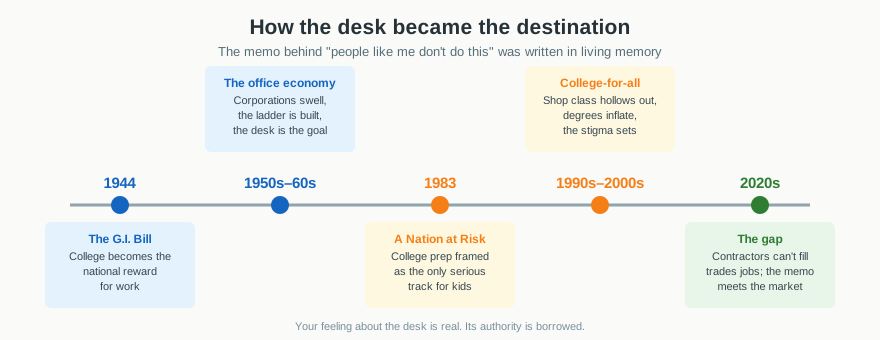
Now look at the last box on that timeline, because the punchline is almost comic. The same system that spent forty years telling everyone to get a desk now runs recruitment campaigns begging people to pick up a trade. Contractors' associations put out workforce-shortage releases every winter. The memo flipped. It flipped faster than the feeling did, because feelings are inherited slower than policy.
I'm not reciting this history to excuse it or to dunk on it. I'm reciting it because of what it does to the sentence's authority. The desk has been the default destination for about eighty years. That's a long time. It is not forever, it is not nature, and it is not you. Your feeling about the desk is real, and its authority is borrowed. When the sentence speaks, it is speaking with a lot of voices in it, and almost none of them have met you, and none of them have seen your local labor market.
One more thing the history explains: why the sentence is loud right now, of all moments. The people who need trades and service workers are the same institutions that once ranked that work below yours. The economy changed its mind before the culture did. You're standing in the gap between the two, holding a sentence written for an economy that no longer exists.
A sentence about class is really a sentence about what your job pays you beyond money. Any honest answer to the sentence has to price that first.
Keep going — you're working through The White-Collar Exit.
All courses are free ↗