What the Badge Pays
Lesson video in production
The full lesson text below is complete — the video version lands with launch.
What the Badge Pays
Strip the job down to its salary and the exit decision is arithmetic. Nobody's exit decision is arithmetic. So stop stripping it down.
When the sentence says people like me don't do this, the "this" it's guarding isn't the wage. It's everything else the badge pays you, the compensation that never appears on a pay stub. Until you itemize it, you're weighing a full package against a salary and pretending it's a fair comparison. It isn't, and the itemization is where the decision actually lives. Here are the six lines.
The paycheck. The obvious one. Money, twice a month, no dry spells, no accounts receivable, no customer who pays at day fifty-two.
The structure. Somebody else decides what today is. Priorities arrive pre-sorted. The calendar has rails on it. People underestimate this line until their first unemployed Tuesday, when they discover that deciding what to do all day is itself a job.
The status signal. "I work in finance." "I'm at a software company." The sentence does silent work in every introduction, every lease application, every school pickup line. It's a pre-issued membership card in respectable society.
The team. Instant colleagues. A tribe with a shared vocabulary, shared grievances, a coffee machine to gather around. Adulthood friendship is mostly side effect of shared rooms, and the badge rents you a room.
The ready-made identity. The answer to "what do you do?" comes pre-written. You never have to invent yourself at a party; you just recite the title.
The family story. What your parents get to say about you at Thanksgiving. What your degree became in their telling. This line item has almost nothing to do with your daily experience of work, and everything to do with why leaving feels like a betrayal.
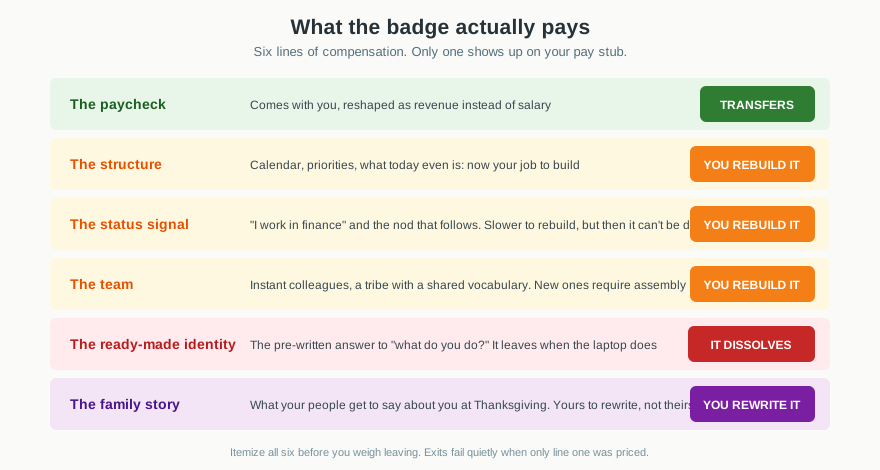
Now the question that matters, and I want you to be honest with yourself in a way you don't have to announce to anyone: which of those lines is doing the most work in your attachment to the job? Because the answer changes the whole decision.
If it's the paycheck, this is a math problem and the runway math in Layoff to Launch will solve it with you. If it's the structure or the team, those are real needs, and ownership has ways to meet them, badly at first and better later. But if the biggest line is the status signal or the family story, I want you to see that clearly now, because those are the two lines ownership doesn't refund. There is no business structure that pays you back in other people's approval. Anyone who tells you otherwise is selling a course about mindset.
Do the written version of this. The Full Compensation Inventory worksheet (listed in the course worksheets) walks you through pricing each line, in dollars where possible and in plain honesty where not. It takes twenty minutes and it is the single most useful exercise in this guide, because everything after it depends on knowing what you're actually weighing.
The ledger has two sides, and an honest guide has to show you both. You've now read the badge's side of it. The other half of the accounting comes later in the course.
Downloads for this lesson
Keep going — you're working through The White-Collar Exit.
All courses are free ↗