Vetting the Numbers Before You Spend
Lesson video in production
The full lesson text below is complete — the video version lands with launch.
Every decision before this point was cheap. This lesson is the gate where money starts to matter, and the tool is one spreadsheet you will keep using for the life of the business.
Build landed cost first
Landed cost is what one unit truly costs you sitting in Amazon's warehouse, and amateurs always lowball it. Five lines:
- Unit price from the factory
- Packaging and labeling
- Freight divided across units (sea freight is cheapest; air runs three to five times sea)
- Duty and tariff allowance, a buffer line, not zero
- Inspection and incidentals divided across units
That tariff line deserves respect. The duty-free de minimis threshold for China shipments ended in May 2025, and tariff rates on Chinese goods swung hard through 2025, peaking above 100 percent before a truce cooled them. You do not need to predict politics. You need your freight forwarder's landed duty quote for your specific product code before you pay the deposit.
The calculator, on a worked example
Take a candidate product at a $24.99 price. Landed cost of $6.00 per unit: $3.50 from the factory, $1.20 freight, $1.00 duty buffer, $0.30 packaging and inspection share. These are example numbers; yours replace them.
The Amazon side, using the fee stack from "What the Money Actually Looks Like": referral fee at fifteen percent, $3.75; fulfillment fee $5.00 for a standard-size unit; storage and incidentals, call it $1.00. Ads at maturity, budget $4.00 per unit, sixteen percent of price, which sits inside the healthy 5 to 15 percent total ad spend to slightly above it while you learn.
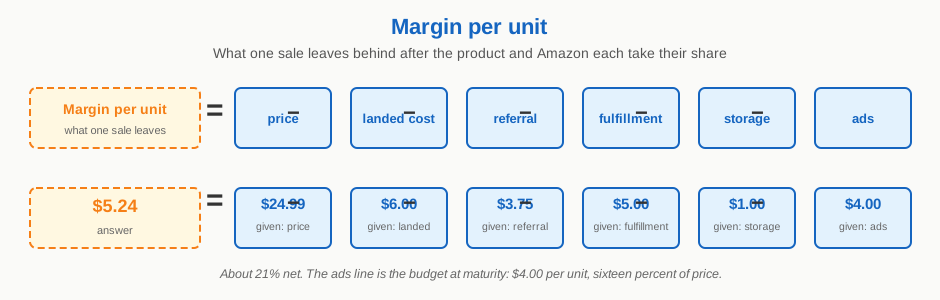
$24.99 - 6.00 - 3.75 - 5.00 - 1.00 - 4.00 = $5.24 per unit, about twenty-one percent net. Modest, real, and a notch above the fifteen-to-twenty percent the industry reports.
Now the metric that decides the order. You are investing $6.00 of cash per unit to earn $5.24 back per loop:
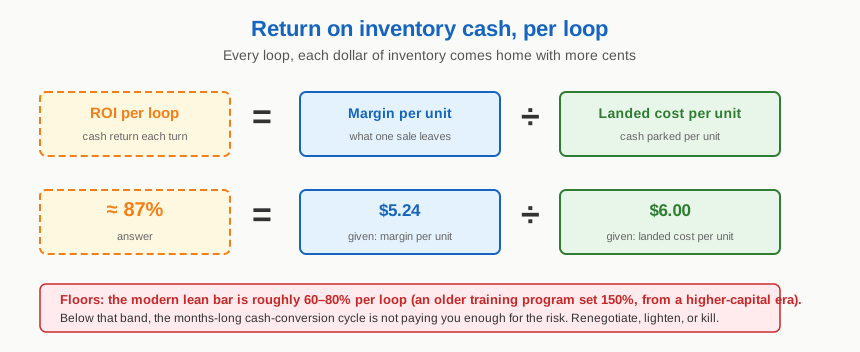
Every loop, each dollar of inventory comes home with eighty-seven more cents. One popular training program set its floor at 150 percent ROI; that bar is from a higher-capital era. Live operator guidance still runs higher than lean, though: the classic three-times-landed-cost rule works out to roughly 100 percent ROI, and 2026 guides report most sellers recommending 150 to 200 percent. This course teaches a defensible lean floor of roughly 60 to 80 percent, the line you walk away below, not the bar you aim for. Below that band, the months-long cash-conversion cycle is not paying you enough for the risk. Renegotiate the unit price, find a lighter product, or kill it.
Last formula, the one your ads will live by. Your break-even ad spend is every cent of margin that exists before ads:
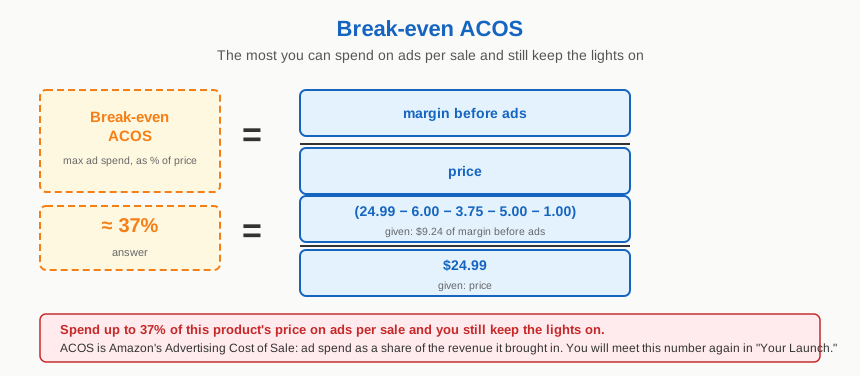
Spend up to 37 percent of this product's price on ads per sale and you still keep the lights on. You will meet this number again later in the course.
Run ten, order one
Build the spreadsheet once, then run every research shortlist candidate through it. Most die on landed cost or fee pressure. What survives gets checked against reality one more way: the sample order, where the numbers finally meet a physical object you can drop on the floor.
Downloads for this lesson
Keep going — you're working through Sell on Amazon FBA: Private Label.
All courses are free ↗