Two Payoffs, One Microphone
Lesson video in production
The full lesson text below is complete — the video version lands with launch.
You already know what a podcast is as a thing. It is a recorded audio show, delivered through a feed, that people play in their cars and on their walks. What matters for you is what it is as a business. A podcast is a machine with two possible outputs, and which output you are building for changes nearly every decision you will make: what you name the show, who you invite on it, how long episodes run, and how you measure whether it is working.
Lane one: the media business
In the media business, the show itself is the product. You build an audience, and advertisers pay to reach that audience. A sponsor buys a sixty-second spot in your episode, and the price is set by a formula: your downloads per episode, times a rate per thousand listeners. At a twenty-five dollar rate per thousand, a show with one hundred thousand downloads per episode charges about two thousand five hundred dollars for a single mid-roll ad spot (Ad Results Media). That is real money. It is also a distant summit, because sponsor deals at standard rates generally start once a show proves consistent listenership in the thousands per episode, and the audience is listening: 55 percent of Americans aged twelve and up now listen to podcasts monthly, about 158 million people (Edison Research, The Infinite Dial 2025; a 2026 edition now exists). Big pond. You are fishing in it with a very small hook at first.
Lane two: the relationship engine
In the relationship engine, the show is not the product. The show is the excuse. Every episode is a professional reason to spend forty-five focused minutes with a person you want to know: a potential client, a referral partner, an operator in the industry you just got laid off from and want to stay connected to. Cold outreach might buy you five minutes of that person's time. A podcast invitation buys you a conversation, and the guest promotes it afterward because promoting the episode promotes them. Operators who run interview shows for business development describe exactly this trade: the podcast converts into pipeline because guests become referral partners and clients, not because listeners click an ad (Content Allies). Nobody asks a new show how many listeners it has. You are offering a platform, and that offer is valuable on day one, before a single stranger has heard your voice.
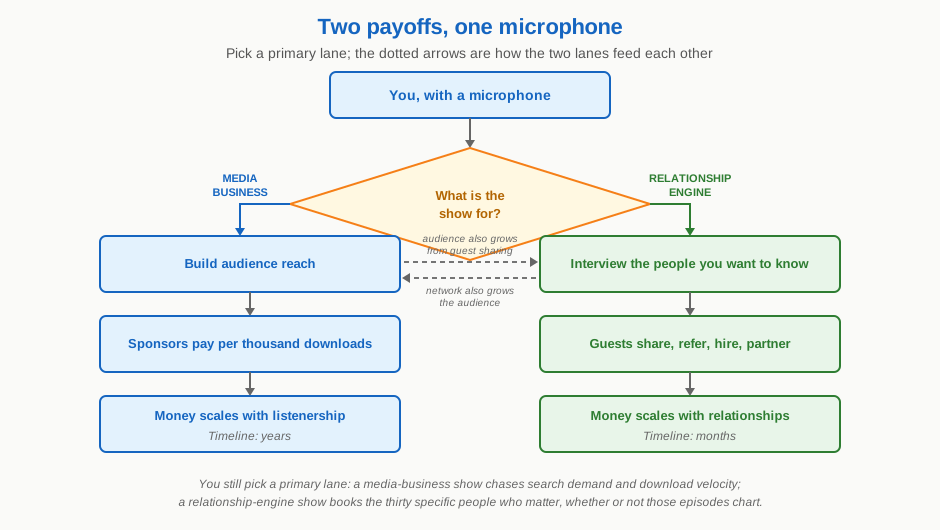
The dotted arrows matter. These lanes feed each other. Guests share episodes, which grows the audience; a bigger audience makes future guests say yes faster. But you still have to pick a primary lane, because the two lanes optimize differently. A media-business show chases topics with search demand and download velocity. A relationship-engine show books the specific thirty people in its industry who matter, whether or not those episodes chart. When you feel torn later, come back to this diagram and pick the branch you are actually on.
Why this course leads with lane two
You are reading this because you need income in months, not decades, and you have limited savings. The media business pays like a farm: plant for a long time, harvest late. The relationship engine pays like a trade: the first guest conversation can open a door before episode ten exists. This course teaches both, honestly, but it teaches the craft in an order that gets lane two working early, because that is the lane that fits a person starting from zero with a microphone and a layoff on their resume. Two neighbors, named now so the boundary is clean: if your pull is toward a camera instead of a microphone, the video-first channel course is the building you want. And if the dream is the full multi-platform audience business, the show as one pillar among several, the creator income stack course is the parent architecture above it.
The money specifics, including the cost stack and the honest timelines for both lanes, come later in the course.
Keep going — you're working through Start a Podcast.
All courses are free ↗