Your First 90 Days & Going Deeper
Lesson video in production
The full lesson text below is complete — the video version lands with launch.
Ninety days is the right horizon: long enough to launch, ship a real catalog, and let the first guest relationships warm up, short enough that every week has a definite job. Here is the sequence, assuming the money lane you chose in "Two Payoffs, One Microphone" and the cadence you set in "Format and Cadence You Can Survive".
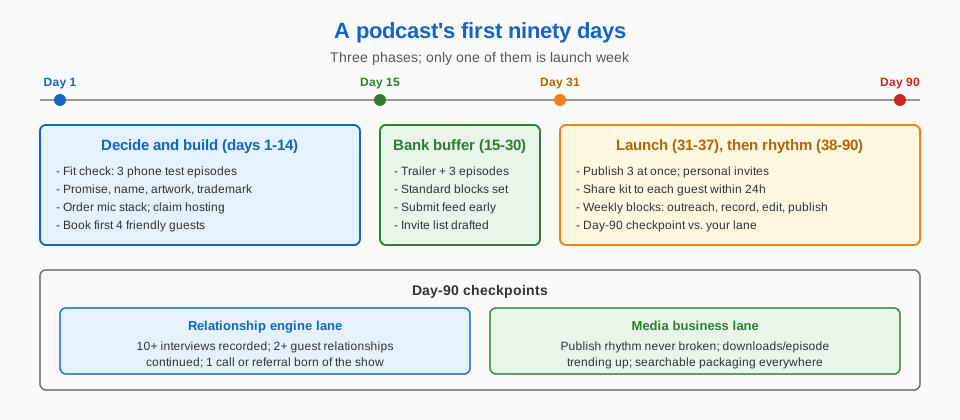
Days 1 to 14: decide and build
Record your three phone test episodes and finish the fit check from "Should You Host?". Write the one-sentence listener promise, pick the name, run the search, trademark, and say-it-out-loud tests, and make the artwork from "Design a Show People Can Find". Order the microphone stack from "The Studio Under $200" and claim your hosting account so the feed exists. Book your first four recordings from the inner ring of your dream list, the people who say yes easily, because your first two interviews are practice and the feed will be better for starting with friendly voices.
Days 15 to 30: bank the buffer
Using the recording habits from "Record It Right" and the edit policy from "Edit Fast or Outsource", produce the trailer plus three full episodes. Choose your standard blocks: intro, music, outro one-liner, episode title format. Submit the feed to Apple and Spotify per "Hosting, RSS, and the Rules" the moment the trailer is live, so approvals land before launch day. Write the fifty-to-two-hundred-name invite list and draft the personal message from "Launch Like It Matters". Do not launch yet. The buffer is the launch.
Days 31 to 37: launch week
Publish everything, send the personal invitations, run the follow-up and review-ask rhythm, and deliver the first share kit within a day of publishing. Spend the back half of the week replying to everyone and writing down every "you should talk to" name.
Days 38 to 90: the rhythm and the checkpoints
Settle into the weekly blocks from "The Real Week": outreach, prep, record, edit, publish, promote, maintain. Then check honestly at day 90 against your lane. Relationship-engine checkpoints: ten or more interviews recorded, two or more guest relationships that continued past the episode, one coffee call, referral, or work conversation that exists because of the show, and a dream list that keeps refilling. Media-business checkpoints: a stable publish rhythm never broken, downloads per episode trending up across the quarter, searchable packaging on every episode, and at least one cross-promotion or guest appearance on an adjacent show. Both lanes share one checkpoint that overrides the rest: you still want to record. If that is true and the operational numbers lag, the answer is patience and outreach. If it is false, the honest moves are a season break, a cadence cut, or a graceful finale episode; a finished show is not a failed show, and two shows in three never reach episode ten to finish at all (Amplifi Media's catalog study).
Going deeper
This course is complete for starting a niche audio show, and the medium has neighboring buildings that are their own courses. When video itself is the product, long-form camera work and a video-first audience strategy, that is the YouTube channel course, and if you felt resistance every time this course said "audio-first," that is your signal. When the show becomes one pillar of a multi-platform creator business with stacked income streams across channels, the creator income stack course is the parent architecture this show plugs into. When your listeners respond better in writing than in audio, the paid newsletter course builds the inbox asset this course kept telling you to own. And when your expertise outgrows interviews and wants to be a product, the online course business course covers building and selling that knowledge product, which pairs naturally with a show that proves you can teach. There is also a difference between researching a course and having income during the build, and the gig bridge guide covers bridge income without confusing it with the destination.
The microphone is the cheapest part. The ninety days are the real investment, and they start this week. Record the first test episode today, before the gear arrives, because the person in the phone recording is the one who ships.
Downloads for this lesson
You Finished This Course
Check out the full course catalog — every course is free, forever.
Browse All Courses