The Two-Engine Business
Lesson video in production
The full lesson text below is complete — the video version lands with launch.
A YouTube channel is a publishing business with a landlord. You produce a library of videos, the landlord owns the road to the audience, and the landlord decides which of your videos get traffic. Once you accept that framing, everything else in this course makes sense. You are not making videos and hoping. You are making videos that are easy for a machine to match to the right viewer, because that machine, not you, does the distribution.
Where views actually come from
Every view your video will ever get arrives through one of a handful of doors, and two of them matter far more than the rest.
The first door is search. Someone types a question or a topic into the search bar, YouTube returns a list of videos, and yours is somewhere on that list. Search rewards clarity. The video that best answers the typed question, and keeps the searcher watching, wins the top slots over time.
The second door is recommendations. This is the homepage feed, the suggested sidebar next to a video someone is already watching, and the auto-play row after a video ends. Nobody typed anything. YouTube watched what a viewer consumed, formed a guess about what they want next, and slid your thumbnail onto their screen. Recommendations reward satisfaction: videos people click and then keep watching, on topics the viewer already cares about.
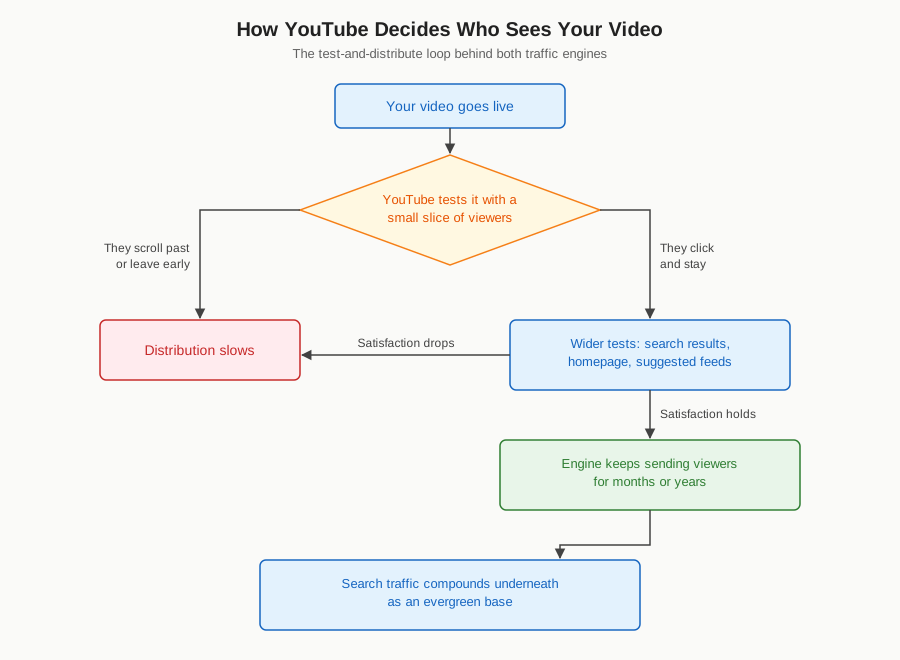
Operators who run growing channels describe the split the same way: search is usually a channel's third or fourth traffic source by volume, but it is the engine a brand new channel can actually turn on. Recommendations deliver the big spikes, and they arrive only after YouTube has learned who your videos satisfy. The practical sequencing for a new channel is search first, recommendations second, and both engines running through every video you make.
The gate, and why it shapes this course
YouTube does not pay you from your first upload. Ad revenue begins only when your channel passes the monetization gate: one thousand subscribers plus four thousand public watch hours in the past year, or the Shorts-view equivalent (the thresholds double for applications after February 2027). That gate is the single most honest thing about this business. It forces months of unpaid work, which filters out everyone who was chasing a quick payout.
Treat the gate as a design constraint, not an insult. It means your niche has to hold your interest for a hundred videos, not ten. It means your production system has to fit your life, because you cannot sprint through a marathon. And it means you should build income streams that do not depend on the gate at all, which is an entire lesson of its own later in this course.
What this business is not
It is not passive income, at least not for the first year. It is not a place where talent alone wins, because packaging and consistency beat brilliance on this platform. And it is not yours in the way a customer list is yours: YouTube can change rules, throttles, and payouts without asking you, and it occasionally does. The creators who last treat the platform as rented land and build things they own off it, like an email list.
You now know what the business is. The next question is harder: whether it is the right business for you. That one deserves an answer before you spend a dollar or a weekend.
Keep going — you're working through Start a YouTube Channel.
All courses are free ↗