Through the Monetization Gate
Lesson video in production
The full lesson text below is complete — the video version lands with launch.
Reaching the gate's numbers is a milestone; passing the review is a separate exam. YouTube re-checks the channel against its monetization policies before ads turn on, and channels do get rejected at the threshold, usually for reasons the creator never read about. This lesson is the rulebook, so the year of work you invested survives the last step.
The application, in practice
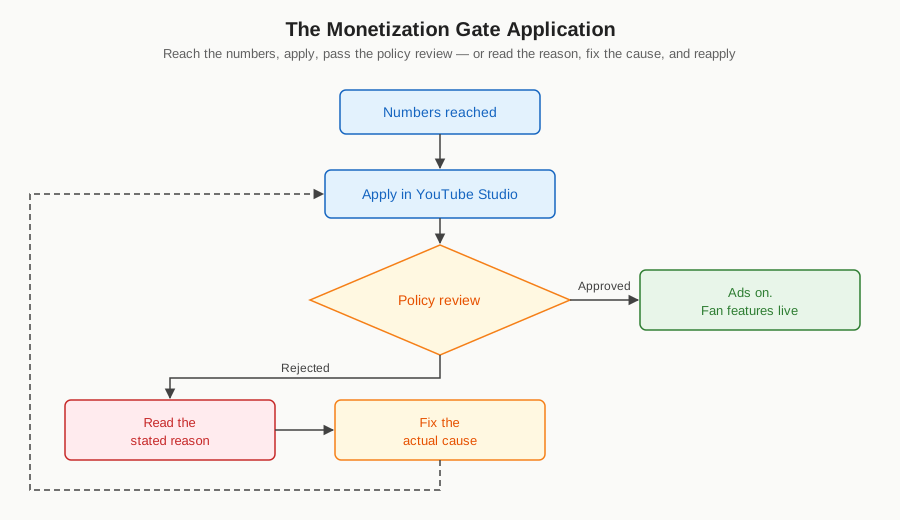
When your channel crosses the numbers (one thousand subscribers plus four thousand public watch hours in the past year, or the Shorts alternative; the lower tier at five hundred subscribers unlocks fan funding earlier), YouTube Studio's earn tab invites you to apply. You will link or create an AdSense account, confirm your tax information, and the platform runs a policy review that typically takes about a month. The review is automated first and human on appeal, and its central question is simple: is this an original channel operated by a human with a consistent audience? That question brings the whole rulebook into play.
The policies that actually reject people
Three policies cause the overwhelming majority of rejections and removals.
Inauthentic content. In July 2025 YouTube renamed and sharpened its repetitious-content policy, now called inauthentic content, to make explicit that mass-produced, repetitive, template-stamped videos are not monetizable, regardless of how they were made. The policy is aimed at content farms, but it draws the boundary every creator must know: AI tools used as instruments (research, drafts, captions, thumbnail variants) are fine; AI used as the factory, generating interchangeable videos with no human judgment, originality, or transformation, is not. YouTube also asks creators to disclose realistic synthetic media at upload. Your protection is the same as your advantage: a human with real expertise, on camera or in the writing, is the definition of authentic content.
Reused content. Uploading others' footage, compilations, and rips with minimal transformation fails review. Reaction and commentary formats survive when they genuinely transform the source: your analysis is the product, the clip is the exhibit.
Invalid traffic and bought engagement. The seeding lesson covered this. The review examines where watch time came from, and purchased traction reads as fraud, because it is.
Strikes and copyright, plainly
Two different systems punish two different sins, and creators constantly confuse them.
Copyright protects other people's material. A Content ID claim is automated: the system matched music or footage, and revenue may be diverted to the claimant; your video stays up. A copyright strike is serious and manual: three strikes within ninety days and the channel is terminated, with strikes expiring after ninety days if you complete Copyright School. The fix for both is the same prevention: use royalty-free music from YouTube's own audio library or properly licensed sources, keep others' clips brief and genuinely transformed, and never build a channel on material you do not own.
Community Guidelines strikes cover everything else: harmful content, spam, deceptive metadata. Each strike carries a ninety-day clock, and three in the window ends the channel. Strikes come with the ability to appeal, and you should appeal any strike you believe is mistaken, immediately and in writing.
Where AI tools belong
This catalog rates every business for AI exposure, and a YouTube channel sits near the middle: the platform's distribution is algorithmic, AI tools accelerate every station of the pipeline, but the asset itself, your credibility with a specific audience, appreciates precisely because it is human. Use the tools for research, outlines, first drafts you rewrite, caption cleanup, thumbnail variations. Keep the judgment, the voice, the face or the hands, and the accountability yours. That is not sentimentality; it is the monetization policy written in English.
Through the gate, ad revenue starts as a trickle and grows with the library. For most channels under a hundred thousand subscribers, the real money lives past ads, in income streams that do not wait for any gate to open.
Keep going — you're working through Start a YouTube Channel.
All courses are free ↗