Your Real Week: A System You Can Keep
Lesson video in production
The full lesson text below is complete — the video version lands with launch.
A channel is not a collection of videos. It is a pipeline that produces videos on a schedule you can keep on your worst week. This lesson shows what the work actually feels like: the real hours, the real sequence, and the batching pattern that keeps a week of production from eating a life.
The pipeline
Every video passes through five stations, and naming them is what turns chaos into a system:
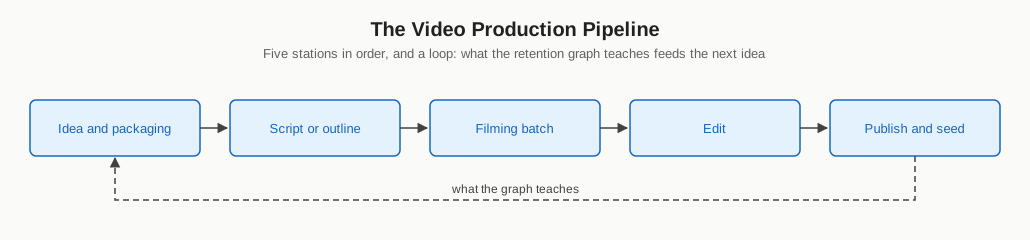
At beginner speed, one video through this pipeline takes four to eight hours for a simple talking-head format, and honest creator-reported totals often run longer: an hour on idea and packaging, an hour outlining, an hour filming (more once you include setup and retakes), two to four editing, and thirty minutes to publish, comment, and log what you learned. Faster comes with reps, and with ruthless simplicity of format, not with working harder. A talking-head tutorial with clean cuts will always beat a mini-documentary you cannot finish.
Batch, do not bounce
The single biggest efficiency gain available to a solo creator is batching: doing one station's work for several videos at once. The pattern that fits a life alongside other work:
One planning block. Sunday evening, an hour. Choose this week's (or fortnight's) video from the idea bank, write the title and thumbnail text first per the packaging lesson, then the outline. Deciding once, in advance, is what removes the weekday blank-page problem.
One filming block. Morning of a weekend day or a free evening, camera-ready: same corner, same light, same mic. Film two or three videos back to back. The first take of the day is always stiff; by the second video you are warm, and setup cost is paid once for all of them.
Short daily edit blocks. Twenty to forty minutes on weekdays chips an edit down without demanding a whole evening. Free editors auto-transcribe now, and cutting filler words by transcript is the fastest beginner skill to acquire.
One publish ritual. Same day, same time each week. Upload, paste a description that states the topic plainly, set the end screen to the evergreen ladder's next rung, pin a comment with one useful link, and reply to every comment in the first hours. Then close the laptop. The publish ritual ends with the laptop closed because the alternative is refreshing analytics all evening, which produces nothing.
Choose the cadence you can fund
Weekly is the default that works. It gives the engines steady signal, gives you a sane pace, and produces roughly fifty videos a year, which is enough to find your format. Twice a week doubles the learning speed and the hours; take that step only after four consistent months of weekly, when the pipeline is real. Daily is for channels with teams, and every operator who has tried it solo says the same thing afterward: they burned out and the quality fell before the growth arrived.
The weekly review
Fifteen minutes, once a week, three questions. Which video's retention curve taught me something, and what? Which package would I change if I could? What does the idea bank need next, another rung on the ladder or a sibling for a format that hit? Write the answers in the production log from this course's downloads. This review, not the daily analytics refresh, is where channel strategy actually happens.
The system now exists end to end. What it needs is people flowing through it, and the first hundred of them is its own piece of work.
Downloads for this lesson
Keep going — you're working through Start a YouTube Channel.
All courses are free ↗