Model Numbers and Parts Logistics
Lesson video in production
The full lesson text below is complete — the video version lands with launch.
Parts logistics is half the business, and it starts before the job does. The operator consensus on r/appliancerepair is blunt: funnel every customer to book online, collect the model number and the complaint at booking, read the complaint before you leave, and know which parts to throw in the van that morning. Almost never buy a control board before seeing the appliance in person. That workflow, done consistently, is the difference between one visit per job and two.
Where the numbers hide
The model and serial number plate is small, sometimes foil, and located with malice. Know where to look before you are on your knees in a stranger's laundry room.
| Appliance | Usual plate locations | |---|---| | Refrigerator | Inside the fresh food compartment wall; behind the crisper drawers; some behind the kick plate | | Dryer | Inside the door lip; on the rear panel; inside the lint filter housing on some models | | Washer | Under the lid on top-loaders; inside the door on front-loaders; rear panel | | Range or oven | Behind the broiler drawer; around the oven door frame; rear | | Dishwasher | Door edge, visible when open; side of the door inner panel; kick plate |
The plate, not the sales brochure, is the source of truth. The same model name covers a dozen variants with different parts. Photograph the plate at every job and the photo becomes your parts lookup, your warranty record, and your invoice line item.
The booking funnel
Your website form or booking conversation collects three things: appliance type, brand, model number if the customer can find it, and a one-sentence symptom description. A customer who cannot find the number gets a friendly instruction with the table above. At diagnosis you confirm the number in person anyway, because customers transcribe a "W" as two Vs with alarming regularity.
With model plus symptom, most jobs let you pre-stage: a "dryer runs, no heat" booking means the thermal fuse and heating element go in the van before you leave the driveway, and the wiring diagram is already on your phone. Pre-staging is why experienced operators fix on the first visit at rates that look like luck to beginners. It is not luck; it is the form.
The sourcing chain
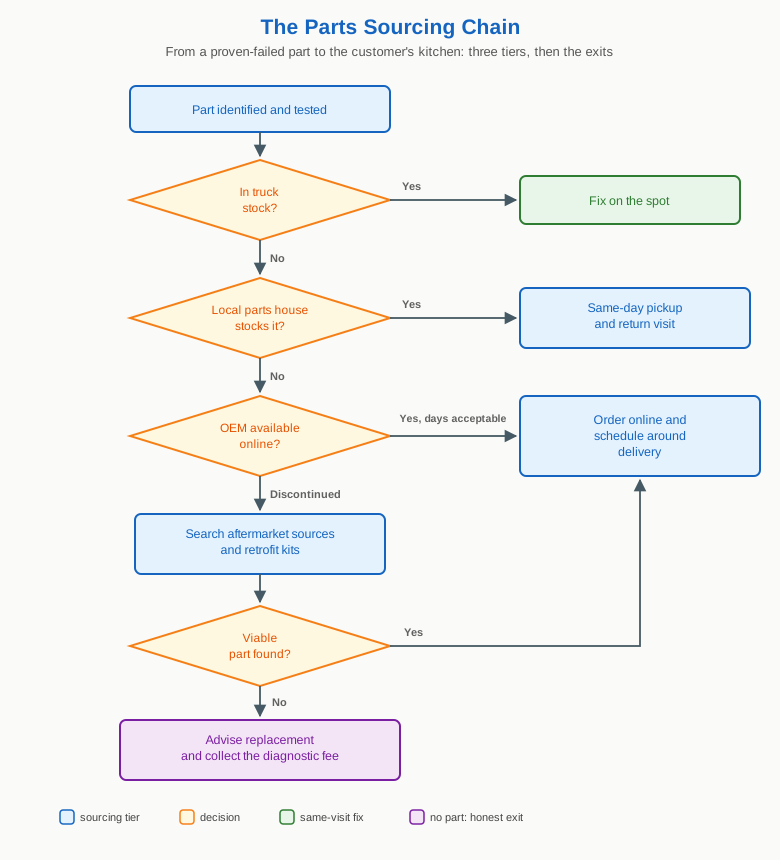
The chain has three tiers and each has a role. Truck stock covers your fast movers and pays for itself weekly. The local parts house, where one exists, is gold: counter staff who know interchange numbers, same-day availability on common parts, and no shipping gap; find yours in the first week of operation and learn its hours by heart. Online ordering covers everything else, with OEM parts from manufacturer channels and the big parts retailers, and delivery times that shape your return-visit scheduling. And when the verdict is a machine not worth fixing, what happens to that dead machine is a separate business. This catalog teaches the flipping craft in the phone-resale course — buy broken, refurbish, resell is the same discipline with a different product — and it sits in the resale frame, not on a service route.
Original versus aftermarket is a per-part judgment. OEM guarantees fit and matches what the machine was built with, which matters for control boards and anything electronic. Quality aftermarket is fine for mechanical simples like rollers, belts, and some pumps, and often costs meaningfully less. Your rule of thumb the first year: OEM for electronics, either for mechanical, and never experiment on a part whose failure means a second callback.
Truck stock: the starter list
Keep it lean, matched to what your area actually runs, and turn it over:
- Thermal fuses and thermal cutoffs for the common dryer brands
- One each of the two or three lid and door switches your market's washers favor
- Dryer belts and drum rollers
- Gas range igniters, both common styles
- Water inlet valves for the popular washer lines
- Drain pumps for the same
- Wire connectors, wire, and generic hardware
Everything else is bought to the job. Revisit the list monthly; your invoice history tells you what belongs in the van, and, soon enough, which machine families own your route.
Keep going — you're working through Start an Appliance Repair Business.
All courses are free ↗